Features
Migration Lessons from Southeast Asia and Australia’s Path to Intercultural Democracy
In recent years, anti-immigration sentiment has intensified across Australia. One Nation has increasingly politicised immigration by portraying it as a source of cultural conflict and competition for public resources, while Australia’s two major parties have largely focused on electoral politics rather than addressing the underlying causes of these tensions.
As an alternative, the publisher of Sameway Magazine has proposed the concept of intercultural democracy, which goes beyond peaceful coexistence by encouraging meaningful interaction between different cultural communities through equality, mutual respect, and shared civic participation.
With the Victorian state election approaching and migration from Asia continuing to reshape Australia’s demographic landscape, the debate over intercultural democracy has become increasingly relevant. Drawing on the experiences of several Southeast Asian countries, this article examines how Australia can strengthen its multicultural model and build a more inclusive framework for public dialogue and social governance.
Melaka’s Rise and the Absence of Long-Term Social Integration
The history of Melaka offers an important lesson about the relationship between migration and social cohesion. Strategically located along the Strait of Malacca, Melaka flourished between the fifteenth and sixteenth centuries as one of Southeast Asia’s greatest trading ports. By declaring itself a free port and introducing the Shahbandar system to manage different migrant communities, it attracted merchants from Persia, Arabia, India, and China, becoming one of the earliest centres of globalisation in the region.
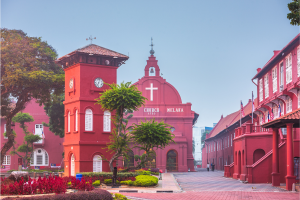

Despite its commercial success, Melaka struggled to build a lasting and cohesive society. The city relied heavily on seasonal trade, meaning most migrants remained temporary residents rather than permanent members of the community. The ruling elite prioritised economic growth over long-term migrant integration, while different ethnic groups largely lived in separate enclaves such as Bukit Cina. Without institutions that encouraged cultural interaction or a shared civic identity, Melaka remained prosperous but socially fragmented.
These structural weaknesses became evident when the Portuguese invaded in 1511. Lacking a common sense of belonging, different communities failed to unite in defence of the city, and many simply left. Melaka’s experience demonstrates that economic prosperity alone cannot sustain a multicultural society. Without meaningful cultural integration and social cohesion, diversity can become fragile. This lesson remains relevant to contemporary Australia, where political narratives surrounding “cultural conflict” and “competition for public resources” risk reinforcing invisible divisions between communities rather than encouraging genuine integration.
The Baba Nyonya: A Model of Cultural Integration and the Limits of Identity Labels
The Baba Nyonya (Peranakan Chinese) community represents one of Southeast Asia’s most successful examples of natural cultural integration. Emerging between the fifteenth and seventeenth centuries through marriages between Chinese male migrants and Malay women, the community gradually blended Chinese traditions with Malay language, customs, cuisine, dress, and later Western colonial influences. Rather than replacing one culture with another, generations of interaction produced a unique hybrid identity that remains internationally recognised today.

At the same time, the Baba Nyonya experience also reveals the limitations of rigid ethnic classification. Although their identity has always been fluid and multicultural, modern governments such as Malaysia increasingly categorised citizens into fixed racial groups—Malay, Chinese, or Indian—leaving little room for hybrid communities. As a result, Baba Nyonya identity was gradually absorbed into broader ethnic categories, weakening its distinct cultural character.
Their history demonstrates that cultural encounters are not inherently a zero-sum competition. Given freedom, mutual respect, and opportunities for interaction, migration can generate new cultural vitality rather than social conflict. By contrast, contemporary rhetoric promoted by One Nation assumes that new cultures inevitably threaten national identity. Like the rigid ethnic classifications imposed on the Baba Nyonya, such narratives reduce complex and evolving identities into simplistic labels, overlooking the fact that cultural diversity can strengthen rather than weaken society.
Ethnic Systems and Resource Competition in Malaysia
While Melaka and the Baba Nyonya illustrate the possibilities and limits of cultural integration, modern Malaysia shows how institutionalising ethnic differences can turn multiculturalism into a political struggle over identity and resources.
After independence, Malaysia introduced a system of ethnic balancing among Malays, Chinese, and Indians, based on quotas and consultation. Over time, this evolved into a binary framework of Bumiputera and non-Bumiputera, reinforced through policies such as education quotas, employment preferences, business licences, and housing allocation. Although these measures initially helped redistribute wealth and maintain political stability, they also carried long-term costs.
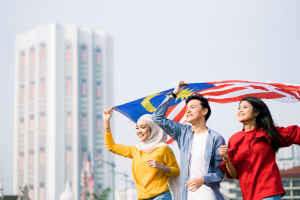
In the short term, the system supported the growth of a Malay middle class and helped stabilise politics after ethnic tensions. However, as ethnic identity became tied to resource distribution, multiculturalism increasingly turned into zero-sum competition. Temporary policies became permanent and politicised, deepening social divisions and turning ethnic issues into electoral tools.
Malaysia’s experience shows that when access to public resources is defined by ethnic labels, it creates anxiety and tension between groups. Without a broader framework of intercultural democracy based on equal citizenship and social justice, diversity risks becoming division. In this context, One Nation’s framing of immigration as “resource competition” reflects a similar logic that can push Australia toward Malaysia’s path of institutionalised social fragmentation.
Singapore’s Immigration Model and Its Trade-offs
Singapore presents a sharply different model of migration governance compared to Melaka and Malaysia. Unlike Melaka’s decline due to weak long-term integration, Singapore pursued rapid population expansion after independence through highly pragmatic, growth-driven immigration policies. It successfully attracted skilled professionals and foreign labour, transforming a resource-scarce island into a global financial and logistics hub.
Since 1965, Singapore has aligned immigration policy with economic transformation—from labour-intensive industries to a knowledge-based economy—actively recruiting global talent. This integration of migration and development not only filled labour gaps but also fuelled innovation and competitiveness.
Its success also relies on institutional innovation. Unlike Malaysia’s ethnic preference system, Singapore promotes meritocracy and managed multiculturalism, with multiple official languages and policies designed to prevent ethnic dominance. Political and housing systems, such as Group Representation Constituencies and ethnically balanced public housing, were introduced to support integration and social stability.
However, this highly managed model also comes with constraints. Strict immigration controls, citizenship restrictions, and regulated settlement patterns reflect a strong state-led approach. While effective in maintaining order and efficiency, tensions still exist, particularly around housing, job competition, and resource allocation between locals and new migrants.
Singapore’s experience challenges the claim that immigration inevitably causes social instability, showing that well-designed systems can turn migration into a driver of national success. At the same time, its limitations caution Australia against overly rigid or control-oriented approaches that suppress diversity rather than enabling genuine social integration.
Lessons from Southeast Asian Governance
A comparison of Southeast Asian migration governance shows that Australia, amid rising anti-immigration sentiment ahead of the Victorian election and the politicisation of “cultural conflict” and “resource competition” by parties like One Nation, should neither return to exclusionary policies nor simply copy foreign systems. Instead, it must rethink the institutional foundations of a multicultural society.
Some Southeast Asian countries manage migration through strong state systems aimed at maintaining order and stability. While such models can improve short-term efficiency through strict identity classification and resource allocation, they also reinforce rigid boundaries between groups, treating cultural difference as something to control rather than a resource for interaction. This approach does not fully align with Australia’s liberal democratic and multicultural values.
In this context, intercultural democracy offers an alternative framework. It goes beyond coexistence and focuses on shared civic foundations such as the rule of law, equality, rights, and civic responsibility. Within these shared principles, individuals should not be required to abandon their cultural heritage to be accepted. Instead, cultural difference is recognised as part of public life, and identity is seen as fluid and multi-layered, allowing people to be fully engaged citizens while maintaining cultural connections.
Practising Intercultural Democracy in Australia

Australia’s modern migration society has developed through long historical change—from British colonial settlement in the 19th century, to post–World War II European immigration policies, and later the end of the White Australia Policy in the 1970s. Since then, migration from Asia and Southeast Asia has significantly reshaped the country’s demographic and cultural landscape.
With the rise of skilled and education-based migration under a points system, Australia has become a highly globalised migrant destination. While this has delivered strong economic benefits, social and cultural integration has largely been left to market forces and individual choice, resulting in strong economic integration but limited everyday interaction between communities.
Neither major party has developed a clear framework for cross-cultural engagement. Instead, expectations of migrant “adaptation” often overlook how to build meaningful public interaction across cultural groups.
Southeast Asian cases offer useful comparisons. Melaka shows how open trade without long-term integration leads to fragile cohesion; Malaysia illustrates how ethnicised resource allocation deepens division; and Singapore demonstrates efficient but tightly managed integration with ongoing social tensions. Together, these examples suggest that the key issue is not migration itself, but whether institutions enable interaction and dialogue.
For Australia, the solution is not adopting strict control models, but building the infrastructure for intercultural democracy. This includes better urban planning, improved resource provision, and—more importantly—creating spaces for genuine social exchange through education, community participation, and public platforms for cross-cultural dialogue.
Ultimately, intercultural democracy reframes migration not as cultural loss or resource competition, but as a process that can strengthen social cohesion. Australia is well positioned for this, given its already diverse and interconnected society. The challenge is to turn this lived diversity into a shared civic identity through inclusive institutions.