Features
The Future of the Sun Yat-sen Statue in Melbourne Chinatown
Recently, the Museum of Chinese Australian History, located in Melbourne’s Chinatown, proposed a major expansion project. As the redevelopment would affect both Cohen Place and the site of the Sun Yat-sen statue beside the museum, the proposal quickly sparked discussion within the Chinese Australian community. Some worry that the public function of the square will be diminished, while others believe there is little cause for concern so long as the statue remains.
However, after examining the planning documents and reviewing the site’s history, it becomes clear that the real issue is not whether the museum should expand, nor simply whether the Sun Yat-sen statue will be relocated. The deeper question is how a city manages its public cultural spaces.
When public interest meets urban development, how should procedural justice and community participation be upheld?
Where did the controversy begin?
Established in 1985, the Museum of Chinese Australian History is one of Australia’s most important institutions dedicated to Chinese Australian history and culture. Its collection includes extensive artefacts relating to Chinese migration, including gold rush relics, nineteenth-century household items, imperial robes, traditional festival objects, and a substantial archive documenting Chinese Australian communities.
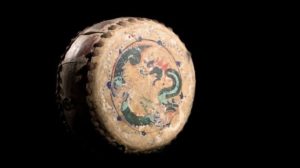

In recent years, as its collection has continued to grow, the museum has increasingly faced shortages of exhibition and educational space. To address these limitations, it proposed a major expansion aimed at increasing gallery space, educational facilities and research capacity.
At the end of 2024, the museum formally submitted a planning application to the City of Melbourne. The proposal would expand the existing heritage building into a nine-storey facility, incorporating new exhibition galleries, educational spaces and underground public facilities. The project is estimated to cost approximately AUD 35 million. In 2025, the Australian Government announced AUD 1.4 million in preliminary planning and design funding as the first stage of the project.
Viewed purely from the perspective of cultural development, the proposal appears entirely reasonable. A larger and better-equipped Chinese museum would help preserve history while enabling more Australians to understand how Chinese migrants became an integral part of Australia’s multicultural society. From heritage preservation and education to tourism, the project offers considerable public value.
So why has it generated controversy?
Should the museum expand?
To begin with, it is important to avoid framing the issue as a simple choice between supporting or opposing the museum.
Although the Museum of Chinese Australian History is a not-for-profit organisation with an important public cultural mission, it remains an independent legal entity. Its expansion proposal naturally reflects the museum’s own development needs and institutional interests. From the perspective of the broader Chinese Australian community, a stronger museum would also help promote Chinese culture and improve public understanding of Chinese Australian history. In this sense, there is little objection to the expansion itself.
The issue changes, however, once the proposal extends beyond the museum’s own site and begins to affect surrounding public land. At that point, the discussion is no longer solely about the museum’s development, but about balancing competing public interests while respecting existing community heritage.
The significance of public space
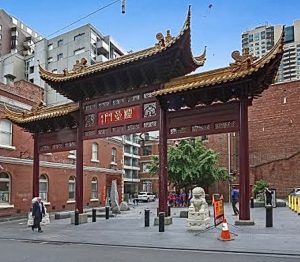

Many people may not realise that Cohen Place has a longer history than the museum itself.
Melbourne’s Chinatown was established during the nineteenth-century gold rush and has now existed for more than 170 years, making it one of the oldest Chinatowns in the Western world. It is not merely a commercial precinct. Rather, it reflects the entire history of Chinese Australians—from the gold rush era and the White Australia Policy to multiculturalism and the community’s place in contemporary Australian society.
Cohen Place itself sits within the Little Bourke Street Heritage Precinct (HO507), is classified as a “Significant” heritage place in the City of Melbourne Heritage Places Inventory, and is also listed on the Victorian Heritage Inventory because archaeological remains from nineteenth-century Melbourne may survive beneath the site. In other words, it is far more than an ordinary public square; it is a place of historical, cultural, archaeological and community significance.
Over many years, Cohen Place has served as the venue for Lunar New Year celebrations, Mid-Autumn Festival events, community commemorations, cultural performances, guided heritage tours and public gatherings. It has witnessed generations of Chinese Australian community life.
The planning documents may focus on practical questions such as how much additional underground exhibition space should be created or where lifts should be located. Yet for many members of the community, the greater concern is whether a public space can continue to carry its historical meaning if its original function gradually disappears.
The public significance of the Sun Yat-sen statue
The proposed expansion has attracted considerable attention largely because of its potential impact on the Sun Yat-sen statue.
During the late 2000s, Melbourne’s Chinese population changed significantly as increasing numbers of migrants arrived from mainland China. Some community members became concerned that the history of early Chinese Australians supporting the Xinhai Revolution, as well as the broader development of the Chinese community in Australia, was gradually fading from public memory.
In response, local residents established the Dr Sun Yat Sen Steering Committee. After years of fundraising, advocacy and negotiations with the City of Melbourne, the statue was finally unveiled in 2011.
As a result, the statue represents far more than a tribute to a historical figure. It embodies a shared history belonging to the Chinese Australian community. It commemorates the participation of overseas Chinese from many different countries in modern Chinese history while symbolising more than 170 years of Chinese presence in Melbourne.
Over the years, the statue has become an important landmark for Lunar New Year celebrations, commemorations of the Xinhai Revolution, community heritage tours and cultural education. It has long formed part of Chinatown’s public life.
For the Museum of Chinese Australian History, the statue is equally valuable. Together, the museum and the statue create a continuous historical narrative linking the museum’s exhibitions with the surrounding public space, enhancing both its educational and cultural value while helping visitors better understand Chinese Australian history.
What also needs to be clarified, however, is that the Sun Yat-sen statue belongs neither to the museum nor to the steering committee. Today, it forms part of the City of Melbourne’s Public Art Collection, and legal ownership rests with the City of Melbourne. In other words, it is not an asset that any single organisation can decide to remove or retain; it is part of the city’s shared cultural heritage.
Given the statue’s significance, those who established it, the Chinese community organisations that have long used Cohen Place, and the many groups that have held commemorations, cultural festivals and public gatherings there over the years are all important historical participants and cultural stakeholders in this public space. They may not own the land, but together they have shaped its cultural meaning.
For this reason, their voices should have been meaningfully considered during the earliest stages of planning, rather than only after the proposal had been largely finalised and entered the statutory consultation process.
Procedural justice: the issue lies not with the museum, but with the City of Melbourne
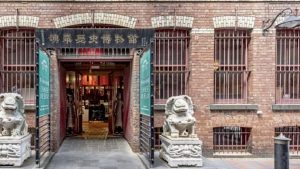

Much of the debate has centred on whether the museum has the right to submit an expansion proposal. In fact, the answer is straightforward: under Victoria’s planning system, any land user meeting the planning requirements is entitled to lodge a planning application. The museum has every right to pursue its own development.
The more important question is whether the City of Melbourne has adequately fulfilled its responsibility to safeguard the broader public interest.
Under Victoria’s planning framework, major planning applications generally involve preliminary discussions, formal submission, statutory public notification, public submissions, council consideration, and, where necessary, review by the Victorian Civil and Administrative Tribunal (VCAT).
Over the past two decades, Australian planning practice has increasingly emphasised early community engagement, recognising that affected communities should have opportunities to participate while proposals are still being developed, rather than only after designs have largely been completed.
This is particularly important where public land, heritage places and minority communities are involved. Procedural justice requires more than merely complying with statutory notification requirements; it requires ensuring that all relevant stakeholders have a genuine opportunity to participate in decisions affecting the public interest.
Many community members have raised precisely this concern. They argue that if the organisations, businesses and community groups that have long used Cohen Place only saw the complete proposal once the statutory consultation process had commenced, then although legal procedures may have been followed, the broader principles of procedural justice may not have been satisfied.
The City cannot outsource community consultation
This also raises a broader concern: the City of Melbourne appears to have delegated much of its responsibility for community engagement to the applicant itself.
Information suggests that the City accepted that the Museum of Chinese Australian History had undertaken sufficient community consultation before allowing the proposal to proceed through the formal planning process.
The question, however, is whom the museum actually consulted. Did it genuinely engage with the community groups, event organisers, nearby businesses and Chinese Australian organisations that have long contributed to Cohen Place’s public life?
After all, the museum inevitably represents its own institutional interests. It cannot be expected to represent the broader public interest. Where proposals involve public land and public space, it should be the responsibility of the government—not the applicant—to undertake broad, representative community consultation.
Equally important is the fact that statutory public consultation occurs relatively late in the planning process. At that stage, the public is asked only to respond to an already developed proposal, rather than participate in shaping it.
If procedural justice is taken seriously, meaningful community engagement should begin before formal planning applications are submitted.
The City of Melbourne should also make better use of its three Chinese Australian councillors—Philip Le Liu, Gladys Liu and Kevin Louey—as bridges between government and the Chinese community. Because the proposal directly concerns Chinatown’s public space and Chinese Australian historical memory, their understanding of community networks could help facilitate broader and more representative public discussion.
Instead, the City appears to have relied largely on consultation undertaken by the applicant, creating the impression that the government accepted the applicant’s engagement without establishing an independent consultation process of its own.
Earlier engagement through councillors, community organisations and cultural groups would have improved transparency, strengthened public trust and reduced the risk of the debate becoming polarised between supporters and opponents.
Public land belongs to the entire community. Decisions about its future should not simply involve an applicant submitting a proposal and the government assessing it. Rather, the government should actively create opportunities for all relevant stakeholders to participate, thereby giving genuine effect to procedural justice and multicultural urban governance.
What kind of public space should Chinatown have?
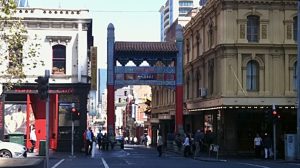
This controversy also provides an opportunity to reconsider the future of Melbourne’s Chinatown.
Today’s Chinatown simultaneously reflects the legacy of nineteenth-century Chinese gold miners, the survival of the Chinese community under the White Australia Policy, the achievements of multiculturalism, and the cultural life of newer generations of migrants.
It is an evolving place. For that reason, public space is no less important than buildings themselves. A larger museum can preserve more historical artefacts. A genuine public square preserves living cultural practice. The two should complement, rather than compete with, one another.
If an expanded museum could integrate more effectively with Cohen Place—making the square more attractive, improving its suitability for public events, further enhancing the prominence of the Sun Yat-sen memorial, and improving the overall public environment—it would undoubtedly represent a win-win outcome.
However, if expansion comes at the cost of the square gradually losing its original public function, then even if the physical space remains, its role as a place of shared public memory may fundamentally change.
This reflects the distinction that contemporary planning scholars often make between space and place. Space can be measured. Place is created through shared use, shared experience and shared memory. What deserves protection is often not simply the space itself, but the place it has become.
The real test of a multicultural city
Ultimately, the significance of this debate extends far beyond a statue or a museum expansion. It raises a deeper question about how Melbourne understands the multicultural identity that it has long celebrated.
Multiculturalism is not simply about allowing different cultures to coexist, nor is it limited to organising cultural festivals or commissioning public art. More fundamentally, it asks whether different cultural communities are genuinely included when decisions about the public interest are made, and whether they can participate in shaping the future of shared public spaces.
This is why the editorial team at Sameway recently proposed the concept of intercultural democracy. Democracy should not stop at procedural equality. It should ensure that different cultural communities are visible, heard, and able to participate meaningfully in the formation of public decisions.
If a city truly embraces multiculturalism, then the government should not merely receive community submissions after plans are completed. It should actively facilitate dialogue by systematically involving culturally relevant communities, long-term users of public spaces, and community representatives from the outset. That is precisely what intercultural democracy seeks to achieve.
The broader question, therefore, is whether a multicultural city can establish a more inclusive decision-making process—one in which the future of public spaces is shaped not by a single institution or a single statutory procedure, but collaboratively by government, institutions and the communities who give those places meaning.
If this debate ultimately produces a solution that balances museum development, public space and community memory, its legacy will extend far beyond a construction project. It will represent a more mature and inclusive model of urban governance.