Connect with us

National News

Sydney Harbour Bridge Becomes Site of Gaza Humanitarian Protest

Published

on

On August 3, 2025, over 100,000 people braved wind and rain to participate in the “March for Humanity” across the Sydney Harbour Bridge, showing solidarity with Gaza and calling for an end to the humanitarian crisis. Despite opposition from New South Wales Police and Premier Chris Minns, the Supreme Court ultimately ruled the protest lawful. The demonstration proceeded peacefully without major conflict.

This became one of the largest pro-Palestinian protests in Australian history. Several Labor Party MPs, including former minister Ed Husic, defied internal party pressure to attend. Protesters banged pots and pans to symbolize Gaza’s hunger crisis and strongly condemned the Australian government’s perceived bias toward Israel.

Premier Minns later reaffirmed support for the public’s right to peaceful expression but warned that the Harbour Bridge should not become a free-for-all protest site, emphasizing the need for better planning and coordination. In response to public sentiment, the federal government announced an additional $20 million in humanitarian aid to Gaza, bringing Australia’s total contribution to $130 million.

Continue Reading

Daily News

Communications Minister Faces Criticism Over Series of Taxpayer-Funded Trips
Published

on

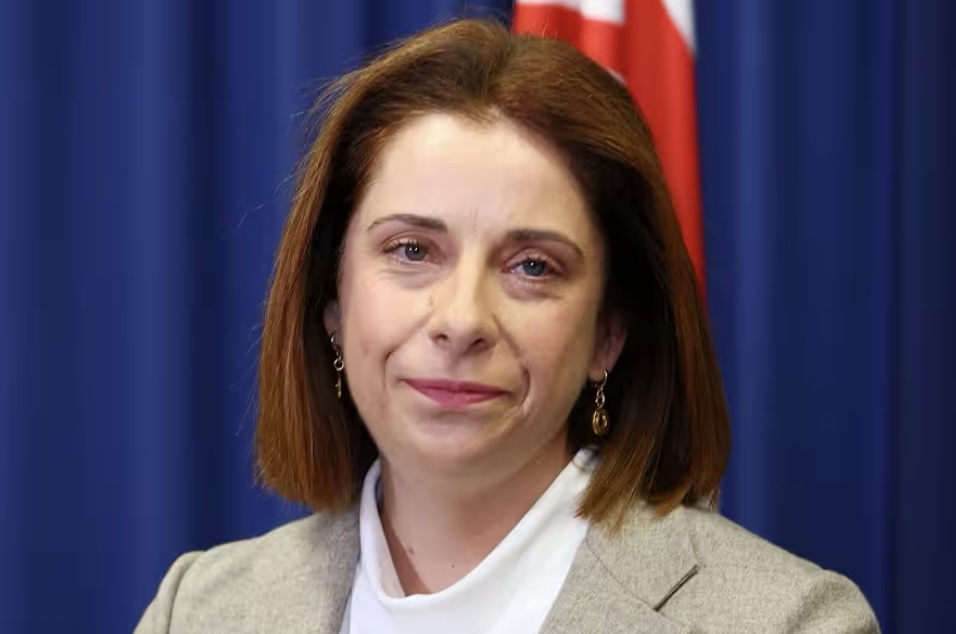
Australia’s Communications Minister Anika Wells has come under fire for a series of trips funded by public money, the latest controversy involving a June visit to the Thredbo ski resort where nearly AUD 3,000 of taxpayer funds were used to cover travel for her husband and child.

Documents show that Wells stayed at local resort facilities during peak ski season and had the costs reimbursed under the guise of official business. Her office emphasized that the trip was part of ministerial duties, including meetings with sports industry representatives, local organizations, and policy discussions related to departmental work. However, several opposition MPs questioned whether the itinerary overlapped with recreational skiing and accused the Labor government of using public funds for an unnecessary “luxury getaway.”

The scrutiny also extended to Wells’ other expenses, including using entitlements to bring family members to the Melbourne F1 Grand Prix, attending a meeting in Adelaide coinciding with a friend’s birthday, and spending nearly AUD 100,000 on flights for herself and two staff members to New York.

In response, the Labor government defended Wells. Prime Minister Anthony Albanese stressed that the trip “fully complied with the rules” and had been appropriately reported by the minister’s office, with no breach of reimbursement guidelines. The government also highlighted that the locations were recommended by relevant departments and represented important hubs for local sports and community activities. Wells’ official itinerary included meetings with sports organizations and discussions on winter sports policy.

Under the Independent Parliamentary Expenses Authority (IPEA) regulations, MPs may claim family travel expenses while performing official duties to help maintain family life, provided the primary purpose of the trip is ministerial business and aligns with the public interest.

Commentary:

Against the backdrop of rising living costs and growing pressure on the Labor Party, a minister using taxpayers’ money to take family members to a ski resort during peak season is inevitably seen as out of touch with ordinary citizens. Even if the trip complies with regulations, public perception may lean toward unfairness, particularly since skiing is a high-end leisure activity, making it more likely to provoke resentment. This scenario undoubtedly undermines Labor’s public image and trust, giving the opposition a long-term point of attack.

The episode also serves as a reminder to government officials that compliance with rules is not enough; transparency and sensitivity to public concerns are essential. Failing to address such perceptions can have a lasting impact on political credibility, emphasizing the need for careful management of taxpayer-funded activities to maintain public confidence.

Continue Reading

Daily News

Federal Government to End Electricity Bill Subsidy by Month’s End

Published

on

The federal government has announced that its electricity bill subsidy for households will not be extended into next year and will end as originally planned at the end of this month. Treasurer Jim Chalmers stated that the $75 quarterly discount for all households will cease, describing the decision as a “hard” one made by the cabinet in light of “budgetary pressures.” Chalmers emphasized that the subsidy was never intended to be a permanent budget measure and that the government would shift to “long-term support,” such as tax cuts, to help households cope with living costs.

The subsidy, which began in mid-2023, was applied directly to electricity bills and complemented by state and territory government assistance. Some small businesses were also eligible. Initially funded for one year, the program was twice extended due to persistently high cost-of-living pressures. Although there had been speculation about a further extension, Chalmers said moving toward long-term measures was the more appropriate approach.

The announcement comes as the Reserve Bank of Australia (RBA) holds its final monetary policy meeting of the year, with markets widely expecting interest rates to remain unchanged. Core inflation recently fell to 3.3%, still above the central bank’s preferred 2–3% range. Chalmers noted that government tax cuts could reduce the average taxpayer’s weekly burden by around AUD 50, but cautioned that inflation, global economic conditions, and other spending pressures require careful budget management.

Rising energy costs were a significant contributor to high inflation in 2022 and 2023. The first round of electricity bill relief was introduced just ahead of a sharp price spike in July 2023. Statistics show that without the subsidy, prices would have risen 19.2%, whereas with the subsidy, the increase was limited to 6%. The program effectively dampened headline inflation, but with both federal and state subsidies ending, households will continue to face elevated electricity bills.

Commentary:

Over the past two years, the subsidy provided direct relief during periods of high living costs, helping ease household burdens and stabilize inflation in the short term. However, its temporary nature highlights that one-off subsidies cannot resolve underlying structural economic pressures.

Shifting to long-term measures such as tax cuts may boost disposable income, but it cannot immediately offset the impact of high electricity and energy costs on low- and middle-income households. For many families, electricity expenses still account for a significant portion of their daily budgets, and the removal of the subsidy may exacerbate financial stress. The government must ensure that follow-up measures effectively address the real cost-of-living needs of citizens while closely monitoring energy prices and inflation trends. Otherwise, household anxiety over rising living costs is likely to persist.

Continue Reading

Daily News

NDIS Plans to Be Computer-Generated
Published

on

Australia’s National Disability Insurance Scheme (NDIS) will undergo major reforms in mid-2026, with participants’ funding packages and support plans to be generated by computer programs, leaving staff with no discretion to alter them.

The new model, known as the I-CAN Planning Tool (Instrument for Classification and Assessment of Support Needs, Version 6.0), was developed by the University of Melbourne and the Centre for Disability Studies, and has been used in Australia’s disability sector for the past 20 years. The National Disability Insurance Agency (NDIA) says the tool will improve plan consistency, reduce human error, and cut the cost and time participants spend gathering medical evidence.

Under the new system, the Administrative Review Tribunal (ART) will no longer be able to directly amend plans; instead, it can only send a plan back to the NDIA for reassessment. Assessors will be Level 6 employees in the Australian Public Service. Initially, assessors will be hired internally by the NDIA, and although backgrounds in allied health or lived disability experience will be considered an advantage, they are not required.

The new assessment process includes a semi-structured conversational interview and a questionnaire. When needed, targeted specialist assessments will be conducted—for example, for home modifications, assistive technology, or hospitalisation/compensation-related factors. The NDIA says delegates will be responsible for confirming whether the computer-generated plan meets a participant’s needs.

The reform will significantly reduce human involvement in plan creation and will change the appeals process. The NDIA emphasises that participants can still request a reassessment, and if they remain dissatisfied, they may appeal to the ART. However, third parties will not be allowed to intervene in the assessment process.

Continue Reading

Trending