Connect with us

Lifestyle

Celebrate Mother’s Day 2025 (Around the World)

Published

on

Mother’s Day, also known in some places as Mothering Sunday, is a special time each year to honour and appreciate mothers and those who play a motherly role in our lives. These figures can include grandmothers, aunties, older sisters, carers, guardians, and others who provide love, care, and support. Celebrated in more than 40 countries, Mother’s Day brings families together through a wide variety of customs and heartfelt traditions from all over the world.

Here are 10 different ways Mother’s Day is celebrated around the world, highlighting the diversity of traditions across cultures:

  • China 🇨🇳

    • When: Second Sunday in May (same as many Western countries)

    • Tradition:
      Mother’s Day (母亲节) is not a traditional Chinese festival, but it has grown in popularity, especially in urban areas. Children often give flowers (especially carnations or lilies), write heartfelt messages, or treat their mothers to meals or gifts.

    In recent years, there has also been a growing cultural blend — for example:

    • Schools may organize Mother’s Day card-making or writing activities.

    • Online and in-store promotions boom around this time, with special sales targeting Mother’s Day gifts.

    • Some people connect it with traditional values of filial piety (孝顺), emphasizing respect and gratitude toward parents.


  • Middle Eastern Countries (e.g., Egypt, Lebanon, Jordan, UAE, Saudi Arabia)

    • When: March 21 (the first day of spring)

    • Tradition:
      Mother’s Day in much of the Arab world was introduced by Egyptian journalist Mustafa Amin in the 1950s and has since become widely adopted across the region.

      Common customs include:

      • Giving mothers flowers, heartfelt cards, and thoughtful gifts

      • Children (young and adult) expressing appreciation through poetry, songs, or visits

      • Radio and TV programs often feature special Mother’s Day segments

      • Schools and communities may host celebrations to honour mothers

      • Public and commercial spaces promote the day with special offers and tributes

    Though it’s a modern holiday, it aligns well with Islamic and cultural values of honouring one’s parents, particularly mothers — which is emphasized in the Quran and Hadith.


  • Japan 🇯🇵

    • When: Second Sunday in May

    • Tradition: Children often draw pictures of their mothers and give red or pink carnations as symbols of love and gratitude. Homemade gifts and food are common too.


  • Ethiopia 🇪🇹

    • When: During the Antrosht festival (usually in autumn, after the rainy season)

    • Tradition: Families gather for a multi-day feast. Daughters bring vegetables and cheese; sons bring meat. Singing, dancing, and storytelling are key parts of the celebration.


  • Mexico 🇲🇽

    • When: May 10 (fixed date)

    • Tradition: Known as Día de las Madres, it includes music, church services, and family meals. Children often serenade their mothers with the song “Las Mañanitas” early in the morning.


  • Thailand 🇹🇭

    • When: August 12 (the birthday of Queen Sirikit)

    • Tradition: Celebrations include ceremonies, candlelight processions, and giving jasmine flowers, a symbol of maternal love and purity.


  • India 🇮🇳

    • When: Second Sunday in May (Western-style observance)

    • Tradition: While modern Mother’s Day is gaining popularity in urban areas, many Indian families also honour mothers during Hindu festivals like Durga Puja, which celebrates divine motherhood.


  • France 🇫🇷

    • When: Last Sunday of May (or first Sunday of June if Pentecost falls on the same day)

    • Tradition: Children often give their mothers handmade gifts, flowers, and recite poems. Family meals are a central part of the day.


  • Nigeria 🇳🇬

    • When: Fourth Sunday in Lent (similar to UK’s Mothering Sunday)

    • Tradition: In Christian communities, special church services are held. Gifts, food, and heartfelt messages are shared among families.


The Story of Mother’s Day in Australia

Australia’s first official Mother’s Day was marked in 1924, thanks to Janet Heyden, a compassionate woman from Sydney. While visiting a friend at Newington State Hospital, she noticed many older women who were lonely and without family. Some had lost loved ones during World War I, while others never had the chance to build families of their own. Moved by their stories, Janet organised for schools and local businesses to donate small gifts to these women.

This thoughtful gesture grew into an annual tradition. Over time, giving cards, flowers, and gifts became part of how Australians show gratitude to mums and mother figures. Today, Mother’s Day is not just about biological mothers—it’s about appreciating anyone who has nurtured, supported, or guided us like a mother would.

Ways to Celebrate Mother’s Day in 2025

There are many meaningful ways to show your appreciation to the maternal figures in your life. Here are some simple and thoughtful ideas:

Bring your mum or mother figure breakfast in bed.
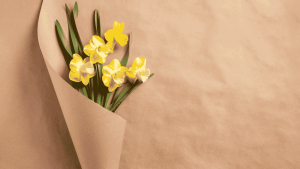
 

Craft handmade paper daffodils to brighten her day.
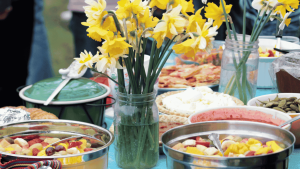
 

Organise a meal or picnic with her favourite foods.


Make or buy a heartfelt card and a small gift.


Spend quality time together—bake, watch a movie, or enjoy a game.


Remember, Mother’s Day is also a wonderful time to honour stepmums, mothers-in-law, grandmothers, and any caring individual who has offered motherly support. Whether through small acts of kindness or heartfelt conversations, it’s a chance to say “thank you” to those who make a difference in our lives.

Continue Reading

Bridging Parenting

Bridging Parenting #2: Eating Is More Than Just Getting Full — When Grandparents Want to Feed and Parents Want to Let Go, What Are We Really Arguing About?

Published

on

Chloe Wong

“Maybe I should feed him. Look how slowly he’s eating.”
“If we don’t help him now, the food will go cold.”
At the table, Grandma picks up the spoon, her voice edged with worry.
Mum stands nearby, frowning slightly. “But I want him to feed himself… the teacher said we should build independence.”
In the middle sits the child — one bite still hovering in the air, rice already scattered across the floor.
For many families, especially immigrant households, this scene feels all too familiar.
On one side, grandparents worry the child won’t eat enough.
On the other, parents worry the child won’t learn enough.
And so, the dinner table becomes one of the most common battlegrounds between generations.
Two Generations, Two Different Fears
For many grandparents, feeding is an act of love.
They grew up in times when food was not always abundant. To be full was not a given. A child who eats well and eats enough is a child who is cared for. Slow eating and food dropped on the floor are not signs of learning — they look like waste.
For today’s parents, however, mealtime has become more than nutrition. It is about independence, attention, hand–eye coordination, and even confidence.
One generation focuses on the outcome.
The other values the process.
One fears hunger.
The other fears missed opportunities for growth.
They may seem opposed, but both are acting from love.
The Hidden Framework Behind Feeding: Division of Responsibility
In feeding therapy, there is a widely used concept called the Division of Responsibility, developed by feeding therapist Ellyn Satter.
The idea is simple but powerful:
Adults are responsible for providing.
Children are responsible for deciding.
In practical terms:
•Adults decide when food is offered, what is served, and where meals happen.
•Children decide whether to eat, how much to eat, and how fast to eat.
This is not permissiveness. It is about returning hunger and fullness cues to the child.
When children are allowed to make these small decisions, they gradually build body awareness and trust in themselves.
Why Constant Feeding Can Undermine Learning
From a developmental perspective, children are born with the capacity for self-regulation. They know when they are hungry. They know when they are full.
But self-regulation is a skill — and skills require practice.
When a child is consistently fed by an adult, they lose opportunities to notice and respond to their own internal signals. Over time, decisions like “Am I still hungry?” or “Do I want another bite?” shift from the child to the adult.
Independence is often taken away not in dramatic moments, but in these small, repeated choices.
Slow, Messy, and Food on the Floor — This Is What Learning Looks Like
Many parents struggle most with the mess.
But eating is a highly integrated skill. It requires:
•fine motor control
•oral sensory processing
•visual–motor coordination
•sustained attention
Learning rarely looks neat.
The rice on the floor is not failure. It is evidence of attempt, adjustment, and retrying.
If every spill is met with immediate intervention, the learning process is interrupted before it has time to consolidate.
Letting Go Doesn’t Mean Doing Nothing
Encouraging independence does not mean total withdrawal.
Many families feel stuck between two extremes:
If we don’t feed, will the child eat enough?
If we do feed, will they ever learn?
There is a gentler middle path.
Instead of focusing on the result of one meal, think in terms of a developmental process.
•Start by modelling — eat slowly and visibly.
•Then eat together, offering support (steadying the bowl rather than placing food into the mouth).
•Gradually step back and allow the child to attempt a few bites independently.
•If intake is genuinely low, consider topping up after the meal rather than interrupting the learning process mid-way.
In this way, the child does not go hungry — and does not lose the opportunity to practise.
Walking With Grandparents, Not Against Them
In many immigrant families, the real difficulty is not the method — it is the relationship.
For many elders, feeding is love.
If we dismiss feeding outright, what they often hear is: Your way of loving is wrong.
Instead of saying, “You shouldn’t feed him like that,”
try, “Let’s let him try on his own for a little while. Could you sit with him and keep him company?”
When grandparents understand that they are not being excluded, but included in a different role, collaboration becomes much easier.
A Therapist — and a Mum
As a speech pathologist, I understand the theory.
As a mother, I have felt the doubt.
When my daughter first started feeding herself, the floor was always a disaster zone. Family members asked, “Aren’t you worried she’s not eating enough?”
I wondered too.
But I chose to sit with her and let her try — bite by bite. Sometimes I helped. Sometimes I held back.
Over time, she improved. One day she proudly declared, “I can do it myself!”
That confidence did not come from being hurried.
It came from being trusted.
In Closing
For children, eating is not just about nutrition.
It is about confidence, attention, and self-management.
For adults, the real challenge is rarely whether the child can eat —
it is whether we can tolerate the discomfort between caring and letting go.
Grandparents feed out of love.
Parents step back out of love.
When we slow down our urgency for quick results, children often move further in the long run.
Because true independence is not forced into existence.
It grows — slowly, steadily — in the presence of patient support.
—-
About the Author
Chloe Wong
Chloe Wong is an immigrant mother and speech pathologist based in Melbourne. She is the founder of Blackburn Speech & Paediatric Therapy, a bilingual multidisciplinary clinic supporting children and families from culturally and linguistically diverse backgrounds.
Having worked closely with immigrant families for many years, Chloe believes that while grandparents and parents may differ in approach, their intention is the same — to give the next generation a better life.
Through this column, she brings together research-informed insights and practical strategies to build bridges between generations, helping love translate into meaningful, effective support for children.
Follow her on Instagram: @phd.speechie.mum

Continue Reading

Bridging Parenting

Bridging Parenting #1: Love Does Not Spoil a Child

Published

on

Chloe Wong

When Your Baby Cries, Should You Pick Them Up — or Let Them Cry a Little?

“Don’t pick him up every time he cries. He’ll get clingy.”
A grandmother once said this to me in the clinic, her voice full of conviction.
Sitting beside her, the mother looked conflicted.
“But the books say we should respond immediately… Should I not let him cry at all?”
I smiled gently.
I have heard this conversation countless times.
To the older generation, letting a baby cry for a while was not considered harmful.
“Let him cry — it strengthens the lungs.”
“If you carry him too much, how will he learn to be independent?”
But for many new parents, the struggle feels different.
They find themselves caught between anxiety and guilt.
Should I pick him up?
Should I wait?
Am I being too soft — or too harsh?
It can feel like two generations standing on opposite ends of a scale.
Yet deep down, they want the same thing —
a child who grows up healthy, resilient, and stronger than they were.

The Wisdom of the Previous Generation: A Choice Shaped by Reality
When we look back at our parents’ and grandparents’ generation, life was not easy.
Adults worked long hours.
They managed households.
They often cared for multiple children at once.
Responding to every cry simply wasn’t realistic.
So “he’ll stop crying eventually” and “don’t carry him too much” became practical parenting strategies.
It was not coldness.
It was survival wisdom under limited resources.

What Research Has Helped Us Understand
In recent decades, child development research has given us a deeper understanding of what crying means.
A baby’s cry is not manipulation.
It is not attention-seeking.
It is not “being spoiled.”
It is their only language.
I’m hungry.
I’m scared.
I’m uncomfortable.
I need you.
When these signals repeatedly go unanswered, a baby’s brain can remain in a heightened state of stress and alertness.
But when a baby learns,
“When I cry, someone comes,”
the world begins to feel safe.
And when the world feels safe, a child dares to explore it.
In other words:
Children who are gently responded to are often more independent — not less.
Security is the foundation of independence.

The Circle of Security: Holding On and Letting Go
In my clinical work, I often share a simple but powerful concept with parents: the Circle of Security.
It describes the parent-child relationship as a circle.
At the top of the circle, the child moves out to explore — to play, to try, to fall, to experiment.
At the bottom of the circle, the child returns — tired, frightened, or overwhelmed — seeking comfort and reassurance.
Throughout the day, children move back and forth between these two positions.
The role of the adult is not to push the child further than they are ready to go,
nor to hold them so tightly that they cannot explore.
Our role is to be the person who:
Holds them when they need holding,
and lets go when they are ready to go.
When a baby cries, they are often returning to the bottom of the circle.
Responding to that cry is not spoiling them.
It is strengthening the base from which independence grows.

Does That Mean We Must Pick Them Up Every Time?
At this point, many parents feel even more confused.
Does secure attachment mean I must pick up my baby every single time they cry?
Not necessarily.
The Circle of Security emphasises emotional availability, not mechanical reactions.
What children need is not to be constantly held.
What they need is the certainty that:
“When I turn back, you will be there.”
Some cries signal fear, pain, or separation anxiety — these are clear bids for connection. A hug and soothing are appropriate.
Other cries may come from small frustrations — a block tower falling, a toy out of reach. In those moments, instead of immediately rescuing, we might kneel beside them and encourage them to try again.
Still others may be protests against boundaries — not wanting to change a diaper, not wanting to stop playing. These moments require calm, steady presence and clear limits, not necessarily physical comfort.
Sometimes, stepping closer, kneeling to their eye level, and saying, “I’m here,” is enough.
Sometimes a gentle touch on the back is sufficient.
Sometimes pausing for a few seconds allows the child to regulate on their own.
Responding does not always mean picking up.
It means staying connected.

My Personal Reflection
This reminds me of my own daughter.
Before she turned three, she was very attached to me.
If I walked just a few steps away, she would cry.
Someone once joked, “That’s because you carry her too much.”
For a brief moment, I doubted myself.
But I continued to kneel down, hold her, and say softly, “Mama is here.”
Gradually, something shifted.
She began to run off to play on her own.
She explored independently.
Sometimes she would even tell me, “Mama, you sit here and wait for me.”
That was when I understood —
A child who has been held enough is the one who walks the furthest.

In Closing
As immigrant families, we often carry two things at once:
The wisdom of our elders
and the insights of modern research.
These do not have to be in conflict.
Our parents and grandparents offer us experience.
We bring new understanding.
Together, they form a fuller kind of love.
We do not need to be perfect parents.
We only need to be the kind of adults who:
Hold our children when they need holding,
and let go when they are ready to go.
Because love does not spoil a child.
Security helps them grow.

About the Author
Chloe Wong

Chloe Wong is an immigrant mother and speech pathologist based in Melbourne. She is the founder of Blackburn Speech & Paediatric Therapy, a bilingual multidisciplinary clinic supporting children and families from culturally and linguistically diverse backgrounds.

Having worked closely with immigrant families for many years, Chloe believes that while grandparents and parents may differ in approach, their intention is the same — to give the next generation a better life.

Through this column, she brings together research-informed insights and practical strategies to build bridges between generations, helping love translate into meaningful, effective support for children.

Follow her on Instagram: @phd.speechie.mum 

Continue Reading

Lifestyle

Melbourne’s Best Autumn Walks

Published

on

Summer may be officially over, but autumn brings its own magic — golden sunshine, crisp air, and vibrant leaves. It’s the perfect time to rug up, head outside, and explore the city’s most scenic strolls.


Carlton Gardens


As autumn sets in, the Royal Exhibition Building is framed by a canopy of warm-toned leaves. Visit at sunset for a rose-gold glow and stop by the Hochgurtel Fountain — a peaceful place to pause, whatever the weather. Afterwards, take a short walk to nearby Lygon Street for a cosy Italian meal or coffee.


Fitzroy Gardens

Tucked on the edge of the CBD, Fitzroy Gardens offers a tranquil escape with tree-lined paths and ornamental ponds that glisten under autumn light. Wander through fern gully and under avenues of elms before grabbing a feel-good coffee at KereKere Green.


Treasury Gardens


This serene park contrasts evergreen conifers with golden oak leaves drifting to the ground. It’s a great place to unwind or people-watch — especially near the Parliament precinct. As night falls, keep an eye out for the resident possums that come out to play.


Royal Botanic Gardens Victoria


A must for any nature lover, the Royal Botanic Gardens explode with autumn colour. Meander through groves of deciduous trees, crunch through piles of fallen leaves, and loop around the ornamental lake for ever-changing views. Don’t miss the arid garden and the dramatic contours of Guilfoyle’s Volcano.

Continue Reading

Trending