Connect with us

Daily News

“Bitcoin Queen” Jailed for 11 Years in UK’s Largest-Ever Money Laundering Case

Published

on

Chinese national Qian Zhimin, dubbed the “Bitcoin Queen,” has been sentenced to 11 years and 8 months in prison by a UK court for orchestrating a massive international Ponzi scheme and laundering billions through cryptocurrency. The case is regarded as one of the largest money-laundering and crypto seizure operations in British history.

Prosecutors said that between 2014 and 2017, Qian masterminded an investment fraud in China involving around 128,000 investors and a total of 40 billion yuan (≈£4.3 billion), embezzling over 6 billion yuan. After the scheme collapsed, she fled China in 2017, traveling through several Southeast Asian countries before entering the UK under a false passport and assuming the alias “Zhang Yadi.”

Once in London, Qian allegedly laundered her illicit gains through Bitcoin, converting stolen funds into cryptocurrency before purchasing luxury goods, jewelry, and properties. A 2018 police raid uncovered over 61,000 bitcoins, then valued at about £300 million, which have since risen in value to nearly £5 billion. Authorities also seized gold, cash, and crypto hardware devices.

Judge Sally-Ann Hales described Qian as “the architect and driving force of the entire criminal enterprise,” adding that her actions were “motivated purely by greed.”

Qian initially claimed political persecution by the Chinese government but later pleaded guilty in September to charges of possessing and transferring criminal proceeds. The UK Crown Prosecution Service has launched civil proceedings to use the seized bitcoins for victim compensation, though the final valuation and distribution will depend on future court rulings due to cryptocurrency price volatility.

Continue Reading

Daily News

Victorian Government Issues Historic Apology to Indigenous Peoples
Published

on

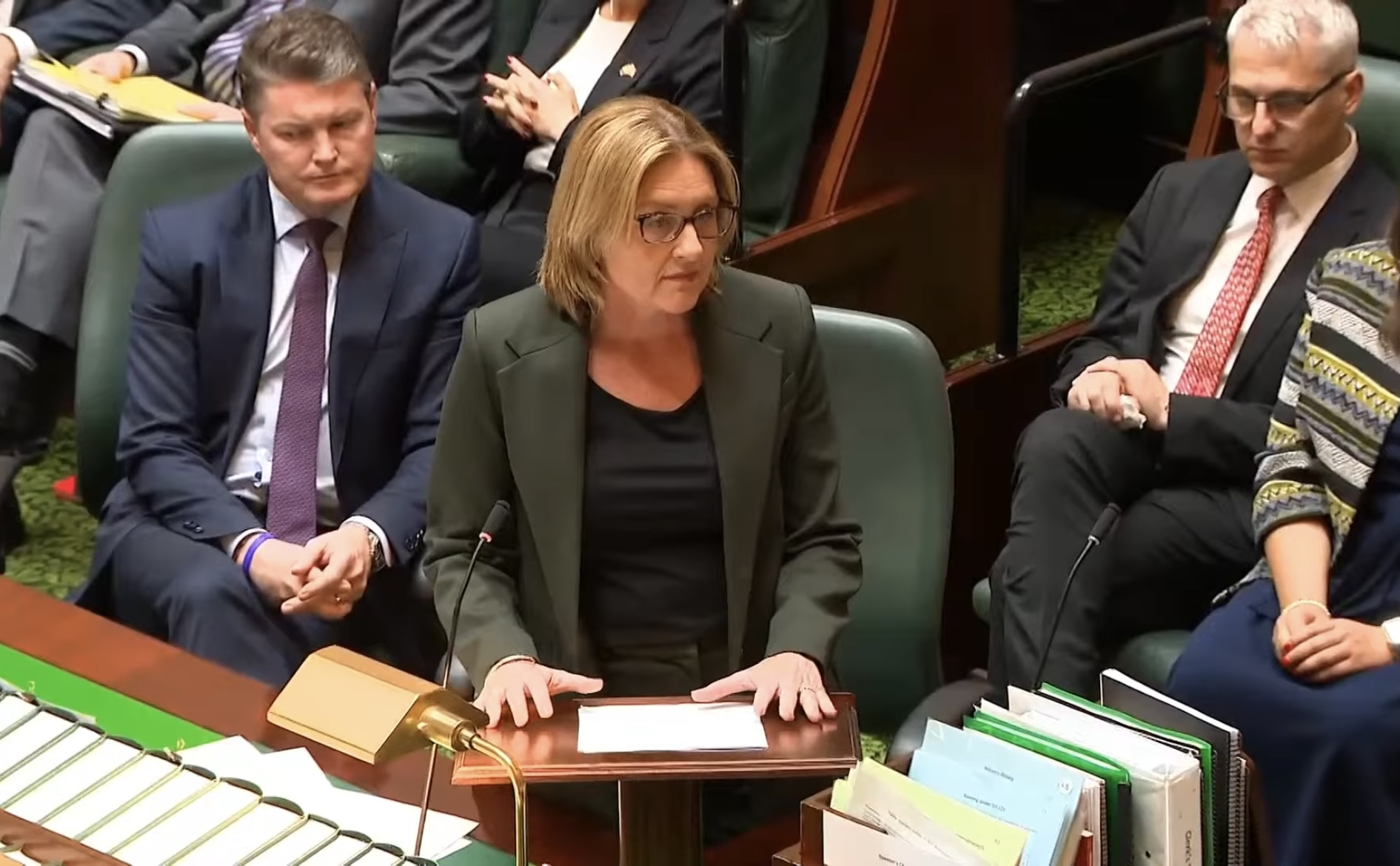
The Victorian Government today delivered a historic apology to the state’s Indigenous peoples during a special parliamentary session, marking one of the first public actions following the formal signing and legislative enactment of the state-level treaty agreement last month.

The apology forms a central component of the treaty negotiations, aiming to acknowledge the systemic injustices inflicted on Indigenous communities by the state government through laws, policies, and institutional practices, including violence, land dispossession, exclusion, and discrimination. The First Peoples’ Assembly of Victoria emphasized that the government must confront “the profound harms caused by colonialism and the state government, both past and present,” describing the moment as a significant step toward rebuilding relationships.

The treaty agreement notes that the apology is not intended to assign blame but to recognize the ongoing effects of historical injustices and to choose a path forward. The agreement, shaped through nearly a decade of consultation, positions Victoria at the forefront of national treaty and truth-seeking initiatives. The apology also implements recommendations from the Yoorrook Justice Commission, which, during its four-year truth investigation, received formal apologies from more than ten state officials and ministers.

However, the move has not secured cross-party support. The Victorian opposition criticized the inclusion of treaty language in the apology and reiterated that it would repeal the relevant legislation if in government. Opposition leader Jess Wilson, in a letter to the Premier, stressed that the disagreement lies in the policy methods for closing the gap rather than the goal itself, and expressed a willingness to seek mutually acceptable wording to gain bipartisan support.

Commentary:

Victoria’s historic apology represents not only a key component of the treaty agreement but also a pivotal moment for Indigenous justice and reconciliation in Australia. For Indigenous communities, the apology cannot erase historical pain, but it symbolizes the government’s willingness to assume responsibility, acknowledge systemic trauma, and lay the groundwork for rebuilding relationships—a necessary and long-overdue step for groups who have endured over two centuries of colonial oppression.

However, the opposition’s insistence on removing treaty references from the text highlights a deeper resistance to the treaty framework itself, rather than a mere dispute over wording. While the opposition frames the disagreement as one of policy approach rather than intent, this stance may impose significant political pressure on the future reconciliation process, potentially complicating efforts to achieve meaningful bipartisan support for ongoing treaty implementation.

Continue Reading

Daily News

Australia and U.S. Finalize Expanded U.S. Military Presence and Base Upgrade Plan
Published

on

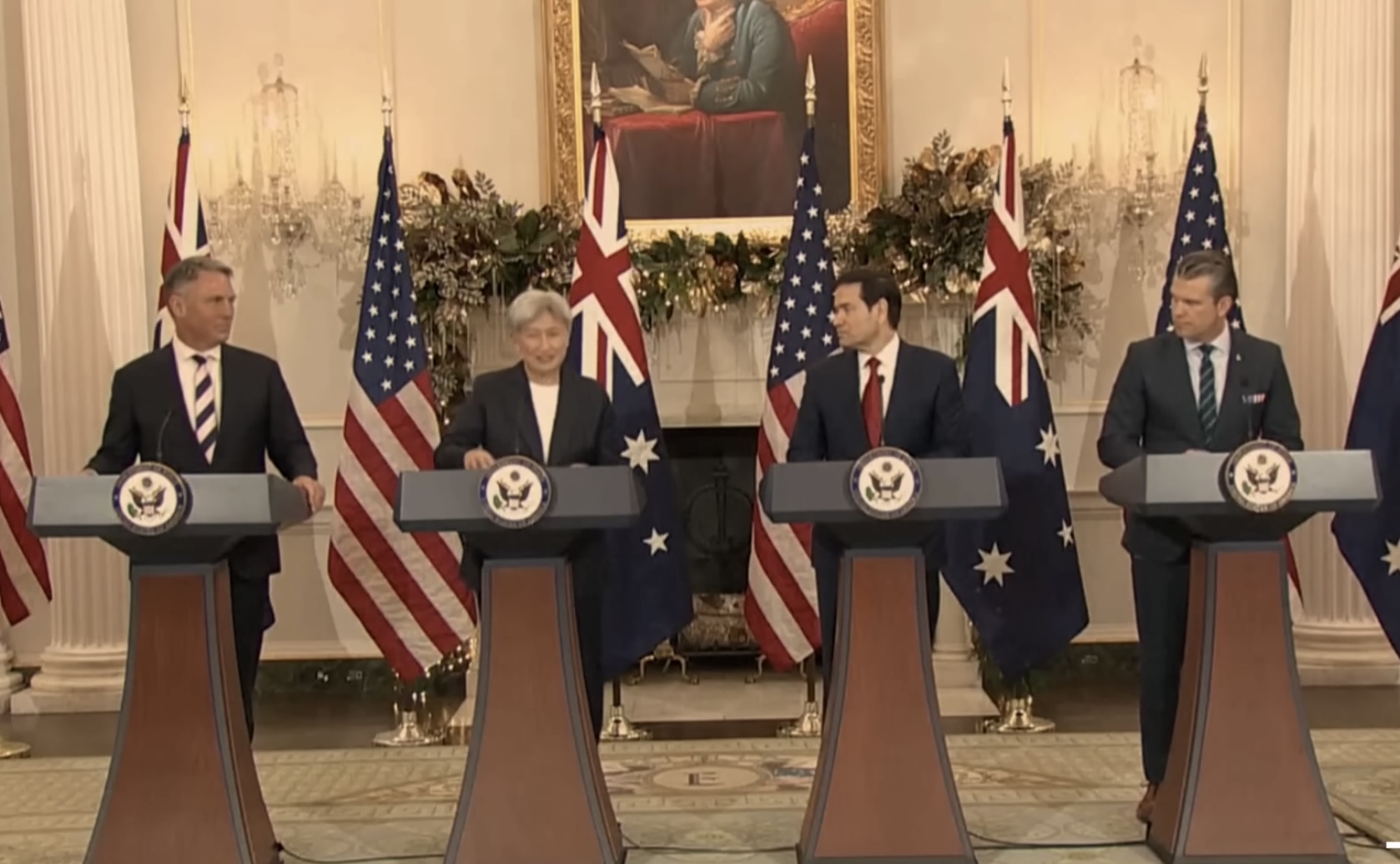
Australian Foreign Minister Penny Wong and Defense Minister Richard Marles attended the annual Australia–U.S. Ministerial (AUSMIN) talks in Washington on Monday, meeting with U.S. Secretary of State Marco Rubio and Secretary of Defense Pete Hegseth to discuss strengthening bilateral defense cooperation following the latest review of the AUKUS agreement. While the U.S. confirmed the review report has been completed, neither side has disclosed its contents.

Marles stated after the meeting that the review focused on “how to make AUKUS work better,” but he refrained from revealing details out of respect for U.S.-led leadership of the review. He also did not confirm whether the U.S. had requested Australia to further increase its defense budget.

AUKUS consists of two main pillars: the first is submarine cooperation, which includes Australia purchasing at least three Virginia-class nuclear-powered submarines from the U.S. in the 2030s and subsequently building its own “AUKUS-class” submarines; the second covers advanced military technology collaboration, such as hypersonic weapons, artificial intelligence, quantum technology, and intelligence sharing.

The U.S. Trump administration has recently taken a tougher stance, demanding allies increase defense spending. The White House’s latest national security strategy emphasizes maintaining “a firm expectation for higher defense expenditure” in dealings with Australia. Marles highlighted that Australia has implemented its largest peacetime defense budget increase and that the U.S. is “fully aware” of Australia’s position.

A joint statement following the talks showed that both sides agreed to expand the U.S. military presence in Australia. This includes upgrading air bases in Queensland and the Northern Territory to accommodate more rotating U.S. bombers and fighter jets, increasing reconnaissance and intelligence aircraft deployments, and pre-positioning substantial U.S. military assets, including MV-22 Osprey aircraft used by the Marine Corps. The two countries will also establish an “Oversight and Support Group” to coordinate U.S. troop activities in Australia.

Commentary:

The increased U.S. military presence in Australia raises the country’s strategic profile but also fuels domestic debate over sovereignty and long-term reliance. First, the U.S. expectation for allies to raise defense spending is increasingly explicit. While Australia has significantly boosted its defense budget, the high cost of nuclear submarines and domestic fiscal pressures may make it uncertain whether Australia can continuously meet U.S. expectations.

Second, while expanded deployments and base upgrades enhance Australia’s security in the Indo-Pacific for supporters, critics may question whether the country is moving toward a “quasi-host nation” role, tying its defense policy more closely to Washington’s strategy.

Nonetheless, from a geopolitical perspective, Australia has little leeway to ignore AUKUS. Rising Chinese influence and increasing tensions in the Indo-Pacific make the Australia-U.S. alliance increasingly crucial for Canberra.

Continue Reading

Daily News

7.5-Magnitude Earthquake Strikes Off Northeastern Coast of Japan

Published

on

A 7.5-magnitude earthquake struck off the northeastern coast of Japan late Monday night local time, prompting the Japan Meteorological Agency (JMA) to issue a tsunami warning for parts of Hokkaido, Aomori, and Iwate prefectures and order approximately 90,000 residents to evacuate. The quake occurred at 11:15 p.m., with its epicenter about 80 kilometers offshore of Aomori Prefecture at a depth of 54 kilometers.

The JMA initially predicted a tsunami height of up to three meters, while multiple ports recorded waves between 20 and 70 centimeters. By early Tuesday morning, the warning was downgraded to an advisory, indicating reduced wave heights and lower flooding risk. In Hachinohe City, Aomori, the quake registered a “strong 6” on Japan’s seismic intensity scale—strong enough to make standing or walking impossible, requiring residents to crawl to move.

As of 2 a.m., Japan’s public broadcaster NHK reported no major structural damage, with only several people in Hachinohe hospitalized for injuries. Prime Minister Sanae Takaichi confirmed at least seven people had been injured. Multiple nuclear power plants, including Tomari (Hokkaido), Higashidori (Aomori), Onagawa (Miyagi), and Fukushima Daiichi, reported no abnormalities.

Japan, located along the “Ring of Fire,” is among the world’s most seismically active countries, with roughly 20% of magnitude-6 or higher quakes occurring there. The Tohoku region previously experienced one of modern history’s deadliest disasters in March 2011, when a 9.0-magnitude quake and resulting tsunami killed nearly 20,000 people.

Commentary:

Japan’s frequent exposure to earthquakes has led to a highly developed disaster-prevention system, considered a global model. In this latest quake, the rapid tsunami warnings, immediate evacuations, and quick nuclear safety inspections reflect Japan’s preparedness in systems, infrastructure, and public awareness.

Other countries can learn from Japan’s three key disaster-prevention practices: first, a rapid and precise alert system that uses TV, mobile phones, and radio to issue warnings before shaking reaches the area; second, institutionalized evacuation procedures, with schools, businesses, and communities conducting regular drills to ensure residents know escape routes and evacuate promptly; third, reinforced buildings and infrastructure, including earthquake-resistant structures and automatic shutdown systems at nuclear plants. While disasters cannot be prevented, thorough preparation can significantly reduce harm.

Continue Reading

Trending