Features
Examining Freedom of Speech in Hong Kong Through the Jimmy Lai Case
Published
4 hours agoon

Jimmy Lai, the founder of Apple Daily, endured 156 days of trial under the National Security Law and was preliminarily convicted on December 15, 2025, on multiple charges, including collusion with foreign forces, publishing seditious material, and other conspiracy-related offenses.
The formal sentencing hearing will not take place until January 12, 2026, to determine the length of his imprisonment. Nevertheless, this verdict sends an undeniable signal and warning to Hong Kong residents: freedom of speech in Hong Kong is running out of time.
Freedom of Speech Is Not What It Used to Be
Since Hong Kong’s handover, the SAR government has retained much of the administrative culture and governance practices from the British colonial period. Before the enactment of the National Security Law, freedom of speech in Hong Kong was relatively broad. Media outlets could openly criticize officials, question policies, and publish investigative reports without immediate legal repercussions. Newspapers like Apple Daily thrived on sharp political commentary and incisive editorials; civil society and protest activities also operated within a certain degree of freedom.
Of course, freedom of speech was never absolute. Citizens still had to avoid baseless defamation or personal attacks. Overall, Hong Kong possessed a culture of debate, satire, and investigative reporting. Cartoonists could mock leaders, columnists could challenge policy decisions, and social media offered a relatively open platform for political discussion and engagement. Civil society could organize forums and large-scale peaceful marches, such as the 2003 anti-Article 23 protest that attracted 500,000 participants. The judiciary at the time was relatively independent, so criticizing officials or exposing corruption through the press did not automatically constitute a crime.
However, with the case of Jimmy Lai, the closure of Apple Daily in 2021, and the full implementation of the National Security Law, freedom of speech in Hong Kong has steadily declined. Media professionals, activists, and even ordinary citizens have begun to self-censor, and public discourse has visibly contracted. Hong Kong, once willing to expose wrongdoing, criticize the government, and conduct in-depth investigations, now bears little resemblance to its former self.
The Core Issues of Injustice in the Case
Under the forceful implementation of the National Security Law by the central government, the official narrative around Jimmy Lai has been uniform: “Lai sought foreign sanctions and cooperated with anti-China forces abroad,” “foreign powers glorified Lai’s actions in the name of human rights and freedom,” or “freedom of speech cannot override national security.” There is no room for debate. Nobody wants the police knocking on their door, so people naturally turn a blind eye.
But a closer analysis of the case reveals that these statements mask the deeper injustice of the crackdown on freedom of speech in Hong Kong.
First, the so-called “collusion with foreign forces” is extremely broad and vague. What exactly counts as collusion? Does speaking with foreign media qualify? The law does not clearly define the elements of “collusion,” the threshold of intent, or the degree of actual harm, allowing law enforcement and prosecution to rely heavily on after-the-fact interpretation. Ordinary public actions—such as giving interviews to foreign media, contacting overseas politicians or organizations, or calling international attention to Hong Kong’s situation—can now be reclassified as criminal acts. The core principle of the rule of law is predictability; citizens should clearly know what is legal and what is illegal. When legal boundaries are vague, people cannot adjust their behavior in advance to comply with the law, and lawful speech can be criminalized at any time, violating the fundamental judicial principle of nullum crimen sine lege (“no crime without law”).
Second, the case shows that under the National Security Law, the Chief Executive is allowed to freely select pro-Beijing judges and limit jury participation, clearly deviating from Hong Kong’s common law tradition. This blurs the line between the judiciary and the executive in politically sensitive cases. Even if a judge maintains professional integrity, the perception of independence is equally important. When politically sensitive cases are heard by executive-designated judges, defendants and the public naturally question whether the judiciary is free from political pressure. Once judicial credibility is undermined, rulings themselves are difficult to view as fully impartial, creating structural disadvantages for any defendant.
For instance, the judge stated during the trial that Lai “continued despite knowing the legal risks” and “intended to overthrow the Chinese Communist Party,” even declaring him the mastermind behind the entire conspiracy. The judgment described his use of the newspaper and personal influence as a coordinated propaganda campaign aimed at overthrowing the CCP. When the defense argued that Lai’s activities were within the scope of freedom of expression, the judge responded: “Opposing the government itself is not wrong, but if done in certain improper ways, it is wrong.” The judgment further characterized Lai’s actions as “a threat to Hong Kong and national security,” even claiming that he “sacrificed the interests of China and Hong Kong citizens.” Such politically charged language links speech directly to intent, raising doubts about judicial impartiality.
Additionally, the trial, spanning from 2023 to 2025, lasted 156 days—far beyond the original schedule. Prolonged legal procedures, combined with pre-trial detention or restrictions, caused ongoing psychological, physical, and financial pressure on Lai, particularly severe given his advanced age. His daughter, Claire Lai, stated in multiple media interviews that his health continued to deteriorate in prison, with significant weight loss and physical weakness. His son, Sebastian Lai, publicly appealed to international leaders to monitor his father’s health, fearing he might not have much time left. The prolonged trial itself constitutes an informal punishment, yet the authorities ignore the defendant’s health while asserting that the case is “lawful” and “protecting national security,” framing external criticism as foreign interference. Under this context, dissent is no longer considered part of public discourse but a potential threat, and the defendant’s human rights are irrelevant. Even before sentencing, Lai has suffered tremendous mental and physical trauma, while the prosecution, as an instrument of the state, bears no comparable burden. This asymmetry places the defense at a disadvantage and undermines the practical significance of the presumption of innocence.
Human Rights Betrayed by China
If the central government can crush a media figure simply for expressing opinions, citizens—especially the younger generation—might wish to fight back. But fantasy aside, reality must be acknowledged: Hong Kong will not allow any so-called “rebellion” to occur.
First, with the Sino-British Joint Declaration effectively undermined, the central government is no longer bound to follow the United Nations International Covenant on Civil and Political Rights (ICCPR). Analysts have reasonably pointed out that the National Security Law bypasses Hong Kong’s normal legal processes, showing that the city’s once-vaunted rule of law is eroding. Once developments are circumvented in this way, the central government deems it necessary to monitor speech through ad hoc legal measures. From the arrest of activists like Miles Kwan to the prolonged trial of Jimmy Lai, dissatisfaction with policies—whether large or small—is no longer tolerated.
The ICCPR’s Article 19 protects freedom of expression, including political commentary, criticism of the government, press, publications, and international exchanges. Independent media, investigative reporting, and critical journalism are foundational to civil society’s freedom of speech. Article 14 guarantees fair trial rights, encompassing independent and impartial courts, fair bail procedures, public hearings, and the right to full defense. Yet the central government has violated both of these basic provisions. Under the National Security Law, the legal definitions of “seditious acts” and “collusion with foreign forces” are extremely vague, turning normal journalistic and public speech—comments, interviews, and international engagement—into potential criminal acts, producing a severe chilling effect. Such vagueness in law itself constitutes an infringement on freedom of expression.
Similarly, fair trial rights are compromised: judges in national security cases are designated by the Chief Executive, bail thresholds are exceptionally high, trials may occur without a jury, and Beijing retains ultimate interpretation authority. UN human rights experts widely regard political cases subject to executive influence as violating fundamental fair trial standards under international law.
Articles 21 and 22, which protect freedom of assembly and association—including peaceful protests, political organizations, and normal operation of civil groups—have also seen clear regression in Hong Kong. Numerous civil organizations have disbanded, and protests are treated as potential national security risks, with participants possibly facing retrospective criminal liability—a disproportionate and preventive restriction.
UN human rights experts, special rapporteurs, and treaty monitoring committees have repeatedly pointed out that the National Security Law’s broad definitions and implementation methods do not meet the necessity and proportionality standards required under international human rights law. The core issue is not whether the state has the right to maintain security, but whether national security is being used to completely override human rights. Rights are not gifts from the government; they are protections that cannot be arbitrarily revoked. When “national security” becomes an infinitely expandable and unquestionable rationale, rights once guaranteed under the ICCPR cease to exist legally and become political privileges revocable at any time.
How the Central Government Circumvents the ICCPR
China’s ability to bypass the ICCPR is not accidental; it stems from its historical, selective participation in the UN human rights framework. China signed the ICCPR in 1998 but has never ratified it, meaning it has never formally recognized its legal binding force domestically. Under international law, unratified treaties do not create full legal obligations for the state. Moreover, China’s “dualist” legal system requires that international treaties be transformed into domestic law to be enforceable in courts; without this, they cannot be invoked or applied in judicial proceedings.
This design allows China to diplomatically acknowledge human rights values and participate in UN discussions while retaining complete interpretive and enforcement sovereignty domestically. Even though Article 39 of the Basic Law states that the ICCPR continues to apply in Hong Kong, its practical effect is constrained by the National People’s Congress Standing Committee’s ultimate interpretive authority and the constitutional priority of national security. Within this structure, the common law culture and human rights protections inherited from Britain are not outright rejected but are institutionally neutralized. When the central government deems certain rights in conflict with national security, international covenants and local constitutional commitments can be reinterpreted, suspended, or effectively set aside, without immediate international legal consequences.
This institutional reality explains why Jimmy Lai gradually lost legal protection. British-established common law in Hong Kong was founded on limiting power, prioritizing individual rights over the state, and judicial checks on the executive. Article 39 of the Basic Law was intended to lock in this system and the ICCPR so that post-handover Hong Kong residents would retain fundamental freedoms. However, China’s consistent refusal to ratify the ICCPR and insistence that international human rights treaties cannot override national sovereignty allows it, through NPC interpretations and the National Security Law, to nullify the covenant’s substantive force.
Jimmy Lai’s case is a concrete manifestation of this systemic shift. Activities that would have been protected—journalistic work, political commentary, international engagement—are no longer treated as protected civil rights but are redefined as security risks subject to state intervention. With Britain’s rights-centered legal culture powerless to check central authority, and the ICCPR legally unenforceable in China, Lai and all Hong Kong citizens have effectively lost the last line of institutional protection. China does not simply “violate” international human rights law; it uses institutional design and hierarchical restructuring of power to transform Hong Kong citizens’ freedoms and legal protections from inalienable rights into political privileges revocable at will.
Crucially, many Hong Kong citizens fail to recognize that the National Security Law’s revocation of freedom of speech is legally possible precisely because China has never formally recognized the ICCPR. Signing in 1998 without ratification, the ICCPR has never been incorporated into Chinese law, meaning it cannot be directly enforced in courts. Many mistakenly believe that Article 39 of the Basic Law guarantees irrevocable protection, ignoring that its practical effect is constrained by NPC interpretations and the constitutional prioritization of national security. Thus, the National Security Law, deemed to safeguard the country’s fundamental interests, reclassifies freedom of expression not as a right protected by international law but as an exception fully limited for security reasons. This is the harsh reality that citizens still hoping for “protection under international law” have yet to fully grasp.
Lessons from the Jimmy Lai Case
Jimmy Lai’s case transcends individual criminal liability or a single judicial ruling; it symbolizes a systemic transformation in Hong Kong. In a city that was once legally bound by the ICCPR, a media founder has been convicted for his journalistic stance, political commentary, and international engagement. This demonstrates that the National Security Law has effectively reshaped the boundaries of speech and the judiciary. The case reflects not merely a ruling against one defendant but a governance logic that redefines normal civic behavior as a national security risk. Under this logic, press freedom, fair trials, and civil society are no longer institutional cornerstones but variables that can be sacrificed. Lai’s trial marks a clear transition from rights protection to political permission.
In this harsh reality, leaving Hong Kong is not shirking responsibility; it is a rational choice for risk management. When institutional resistance has been criminalized, preserving personal freedom, dignity, and future prospects is often more practical than futile confrontation.
For those choosing to stay in Hong Kong, the priority is not nostalgia or sentiment but a clear-eyed recognition that Hong Kong no longer operates under the system promised by the Sino-British Joint Declaration. The city is fully integrated into China’s political and security governance framework. Within this structure, international support, foreign government statements, or UN mechanisms can offer only limited symbolic effect. This is not “foreign betrayal” but a reflection of international political realities. Residents staying must understand the choice they are making and bear the risks and restrictions of a contracting legal and civil environment.
For those considering emigration, illusions must be discarded. Certain institutional protections and freedoms once present in Hong Kong have effectively vanished and will not return simply because of personal desire. Those who ultimately stay must accept living in a society where speech, organization, and political participation are tightly constrained. For undecided individuals, the Jimmy Lai case is an unavoidable benchmark for careful consideration. It clearly defines the boundaries of systemic risk, and making the decision to leave at this stage is not yet too late.
For Hongkongers already abroad, the next challenge is not only to mourn what Hong Kong has lost but to rebuild life, identity, and future on new soil. Only then can leaving be more than retreat, instead becoming genuine rebirth and forward movement.
You may like

This year, the world has continued to pass through turmoil.
Israel has temporarily stopped its attacks on Gaza. I hope that this region, after nearly 80 years of conflict, can finally move toward peace. I remember when I was young, I believed that this land was given by God to the Israelites, and therefore they had the right to kill all others in order to protect the land that belonged to them. I can only admit my ignorance. Yet this did not cause me to lose my faith; rather, it taught me to seek and understand the One I believe in amid questioning and doubt.
December is the time when we remember the birth of Jesus Christ—a season when people would bless one another. Sameway sends blessings to every reader, whether you are in Australia or gone overseas. May you experience peace that comes from God, and not only enjoy a relaxing holiday with your family, but also share quality time together. Our colleagues will also take a short break, and we will resume publication in early January next year, journeying with our readers once again.
While our office will be relocating, the daily news commentary we launched on our website this year will continue throughout this period though. Our transformation of Sameway into a multi-platform Chinese media outlet will also continue next year. It is your support that convinces us that Sameway is not just a publication—it is a calling for a group of Christians to walk with the Chinese community. It is also the blessing God wants to bring to the community through us. We hope that in the coming year, Sameway will continue to stand firm as a Chinese publication committed to speaking truth.
Today, anyone making a request to U.S. President Trump must first praise his greatness and contributions—no different from the Cultural Revolution-style rhetoric we despise. Western politicians call this “political reality.” Russia, as an aggressor, shamelessly claims to “grant” conditions for peace to Ukraine, and other Western leaders must endure and compromise. Australians continue to face economic and living pressures, and immigrants are still scapegoated as the root of these problems, leaving people anxious. Sadly, last week Hong Kong suffered a once-in-a-century fire disaster, causing 151 deaths and the destruction of countless properties—a heartbreaking tragedy. Even more tragic is witnessing the indifference of Hong Kong officials responsible for the incident, and the fact that Hong Kong has now been fully absorbed into the Chinese model of governance—an authoritarian system dominated entirely by “national security” or the will of its leaders, where no one may question the truth of events or demand government accountability.
Yet, in the midst of such helplessness, I still believe that the God who rules over history is the same God who loves humanity—who gave His only Son Jesus to the world to redeem humankind.
Wishing all our readers a Merry Christmas and a Happy New Year! See you next year.
Mr. Raymond Chow, Publisher

A massive fire has revealed to the world the hardships Hong Kong society is currently facing. Seven 31-storey buildings—with roughly 1,700 units—were destroyed in a 43-hour blaze, leaving nearly two thousand families homeless. The 156 people who died, including many elderly residents and the domestic workers who cared for them, left their families devastated: most victims simply had no chance to escape because the flames spread rapidly and the fire alarm never sounded. The shocking footage—resembling iconic scenes from a disaster film—circulated online within a single day, prompting many to ask: Is this the suffering now endured by the place once known as the “Pearl of the Orient”?
World leaders offered their condolences to Hongkongers. Chinese President Xi Jinping expressed sorrow for the victims and extended sympathy to their families and survivors. Pope Leo XIV and King Charles III conveyed their condolences; Australian Prime Minister Anthony Albanese expressed care and support for Hong Kong people. Hong Kong tycoon Li Ka-shing immediately donated HKD $80 million for disaster relief and distributed emergency aid, earning widespread approval. Citizens brought clothes, food, and supplies to the disaster site to help affected residents, showing a spirit of mutual aid in times of hardship.
During the fire, many waited anxiously near the site, hoping their loved ones would emerge safely. For those who reunited with family, there was relief—an ember of hope amid catastrophe. But others were forced to accept, in an instant, that their loved ones had been burned to death, reduced to ashes, having suffered unbearable agony in their final moments. Their grief, anger, and pain naturally lead to a single question: Who will be held accountable for this?
Yet the response from senior Hong Kong officials has been deeply disappointing.
A Government That “Cannot Be Wrong”
The Hong Kong government’s first reaction was astonishing: it blamed the fire on the use of bamboo scaffolding and immediately pushed for legislation to ban bamboo scaffolds. Without proper investigation, the government casually pinned the problem on bamboo, leaving the public with the impression that officials were merely searching for a “not us” excuse—an attitude cold and indifferent to human life.
Yet the footage showed the opposite. The falling bamboo poles were not on fire; instead, flames raced along the sheets of netting wrapped around the buildings. The blame placed on bamboo looked like a crude attempt to deflect responsibility.
When it was later suggested that non-compliant, flammable netting was the real reason the fire spread so quickly, the relevant bureau chief hastily declared that the materials had “been verified as compliant,” prompting widespread disbelief. Those who questioned the government were then accused of “inciting hatred” or being “troublemakers”—a clear reflection of the post-2019 logic in Hong Kong: the government is always right, and anyone who questions it is subversive.
While the entire city was gripped by shock and grief, authorities chose repression over empathy, acting as if heavy-handed tactics could simply bury public anger. This showed a profound misunderstanding of Hong Kong’s unique social fabric and international context. With the world watching, expecting Hongkongers to react like citizens long conditioned under an authoritarian regime in the mainland revealed a startling lack of political awareness.
As a result, Hongkongers across the globe—supported by international media—laid bare the deeper societal, structural, and governance failures behind the fire.
A Government Accountable to the People
Democratic governments may be inefficient or inconsistent, but those that ignore their people for too long ultimately get voted out. Thus they at least claim accountability. In disasters, the most essential response is empathy and acknowledgment of public concerns—not suppression or demands for silence.
The Hong Kong fire has drawn global attention, causing many to suddenly re-examine the skyscrapers built worldwide over recent decades. No matter the country, these massive structures can become sources of catastrophe. I still remember watching Paul Newman’s 1974 classic The Towering Inferno, a film built around fears of high-rise disasters: a 138-storey skyscraper becomes an inferno during its opening ceremony because of cost-cutting and substandard safety systems. The film’s message was clear—human arrogance and greed can turn innovation into tragedy.
Hong Kong’s dense population means high-rise living is long normalized; Australian cities like Melbourne and Sydney have similarly embraced this lifestyle. But have we truly learned how to live safely in such environments? The fire at Hong Fuk Court—and similar tragedies like London’s 2017 Grenfell Tower fire—are harsh lessons for modern societies on managing high-density urban living.
The Hong Kong fire demonstrates clearly that the city—including its government—has not yet learned to manage such buildings safely. When officials treat victims’ questions as threats to national security, it shows an unwillingness to confront reality.
China’s rapid urbanization means cities across the mainland now resemble Hong Kong, sharing similar latent risks. Ensuring these skyscrapers are safe homes is also a pressing concern for the central government. I do not believe Beijing will ignore the lessons of this Hong Kong disaster or use “national security” as an excuse to bury the underlying problems; that would not benefit China either.
Recent developments suggest the central government may pursue accountability among Hong Kong officials. Perhaps, amid all the suffering, this is one small glimmer of hope for Hongkongers.

On 26 November 2025, a massive fire broke out at Wang Fuk Court in Tai Po, Hong Kong, during exterior wall renovation. Flames raced along the scaffolding and netting, igniting seven residential blocks at once. The blaze spread from one building to the entire estate in minutes. As of 2 December, the disaster had left 156 people dead and more than 30 missing, making it one of the deadliest residential fires in decades worldwide.
Caught between grief and fury, the public cannot help but ask:
Was this an accident, or a tragedy created by systemic failure?
A Disaster Rooted in Sheer Complacency
First-hand footage circulating online shows how quickly the fire spread. The primary cause was the use of non–fire-retardant scaffolding netting and foam panels. Under the Buildings Department and Labour Department’s guidelines, netting must be flame-retardant and self-extinguish within three seconds of ignition. But the netting seen on-site shot up in flames immediately.
Investigations revealed an even more infuriating detail:
Some contractors did purchase compliant fire-retardant netting — but installed it only at the base of each building, replacing the rest with ordinary, non-compliant netting to save roughly HKD 20,000 (about 105,800 TWD). Additionally, foam boards were used to seal some unit windows, funneling flames directly into homes. These materials had long been prohibited, yet were still used simply because they were cheap.
What’s worse, this danger was no secret.
For years, watchdog groups warned the government about flammable netting. Since 2023, Civic Sight chairman Michael Poon had sent over 80 emails to authorities about unsafe scaffolding in various housing estates. In May 2025, he specifically named Wang Fuk Court as using suspiciously non-compliant netting — but letters to the Fire Services Department never received a formal reply.
Residents also lodged complaints to multiple departments, only to be told that officials had “checked the certificates” or that fire risks were “low,” with no further action taken.
Engineers note that government inspections focus mainly on whether the structure of the scaffolding is secure, not whether the materials are fire resistant — effectively outsourcing public safety to the industry’s “self-discipline.” With lax oversight, contractors adopted a “no one checks anyway” mindset that turned regulations into empty words.
Inside the fire zone, fire safety systems also failed. Automatic alarms, sprinklers, hydrants, and fire bells in the eight buildings were all found to be nonfunctional, depriving residents of early escape warnings. Some exits were clogged with debris. It took three and a half hours from the first report for the incident to be upgraded to a five-alarm fire — a delay that worsened casualties.
From flammable materials, to inadequate government oversight, to malfunctioning fire systems, every layer of failure stacked together.
Let’s be clear: This was a man-made disaster.
Who Bears Responsibility?
If this was a man-made tragedy, where exactly did the system fail?
Police have arrested 15 people on suspicion of manslaughter, including executives from the main contractor, consulting engineers, and subcontractors involved in scaffolding and façade work.
The incident has also sparked another controversy:
Were there political–business entanglements?
DAB Tai Po South district councilor Wong Pik-kiu served as an adviser to the Wang Fuk Court owners’ corporation from early 2024 to 2025. During her tenure, the corporation approved the renovation project. She allegedly lobbied owners door-to-door to support the works and pushed for multiple controversial decisions, including simultaneous works on multiple blocks — increasing both risk and cost.
A district councilor serving as an OC adviser is a highly sensitive overlap. Councillors are expected to act as neutral third parties safeguarding public interest, whereas OC advisers handle tenders, project monitoring, and major financial decisions. The dual role naturally raises questions of conflict of interest.
Whether the OC, councilor, and contractors engaged in collusion, dereliction of duty, or even corruption remains under investigation by the ICAC and police.
But the tragedy exposes deep structural issues in Hong Kong’s building management system, which is a clear warning sign for the OC mechanism.
The Wider Problem: Aging Buildings and Weak Oversight
Old-building maintenance is a territory-wide problem. Wang Fuk Court is not an isolated case.
In 2021, Hong Kong had 27,000 buildings over 30 years old. By 2046, the number will rise to 40,000. With aging buildings, major repairs, fire system upgrades, escape-route improvements, and structural checks are becoming increasingly urgent.
But most homeowners lack engineering knowledge and rely entirely on their owners’ corporations. OC committee members are volunteers with limited time and expertise. Under pressure from mandatory inspection deadlines, they often make poor decisions with incomplete information.
Meanwhile, OCs hold enormous power — they manage all repair funds and approve all works — yet face minimal oversight. Bid-rigging and collusion are widespread.
Classic tactics involve competitors privately agreeing who should “win” a tender, distorting competition and harming owners.
Although Wang Fuk Court’s repair fund was managed by the OC, the Housing Bureau — overseer of subsidized housing — also cannot escape blame. With massive project costs and questionable workmanship, why did authorities not intervene or conduct deeper audits?
These systemic gaps enable problems to repeat endlessly.
How Australia Handles Major Repairs and Tendering
In contrast to Hong Kong’s volunteer-run OC model, Australia’s strata property system uses professional management + statutory regulation.
Owners corporations hire licensed strata managers, who then appoint independent building consultants to assess required works. Tendering follows a transparent, standardized process that includes checking contractor licences, insurance, and track records.
Owners rarely deal directly with contractors, reducing information asymmetry and the risk of lobbying. Major expenses must be approved by the owners’ meeting, and strata managers must provide written reports and bear legal accountability.
This creates clear divisions of responsibility, heightens transparency, and minimizes corruption, bid-rigging, and low-quality work. Contractors have fewer opportunities to privately lobby homeowners or manipulate the tendering process.
Is the Government Truly Responding to Public Demands?
After the disaster was widely recognized as man-made, public anger exploded.
Residents, experts, scholars, and former officials all condemned the failure of Hong Kong’s regulatory system and demanded accountability.
Residents quickly formed the Tai Po Wang Fuk Court Fire Concern Group, raising four demands on 28 November:
-
Ensure proper rehousing for affected residents
-
Establish an independent commission of inquiry
-
Conduct a comprehensive review of major-repairs regulations
-
Hold departments accountable for oversight failures
Over 5,000 online signatures were collected the next day.
Under intense public pressure, Chief Executive John Lee announced on 3 December the formation of an “independent committee” led by a judge to examine the fire and its rapid spread.
However — and this is crucial — this body is not a statutory Commission of Inquiry.
A COI, established under the Commissions of Inquiry Ordinance, has legal powers to summon witnesses, demand documents, and take sworn testimony, giving it far stronger investigative and accountability capabilities.
By comparison, the “independent committee” lacks compulsory powers and focuses on “review and prevention” rather than defining responsibility or recommending disciplinary action.
This falls far short of public expectations, raising doubts about whether the government genuinely intends to confront the issue.

A Second Fire: The Fire of Distrust
In the aftermath of the Wang Fuk Court inferno, the community displayed remarkable self-organisation: residents gathered supplies, assisted displaced families, compiled lists of elderly neighbours, and coordinated temporary support. These actions were the natural response of civil society stepping in when public governance collapses. And while contractor negligence and construction issues sparked public outrage, an even deeper anger targeted the government’s total failure in oversight and crisis management.
Ironically, as residents were busy helping one another, some volunteers were arrested on suspicion of “incitement.” The fire broke out just days before the 7 December Legislative Council election. In the eyes of the government, any form of spontaneous community mobilisation seemed to be viewed as a “risk” rather than support.
Haunted by the shadow of 2019, the authorities remain terrified of bottom-up community organising. Instead of crisis management, they engage in risk suppression—focusing on dampening social sentiment rather than improving rescue efficiency. Blame is shifted toward “those who raise questions,” instead of the systems that produced the problem in the first place.
These reactions transformed what could have been a moment of community unity into a much deeper crisis of public trust.
Beijing’s Disaster Narrative
In sharp contrast to the Hong Kong government’s understated approach, Beijing intervened swiftly and publicly. President Xi Jinping ordered full rescue efforts and expressed condolences immediately. Yet such speed also suggests that Beijing vividly remembers the 2022 Urumqi fire, which triggered the “White Paper Movement.”
In Chinese political logic, fires are never just accidents—they can become flashpoints of public anger. With long-standing grievances over housing policy, old-building safety, and the culture of unaccountability, Beijing moved quickly to prevent emotions from spilling over.
Notably, the Office for Safeguarding National Security in Hong Kong issued a statement during the rescue phase, warning that “anti-China, destabilising forces are waiting to create chaos,” emphasising that political stability overrides everything else.
Under China’s crisis-management style, officials frequently shift public focus from “the causes and responsibility of the disaster” toward “the hardship and heroism of rescue workers.” Following the Wang Fuk Court fire, some local media began flooding the airwaves with stories of brave firefighters and tireless medical staff, all being positive narratives that subtly eclipse the underlying issues of flammable materials, broken systems, and weak oversight.
By swiftly arresting a few contractors and engineers, authorities aim to frame the incident as the fault of several “technical offenders,” preventing accountability from extending to systemic failures or government departments.
This narrative reframes a man-made tragedy into a supposed showcase of “government mobilisation,” diluting public scrutiny and preventing grief and anger from evolving into collective resistance.
A particularly important detail:
In the early stages, several Western media outlets focused heavily on the idea that “bamboo scaffolding is inherently risky,” while barely discussing the scaffolding netting, material quality, or regulatory negligence. This inadvertently echoed the Hong Kong government’s early narrative frame. It also exposed a cultural bias—an assumption that bamboo equals danger—overlooking the rigorous safety standards of Hong Kong’s traditional scaffolding industry. As a result, some international reporting unintentionally helped divert attention away from structural, institutional failures during the crucial first days.
Who Should Be Held Accountable?
The shock of this catastrophe lies not only in the scale of casualties but in the fact that behind what seems like an “accident” are layers of systemic failure—from flammable netting and dead fire-safety systems, to weak regulation, chaotic building management, bid-rigging culture, and the government’s post-disaster reliance on a national-security framework to manage public sentiment.
So, the fundamental question remains:
Who is responsible for this fire?
As of the copy deadline (3 December) and after the seven-day mourning period, Hong Kong has seen zero officials, zero government departments, and zero senior leaders take any responsibility. Whether this was an accident or a man-made disaster is beyond obvious, yet the government—obsessed with saving face—refuses to admit regulatory failure. Instead, it blames bamboo and a handful of contractors, shrinking a deeply interconnected man-made catastrophe into the fault of a few convenient scapegoats.
AFP put it bluntly when a reporter asked Chief Executive John Lee:
“You said you want to lead Hong Kong from stability to prosperity.
But in this ‘prosperous’ society you described, 151 people have died in a single fire.
Why do you still deserve to keep your job?”
From 2019, to the pandemic, to the collapse of the medical system, and now this fire—no one has ever been held accountable for catastrophic policy failures.
What Can We Do?
The disaster is far from over. The real challenges are only beginning: nearly 2,000 households across the eight blocks face long-term displacement, trauma, and the struggle to rebuild their lives.
For Hongkongers and Chinese people living in Australia, what can be done?
Perhaps the answer is simpler—and more important—than we think:
Support those affected. Emotionally, psychologically, and materially. Even from afar, offering solidarity, sharing information, donating to practical assistance, or simply staying engaged with the issue matters.
After a tragedy like this, our role is not only to mourn.
It is to refuse to let the disaster fade away without accountability or reform.
And it is to remind ourselves, gently but urgently:
cherish the people beside us, and hold close those who still walk this uncertain world with us.
Listen Now

Examining Freedom of Speech in Hong Kong Through the Jimmy Lai Case
Victorian Farm Accused of Exploiting Migrant Workers
Middle-aged Couple Killed in Bondi Beach Shooting
Trump Says Gaza “International Stabilization Force” Already in Operation
Famous Director’s Son Arrested for Alleged Parental Murder
Fraudulent ivermectin studies open up new battleground
Cantonese Mango Sago
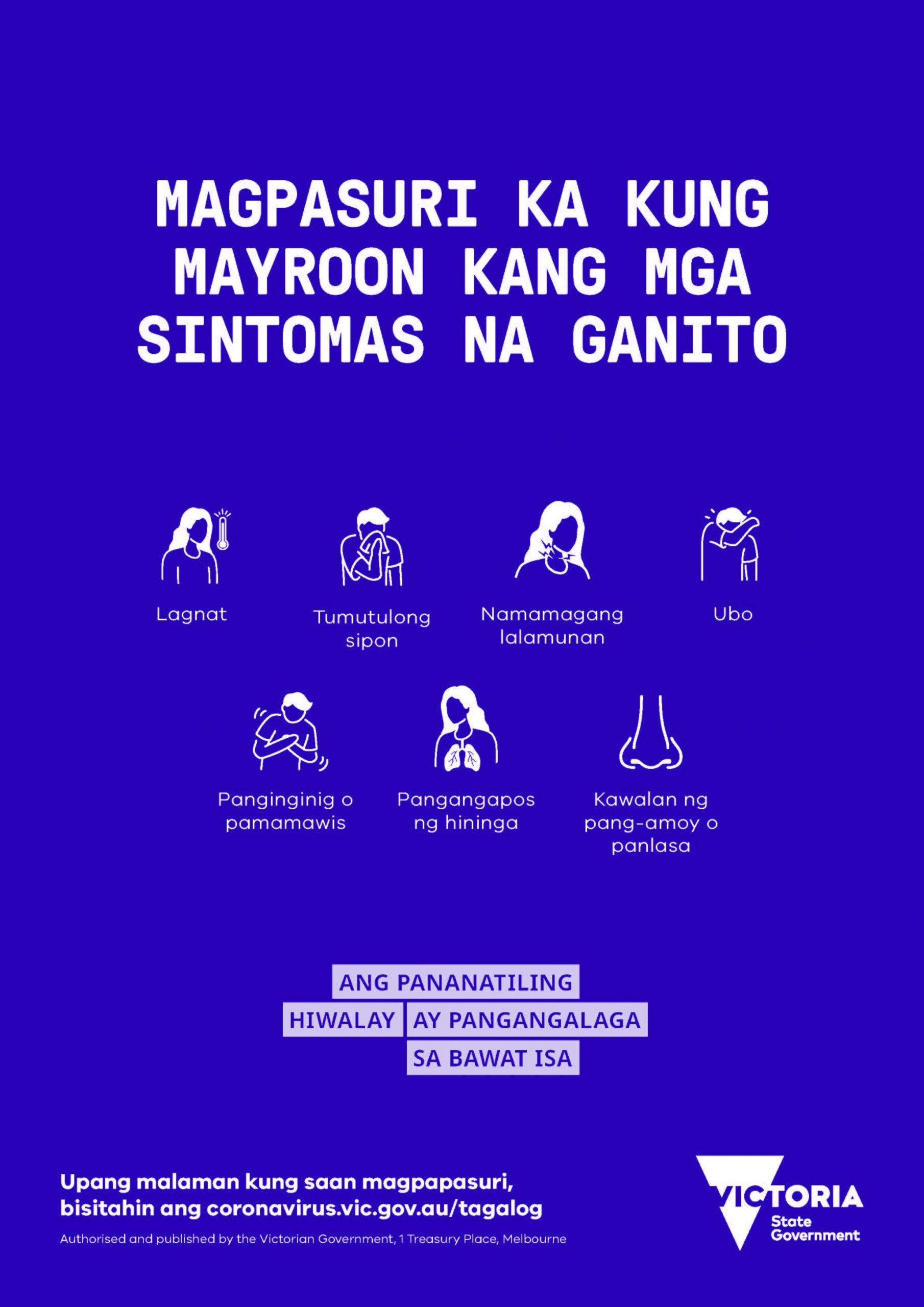
FILIPINO: Kung nakakaranas ka ng mga sumusunod na sintomas, mangyaring subukan.
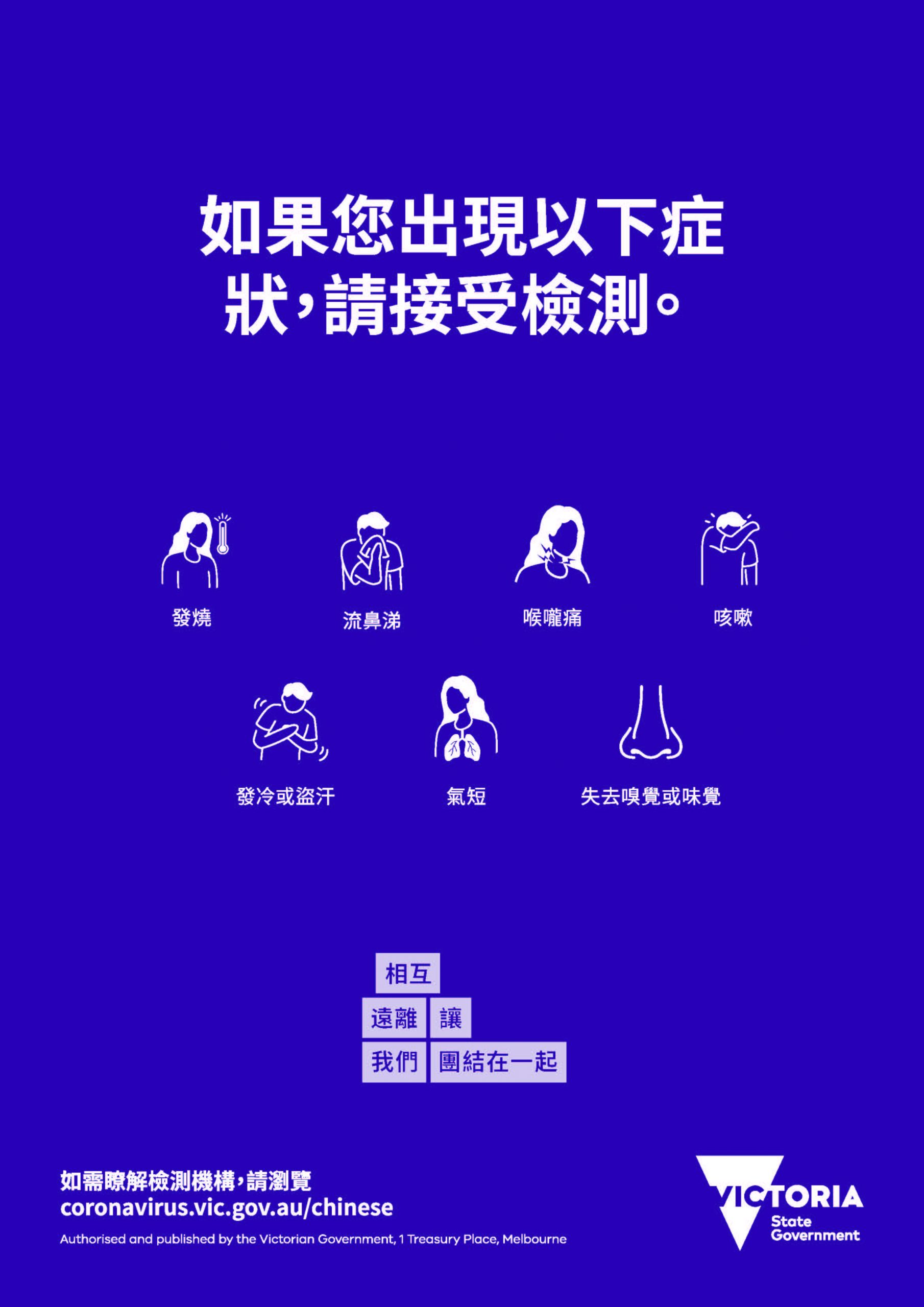
如果您出現以下症狀,請接受檢測。
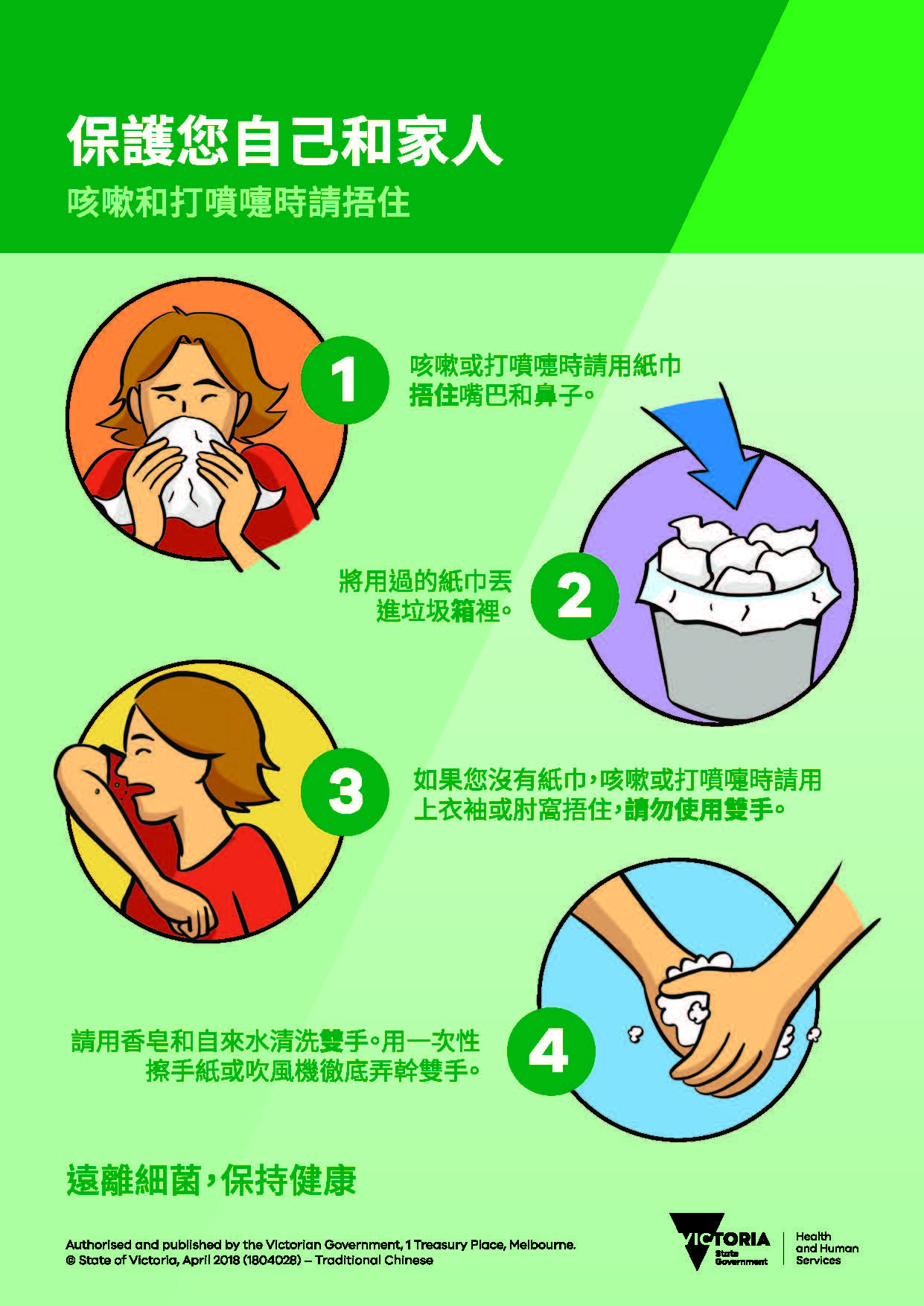
保护您自己和家人 – 咳嗽和打喷嚏时请捂住
Victorian Government Issues Historic Apology to Indigenous Peoples
Australia and U.S. Finalize Expanded U.S. Military Presence and Base Upgrade Plan
7.5-Magnitude Earthquake Strikes Off Northeastern Coast of Japan
Paramount Challenges Netflix with Warner Bros Acquisition Bid
Thailand Strikes Cambodia as Border Clashes Escalate
Trending
-
COVID-19 Around the World4 years agoFraudulent ivermectin studies open up new battleground
-
Cuisine Explorer5 years agoCantonese Mango Sago
-
Tagalog5 years agoFILIPINO: Kung nakakaranas ka ng mga sumusunod na sintomas, mangyaring subukan.
-
Uncategorized5 years ago如果您出現以下症狀,請接受檢測。
-
Cantonese - Traditional Chinese5 years ago保护您自己和家人 – 咳嗽和打喷嚏时请捂住
-
Uncategorized5 years agoCOVID-19 檢驗快速 安全又簡單
-
Uncategorized5 years agoHow to wear a face mask 怎麼戴口罩
-
Uncategorized5 years ago
在最近的 COVID-19 應對行動中, 維多利亞州並非孤單