
National News
Constitutional expert labels Albanese government’s golf club grant ‘grey corruption’

A leading constitutional expert has labelled an Albanese government decision to award a $6m grant to a golf club in the prime minister’s electorate as “grey corruption” and called the scheme under which it was given a “farce”.
Anne Twomey, a University of Sydney professor emerita, submitted the scathing assessment to a Senate inquiry into an opaque $560m invitation-only grants scheme used to fund projects Labor promised at the 2025 election, and which largely went to Labor-held seats. During the 2025 campaign, the government promised the Marrickville golf club, which is in Albanese’s electorate of Grayndler, $6m for a series of upgrades. The grant was awarded under a “closed non-competitive” process last July.
After coming under fire last month for the grant, Albanese said the funding was meant to fix problems caused by raw sewage flowing into the adjacent Cooks River. But Twomey wrote that there was no reference to this in the prime minister’s original announcement in 2025, only that it involved renovations and the harvesting of storm water to irrigate the golf course.
A scandal erupted last month when research found that the money in the program went overwhelmingly to Labor electorates. The Centre for Public Integrity found 73% of the allocated funding went to seats held by Labor MPs before the election.
Labor strongly defended the program as within the rules. The infrastructure minister, Catherine King, has said there was no conflict of interest as Albanese was not the decision-maker on the grant, and applications had been approved after they were assessed to show they met value for money.
Twomey labelled the gold club grant “grey corruption”, which she described as a “broad term that encompasses any actions where governments exercise their powers to favour private interests or political interests over the national interest”.

National News
Australia may be headed for recession according to economist

Australia’s unemployment rate has surged to its highest level in five years, raising concerns the Reserve Bank’s battle against inflation could tip the economy into recession.
But some economists say a unique recession indicator that tracks the speed unemployment is rising could be triggered as early as December if unemployment maintains its current rate of increase.
Australia’s jobless rate jumped to 4.9 per cent in October, to its highest level since 2021. It was higher than economists’ expectations. Almost 44,000 jobs were lost last month, leaving more than 750,000 Australians unemployed.
Australia has traditionally defined a “technical recession” as six months in a row of contracting economic output. However, when working with that definition, policymakers cannot confirm if an economy is in a technical recession for up to nine months after the recession has started. Some economists argue that that definition of a “technical recession” can also fail to reflect the damage that can occur from economic weakness or abrupt but short downturns.
Independent economist Saul Eslake said relying on GDP figures to identify a downturn meant “you’re really looking in the rear-vision mirror rather than in the windscreen in order to see what’s going on”, adding that the Sahm rule, which is a real-time recession indicator created by former Federal Reserve economist Claudia Sahm, provided a good early warning of a possible recession, preventing the need to wait for GDP figures to confirm a downturn months after the fact.
National News
Australia urged to wean off imported fossil fuels amid global supply shocks

The Grattan Institute has warned Australia imports too much of its fuel and that the country must brace for more global supply shocks – like those from the war in Iran.
Grattan’s fuel plan report, Fuelling the Future, warns this “leaves us dangerously exposed to supply disruptions and price hikes”. Under a plan already attracting criticism from business groups, Grattan urged diesel handouts to mining and primary industries be curbed in favour of incentives for electric trucks and a huge expansion of the EV charging network, especially when Australia imports 97% of its liquid fuel.
The report argues that the US-Israel war in Iran has driven up inflation and cost Australians nearly $18bn, and the federal government directly at least $3bn, creating an opportunity the government “should seize” to boost fuel security. Very little liquid fuel is produced or refined in Australia, with only two domestic oil refineries. But rather than boosting that number, Grattan says Australia should lower its reliance on imported fuels and fossil fuels generally by shifting towards EVs, including an ambitious target of 650,000 electric trucks nationwide by 2050.
Tania Constable, the chief executive of the Minerals Council of Australia, rejected the Grattan proposal, claiming that Australia should be focused on increasing domestic production, expanding refining capacity and building more resilient supply chains, in order to avoid increasing costs for miners, farmers, freight operators and regional businesses.
National News
Australia’s Unemployment Rate Hits Five-Year High

The latest data released Thursday by the Australian Bureau of Statistics (ABS) shows that Australia’s seasonally adjusted unemployment rate rose to 4.9% in October from 4.7% the previous month, marking the highest level in nearly five years.
The data indicates that while overall employment continued to grow slightly, the number of people seeking work increased further due to a high labor force participation rate, combined with businesses slowing their hiring pace amid rising borrowing costs and inflationary pressures.
Economists analyze that the cooling of the labor market reflects that the Reserve Bank of Australia’s (RBA) earlier interest rate hikes are gradually taking effect. Currently, Australia’s inflation rate remains at a relatively high level of 4.3%, and the RBA raised the official cash rate to 4.85% earlier this month to curb rising prices.
The Treasurer stated that the government is closely monitoring global economic uncertainties and the pressures that high interest rates are placing on households and businesses. He emphasized that the job market as a whole remains resilient and that the government will continue to support those affected by rising living costs through targeted measures.


Sun Yat-sen and Chinese Australians: Different Histories, a Shared Civic Identity

What Will the US Government Look Like After the Democrats’ Landslide Victory?
Hong Kong security chief hits out at The Washington Post over ‘scaremongering’ op-ed by wanted activist
South Korean minister quits due to AI cheating scandal
Australia may be headed for recession according to economist

Cantonese Mango Sago

FILIPINO: Kung nakakaranas ka ng mga sumusunod na sintomas, mangyaring subukan.

如果您出現以下症狀,請接受檢測。

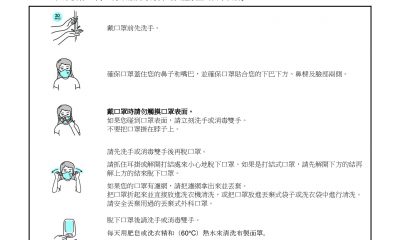
How to wear a face mask 怎麼戴口罩

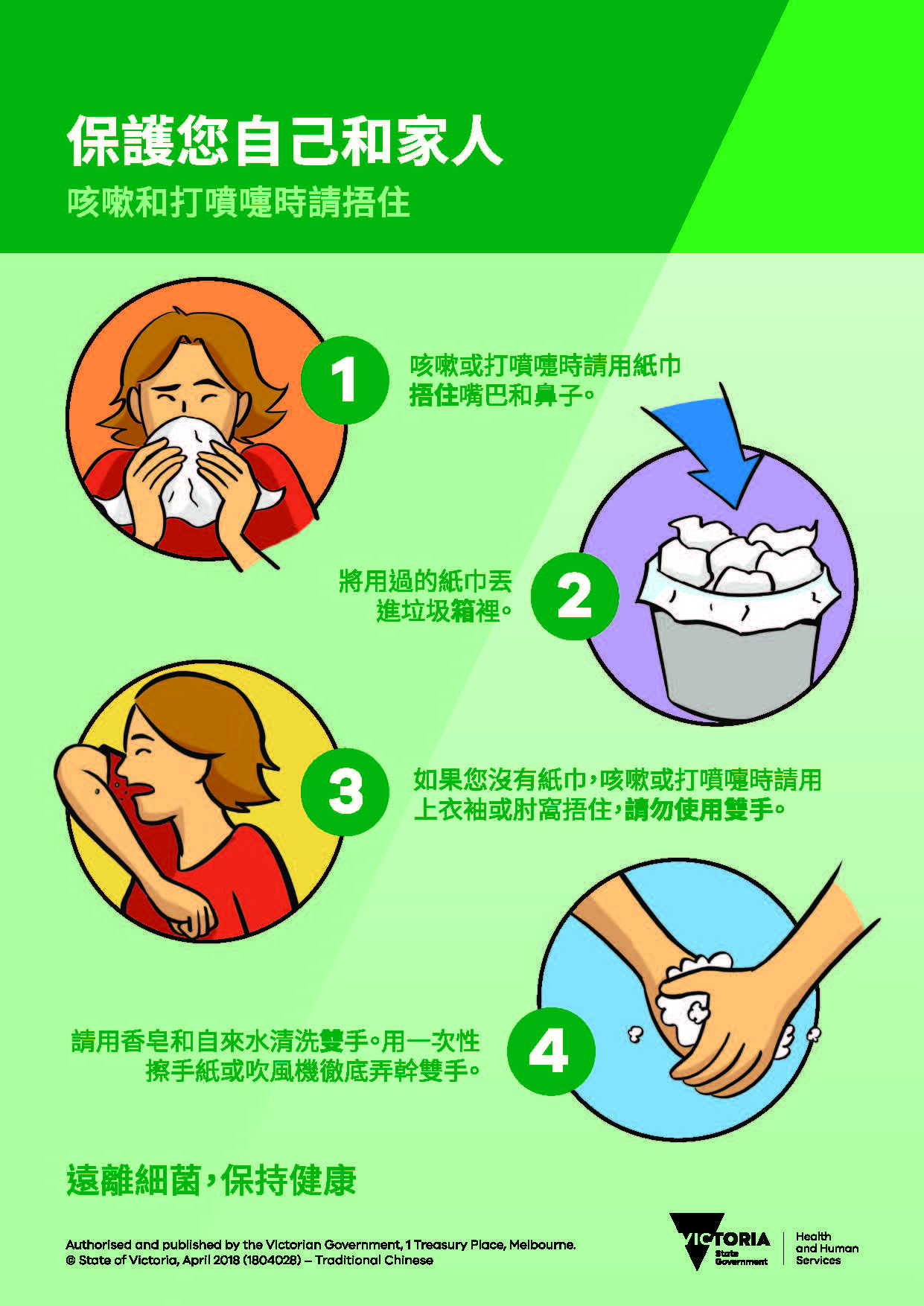
保护您自己和家人 – 咳嗽和打喷嚏时请捂住
UAE Fully Suspends Trade and Financial Ties with Iran
Victorian Liberal Candidate Counselled Over Volunteer Internship Program

Trump signs order banning “birth tourism” and further restricting birthright citizenship

SpaceX Rocket Debris Hits the Moon, Renewing Concerns Over Space Junk

Australia Sets New Standards for Men’s Behaviour Programs
-
 Cuisine Explorer6 years ago
Cantonese Mango Sago
-
Tagalog6 years ago
FILIPINO: Kung nakakaranas ka ng mga sumusunod na sintomas, mangyaring subukan.
-
Uncategorized6 years ago
如果您出現以下症狀,請接受檢測。
-
 Uncategorized6 years ago
How to wear a face mask 怎麼戴口罩
-
Cantonese - Traditional Chinese6 years ago
保护您自己和家人 – 咳嗽和打喷嚏时请捂住
-
 Uncategorized6 years ago
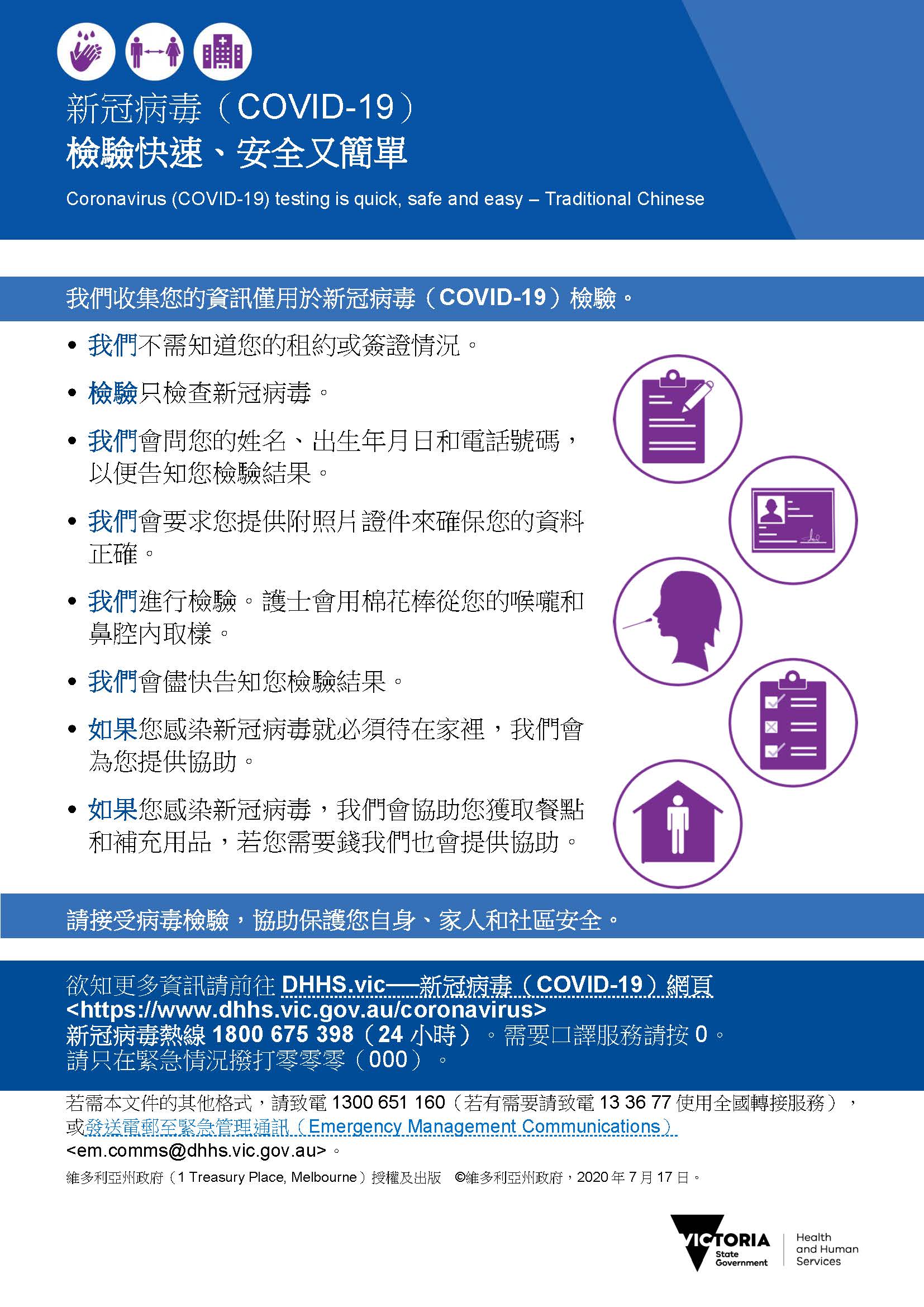
COVID-19 檢驗快速 安全又簡單
-
Uncategorized6 years ago
在最近的 COVID-19 應對行動中, 維多利亞州並非孤單
-
 Cantonese - Traditional Chinese6 years ago
保護您自己和家人 – 咳嗽和打噴嚏時請捂住
