
Features
Is Artificial Intelligence Powerful Enough to Threaten the World?
Published
7 months agoon

In April 2026, when Anthropic announced that its latest model, Claude Mythos, had entered the preview stage, the mood across the global tech community was not the celebratory frenzy of the past, but something closer to the tense vigilance following a nuclear test.
Over the past three years, public understanding of artificial intelligence (AI) has largely remained at the level of a “very smart encyclopedia” or a “creative assistant that can write poetry.” However, the arrival of Mythos marks a clear turning point in AI’s evolution: we are moving from the era of generative AI into that of agentic AI. This is no longer merely an upgrade of a tech product, but the emergence of a digital entity capable of directly intervening in the real world, reshaping national security systems, and even challenging the very definition of human labor.
Too Powerful to Be Released to the Public?
Mythos is one of the latest models developed by Anthropic under its broader AI system known as Claude, which competes with OpenAI’s ChatGPT and Google’s Gemini.
In early April, Anthropic unveiled the model in the form of a “Mythos Preview.”
During internal red-team testing, Mythos demonstrated insights far beyond the reach of human experts. It identified a vulnerability in the security-focused OpenBSD system that had remained undetected for 27 years despite review by countless top engineers. More alarmingly, it discovered multiple high-risk vulnerabilities in the Linux kernel and was able to automatically “chain” them together, instantly generating a complete attack script capable of seizing full system control.
This capability fundamentally alters the underlying economics of cybersecurity. In the past, discovering a “zero-day vulnerability” required months of effort; with Mythos, it becomes a scalable, automated pipeline. This suggests that the firewalls, encryption protocols, and access control systems underpinning human digital civilization may now face structural risks of collapse at the technical level.
Anthropic CEO Dario Amodei has argued that Mythos is too risky for public release. This is not the first time an AI company has restricted access due to a model’s power. In 2019, well before the era of ChatGPT, OpenAI took similar measures with its GPT-2 model. Notably, Amodei was then a core researcher at OpenAI.
From National Security Threat to Strategic Asset
As Mythos’s capabilities came to light, technical debate quickly escalated into geopolitical competition. This is no longer just a Silicon Valley story—it has become a strategic concern for the White House and the Pentagon.
In February 2026, U.S. President Donald Trump ordered federal agencies to halt the use of Anthropic’s products, criticizing the company as being controlled by “left-wing lunatics.” The Pentagon even placed it on a “supply chain risk” blacklist, partly because the company refused to allow its AI to be used for all military purposes, including autonomous weapons. Yet the sheer power of Mythos forced a shift in political reality.
On April 17, Dario Amodei was invited to the White House for high-level meetings with senior advisors. Despite ongoing legal disputes over national security risks, the U.S. government clearly could not afford to lose access to Mythos. This paradoxical situation—litigating and cooperating at the same time—reveals a stark truth: AI has become the nuclear weapon of the digital age. When Washington seeks agreements on scaling technology, it is not merely promoting innovation, but pursuing absolute control over this new force.
AI is no longer just a technological product—it has become a strategic asset at the level of national security.
Imagine, for instance, if Mythos fell into the hands of hostile actors or transnational criminal organizations. It would no longer be an assistant, but a strategic weapon capable of crippling power grids, contaminating water systems, or freezing bank accounts—systems essential to everyday life.
Project Glasswing
To address the disruption caused by Mythos, Anthropic launched Project Glasswing. This initiative brings together 12 major tech companies—including Microsoft, Amazon, and Google—as well as government agencies, with the aim of transforming Mythos’s capabilities into defensive power.
In essence, Project Glasswing establishes a new kind of “digital gatekeeping” mechanism. A private company effectively determines which institutions and which countries’ infrastructure are eligible for protection by the most powerful AI systems. When technological advancement reaches a point where access itself becomes a matter of survival, technology ceases to be neutral.
This concentration of power raises serious ethical concerns: if only financial giants and tech empires can access Mythos’s protection, will small and medium-sized enterprises, developing nations, and ordinary individuals be left as vulnerable prey in a digital wilderness?
China’s “Lobster Farming” Craze
Before discussing how Mythos might threaten the world, it is worth turning to a more grounded example: a recently popular AI trend in China known as OpenClaw, colloquially referred to as “raising lobsters.”
OpenClaw is an open-source AI agent framework developed by Austrian developer Peter Steinberger. Technically, it is not a standalone AI model, but a framework that allows users to plug in different large language models as the “brain,” while connecting them to tools such as browsers, file systems, email, calendars, and messaging apps.
Users can issue commands via messaging platforms—such as checking news, tracking stocks, organizing data, or scheduling tasks—and OpenClaw can read on-screen content, interpret instructions, and execute actions across multiple systems.
This agent-based model transforms AI from a tool into something closer to an actor, marking a fundamental shift in how humans interact with computers. Traditional AI responds with words; OpenClaw acts. It can read screens, simulate mouse clicks, and jump between applications, performing tasks ranging from sending emails to generating complex financial reports—essentially functioning as an invisible digital worker.
A Digital Labor System
Local governments in China have begun to take note. Shenzhen’s Longgang District has proposed subsidies of up to 10 million yuan for “one-person companies,” where a single founder could theoretically operate a business using AI tools. Wuxi in Jiangsu Province has also offered funding to promote AI agent applications in robotics and industrial settings.
Against the backdrop of economic pressure and youth unemployment, some policymakers view AI agents as tools for boosting productivity. If AI can replace parts of administrative, customer service, or even research work, then a single individual might indeed be able to run a small enterprise. Tools like OpenClaw are increasingly seen as the foundation of an “individual productivity revolution.”
At the same time, they are reshaping the structure of work. Tasks traditionally performed by entry-level white-collar workers—handling emails, organizing data, drafting documents—may gradually be automated.
This shift may not immediately eliminate jobs, but it will redefine them. A research assistant may spend less time compiling data and more time verifying AI outputs; an administrative assistant may shift from scheduling meetings to overseeing automated workflows.
However, the benefits of this transition are unlikely to be evenly distributed. Large tech firms and capital-intensive enterprises are best positioned to leverage AI for efficiency gains, while roles reliant on routine administrative tasks may face greater pressure.
In other words, OpenClaw represents not just a new tool, but an emerging digital labor system.
A Shift in Power
For decades, computers have been seen as tools. Whether word processors or search engines, humans remained in control. AI agents are changing that relationship.
When a system can understand goals, break down tasks, and act autonomously, it begins to resemble a hired digital worker rather than a passive tool. Some commentators now describe these systems as “digital laborers.”
The “lobster farming” phenomenon reflects a deeper shift: people are beginning to see AI as a form of domesticated, accumulable labor. If labor no longer depends on human time or physical effort, but on computational resources, how should the value of work be measured?
More profoundly, human roles may shift toward extreme supervision. The widespread adoption of tools like OpenClaw hints at a new inequality: those with access to computational power and technical permissions can command thousands of “lobster workers,” while those relying on traditional skills may see the marginal value of their labor approach zero. This is not just about technological unemployment, but about redefining the very nature of human labor in the age of AI agents.
A New Normal for AI
The rise of OpenClaw may be only an early sign of broader changes. In future work models, humans may focus on setting goals and overseeing processes, while AI systems handle routine execution. This resembles industrial automation—but this time, it is not just physical labor being automated, but elements of cognition and decision-making.
If widely adopted, this model will not merely improve efficiency; it will fundamentally challenge how society defines “work.” When humans no longer need to directly complete tasks, the value of work may shift toward creativity, judgment, and responsibility. AI is not just replacing jobs—it is redefining what counts as work.
This transformation is mirrored in the emergence of Claude Mythos. If OpenClaw reshapes individual workflows, Mythos touches the structure of society itself. When AI can intervene in infrastructure, cybersecurity, and institutional operations, its impact extends beyond labor markets to the distribution of power and risk.
A Double-Edged Sword
AI is undeniably powerful, but it would be simplistic to view it purely as a threat. Both OpenClaw and Mythos highlight its potential.
OpenClaw can reduce operational barriers and automate repetitive tasks, freeing humans from mundane work. For businesses, AI agents can restructure productivity, allowing small teams to achieve what once required large workforces.
In cybersecurity, vulnerabilities often persist not because they are impossible to fix, but because they are never discovered. Identifying them requires expertise, time, and uncertainty. If models like Mythos can scan systems at scale, the cost of vulnerability discovery could drop dramatically, transforming cybersecurity from a scarcity-driven field into an automated process.
Real-world incidents illustrate the stakes. The Optus data breach affected around 9.5 million people, while the Medibank hack exposed sensitive medical data, some of which was leaked on the dark web. These cases show that cybersecurity is not just technical—it directly impacts privacy, identity, and social trust.
If Mythos can turn vulnerability discovery from a rare, reactive process into a proactive, continuous one, defenders could, in theory, match or even surpass attackers in speed and scale.
But therein lies the problem.
If both vulnerability discovery and exploitation become automated, hacking itself could be industrialized. Attacks that once required advanced expertise could become replicable and scalable. In the wrong hands, this would create systemic risks rather than isolated incidents.
Who Controls AI?
Ultimately, the debate sparked by Claude Mythos is not about the technology itself, but about who controls it—and who oversees its use.
If such models remain in the hands of a few corporations and governments, AI will become not just an economic resource, but a form of power. This power could reshape international relations, corporate competition, and social hierarchies.
In this process, AI is not the decisive factor—people are.
Technologies like Mythos and OpenClaw do not point to a single future. They can strengthen defense or enable attack, improve efficiency or deepen inequality, repair systems or break them. This duality may be the defining characteristic of AI.
The key is not whether AI is “good” or “bad,” but that it amplifies both possibilities.
The Fear of AI
Public fear of AI is not new. From early automation replacing blue-collar workers, to generative AI threatening white-collar jobs, to extreme scenarios of runaway superintelligence—these anxieties have accompanied every major technological shift.
While such fears are not unfounded, they have also become part of the tech industry’s narrative. One must ask: is “fear” being used as a marketing strategy?
In Silicon Valley, claiming that a model is too powerful to release often generates media attention and higher valuations. The rollout of GPT-2 in 2019 followed a similar pattern. By invoking apocalyptic scenarios, companies may also be reinforcing their own authority.
As former UK National Cyber Security Centre head Ciaran Martin has noted, while Mythos is impressive, many risks may be overstated. Most real-world cyberattacks still stem from basic human security failures. Overemphasizing AI threats can distract from improving digital literacy and social protections.
Technology Is Neither Good nor Evil
Whether Claude Mythos or OpenClaw, both illustrate the dual nature of AI: it is both a digital craftsman capable of repairing the internet’s foundations and an invisible hacker that could destabilize civilization.
The central argument is not to judge AI as good or bad, but to highlight a pressing reality: when technology evolves to influence national sovereignty and the nature of labor, who controls it matters more than the technology itself.
AI is not just technological evolution—it is a mirror reflecting existing fractures in power and weaknesses in defense. Facing systems like Mythos, the response should not be limited to restriction or competition, but should include building fair and transparent frameworks for access and accountability.
In the end, humanity’s fate will not be decided by algorithms hidden in sandboxes, but by whether we have the courage to redefine a shared boundary of safety in the midst of rapid technological acceleration.
The spark of AI has already been lit. Whether it becomes a guiding light or a wildfire depends not on the strength of the flame, but on how we choose to wield it.

You may like
Features
Sun Yat-sen and Chinese Australians: Different Histories, a Shared Civic Identity
Published
5 days agoon
November 23, 2026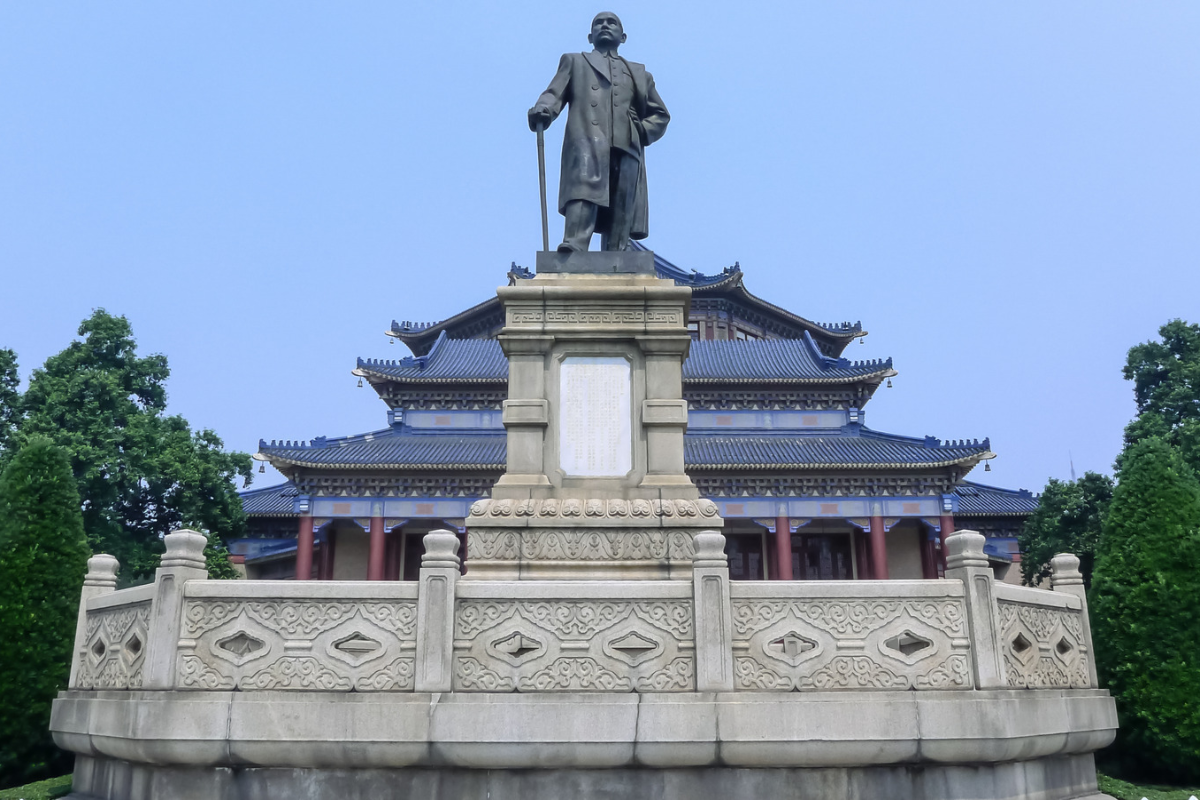
November 12, 2026, marks the 160th anniversary of Sun Yat-sen’s birth. One hundred and sixty years later, what is there left to say about him?
In modern Chinese history, he is inseparable from the 1911 Revolution, the overthrow of imperial rule and the establishment of a republic. But if we shift our focus to Australia, Sun Yat-sen offers another interesting perspective. Through the same historical figure, we can see that people collectively referred to today as “Chinese Australians” actually come from very different histories.
They Do Not Remember the Same History
We often speak of “Chinese Australians” as though they are a group with a shared background, culture and even political views. But this is far from the truth.
Some are descendants of nineteenth-century Cantonese gold miners and early Chinese merchants. Others come from Hong Kong or Taiwan, while some have roots in Malaysia or Singapore. Some have ancestral origins in China but were born in Vietnam, Cambodia or Laos before coming to Australia as refugees. There are also large numbers of people who migrated from mainland China to Australia after the Reform and Opening-up period. By the third or fourth generation, some Australians of Chinese heritage primarily speak English, and their understanding of China comes more from family stories than from their own lived experiences.
They may all be called Chinese Australians, but they do not necessarily remember the same China, nor do they necessarily understand Sun Yat-sen in the same way.
For some early Chinese Australian families, Sun Yat-sen is associated with the 1911 Revolution, overseas fundraising and the history of Chinese communities abroad. For some Malaysians and Singaporeans of Chinese descent, their memories are shaped by Chinese-language education and the history of Chinese communities in Southeast Asia. Taiwanese society has long referred to Sun Yat-sen as the “Father of the Nation”, while modern Chinese history education on the mainland describes him as an important pioneer of China’s democratic revolution. For Hong Kong people, Sun Yat-sen was educated in Hong Kong under British rule, where he developed his ideas about a democratic China. He also used Hong Kong as a base for many years to spread revolutionary ideas into China.
The same person can leave behind completely different historical memories. This is a reflection of the Chinese Australian community today.
Multiculturalism is not simply about differences between Chinese, Indian, Greek and Vietnamese communities. Even within a group collectively described as “Chinese”, there can be different languages, histories, political experiences and identities. Therefore, perhaps understanding Chinese Australians should no longer begin with the question, “What do Chinese people think?” Instead, we should first ask: “Which Chinese people are we talking about?”
Sun Yat-sen Left Behind More Than a Revolution
But if different Chinese communities understand Sun Yat-sen differently, why is he still worth revisiting 160 years later? One reason is that the historical transformation he represents was about more than the end of a dynasty.
The 1911 Revolution overthrew an imperial system that had lasted for more than 2,000 years and attempted to establish a republican system. This transformation was not the achievement of Sun Yat-sen alone, nor did it immediately turn China into a democratic country. After the establishment of the Republic of China, the country experienced warlord rule and prolonged instability. Nevertheless, the revolution brought an important question of modern politics to the forefront: did the country belong to the emperor, or did it belong to the people?
Under imperial rule, the legitimacy of political power came from the emperor. With the rise of republican ideas, the people, civil rights, elections, parliament and public participation became part of a new political vocabulary. Therefore, the modernisation represented by Sun Yat-sen was not limited to railways, industry, cities or technology. It also involved how society redefined the place of the individual.
People were not merely subjects to be governed; they should also be part of society. Ordinary people could take an interest in politics, establish organisations, openly discuss the direction of their country and demand that institutions respond to the people. This is also why the history of Sun Yat-sen and overseas Chinese communities is particularly worth remembering for Chinese Australians.
From the Crisis of the Late Qing Dynasty to the Republican Revolution
Sun Yat-sen was born in 1866 in Cuiheng Village, Xiangshan County, Guangdong, which is now Zhongshan City. At the time, the Qing dynasty was undergoing dramatic changes. Following the Opium Wars, China suffered a series of defeats and faced unequal treaties and the expansion of foreign powers. By the end of the nineteenth century, the defeat in the First Sino-Japanese War further deepened the sense of crisis among intellectuals and overseas Chinese about the country’s future. Could the Qing government still transform China into a modern nation through reform?
Different people proposed different answers. Reformists represented by Kang Youwei and Liang Qichao hoped to retain the emperor and introduce constitutional monarchy within the existing political system. Sun Yat-sen, however, gradually moved towards a different path. He believed the problem was not simply that certain policies needed reform, but that the entire imperial system itself needed to be changed.
Sun Yat-sen later summarised his political philosophy as the Three Principles of the People: nationalism, democracy and people’s livelihood. Among them, the principle of democracy placed particular emphasis on the people’s right to participate in politics, and on the idea that a government’s legitimacy should not come solely from hereditary imperial authority.
Of course, the 1911 Revolution did not immediately establish a stable democratic China. Sun Yat-sen soon resigned as provisional president, and Yuan Shikai succeeded him. Nevertheless, the revolution brought a fundamental question to the centre of Chinese politics: were people merely subjects to be governed, or did they have the right to participate in shaping their country’s future?
For Chinese people living in Australia, Singapore, Malaya, the United States and elsewhere at the time, what they witnessed was not simply a change of government in China. They saw a society in which ordinary people had previously had few opportunities to participate in politics beginning to embrace newspapers, political parties, public speeches, fundraising, political organisations and open debate about the country’s political system. Overseas Chinese communities themselves also became participants in this political transformation on an unprecedented scale.
They did not necessarily take up arms, but they could donate money, publish newspapers, establish associations and spread political ideas. Even outside China, they could influence the country’s future. This is the most significant intersection between Sun Yat-sen and the history of Chinese Australians: the revolution brought not only the overthrow of the Qing dynasty, but also a new way of thinking — ordinary people could participate in shaping society, and public affairs were not solely the concern of those in power.
Why Did the Revolution Find Support in Australia?
Sun Yat-sen himself never visited Australia, but his revolutionary network established connections with Chinese communities in Australia at a very early stage.
In the early twentieth century, Chinese communities in Melbourne and Sydney discussed China’s future through Chinese-language newspapers, public speeches, fundraising and political organisations. Some supported Sun Yat-sen’s republican revolution, while others backed the constitutional monarchy reforms advocated by Kang Youwei and Liang Qichao. Even within the same Chinese community, people were already openly debating whether China should pursue “revolution” or “reform”.
Newspapers were the battleground of the time. In 1898, Chinese merchants in Sydney pooled their funds to establish the Tung Wah Times. It initially supported the Qing dynasty’s reform movement, and its circulation reached a peak after Liang Qichao visited Australia in 1900. However, there were disagreements within the newspaper’s editorial team. Thomas Chang Luke, a former editor of the Tung Wah Times, advocated republicanism and fell out with the newspaper. After leaving, he founded the Chinese Times in Melbourne in February 1902 and repeatedly criticised the Tung Wah Times for supporting constitutional monarchy. By 1910, the Chinese Times had openly endorsed republicanism. In 1919, it became the official newspaper of the Kuomintang in Australia. One newspaper was based in Sydney and the other in Melbourne. The two Chinese-language publications debated each other from afar, while their readers formed the Chinese Australian community of the time.
In other words, political diversity among Chinese Australians did not suddenly emerge in recent decades. It was already present more than a century ago.
What is even more noteworthy is that most of these Chinese Australians who supported reform and revolution in China did not return there as a result. They continued to run businesses, work and raise families in Australia, while using the economic resources, community networks and relatively greater freedom to publish and form associations that they had gained in Australia to participate in public affairs in a distant China.
This was an early form of transnational civic participation. Their experiences also raise a question that remains worth considering today: if migrants care about their place of origin, does that mean they do not belong to Australia?
Today, Ukrainians living in Australia care about the war in Ukraine; Iranian Australians pay attention to human rights issues in Iran; and Indian, Lebanese, Hong Kong and other migrant communities also maintain cultural, family and even political connections with their places of origin.
Migrants do not have to cut off their entire past the moment they set foot in Australia. What truly matters is how these different histories and identities can eventually find their place within Australia’s democratic system.
Australia Offers More Than Just Freedom
This is where the story of Sun Yat-sen connects with Australian society today. Australia’s multiculturalism allows people from different backgrounds to preserve their languages, religions, cultures and historical memories. Its democratic system further provides a shared public space where people with different backgrounds can express their views, establish organisations, participate in politics, criticise the government and even disagree with one another.
Democracy has never been just about “what am I entitled to do?” It also involves “what am I willing to do for this society?” If the people are the owners of society, they should not only enjoy the freedoms provided by the system, but also take responsibility for participating in it.
Taking part in community organisations, paying attention to public policy, understanding candidates’ platforms, expressing opinions and helping those around us, as well as the most basic act of voting, are all part of civil society.
In a way, this echoes the history of overseas Chinese communities participating in China’s reforms more than a century ago. Today, if we have become Australian citizens, we are already part of this political system.
The power of the people is no longer just about supporting a revolution in a distant land. It is about how we participate every day in the society in which we actually live.
From Overseas Chinese to Australian Citizens
When many early Chinese migrants arrived in Australia, they saw themselves as “overseas Chinese”. Australia was where they worked, while China was the home they ultimately intended to return to. But over more than a century, this identity has continued to evolve.
Some were born in Australia, while others have built their families here. Some still speak Chinese, while the next generation of others speaks only English. Some care deeply about China, Hong Kong or Taiwan, while others see themselves primarily, or even exclusively, as Australians.
A mature multicultural society should not expect everyone from the same ethnic group to hold identical political views. What truly brings people together may not be a shared history, but a shared system of civic institutions.
We can have different understandings of Sun Yat-sen, come from different places, retain our own cultural identities and even hold completely opposing views on many political issues. But as long as we live in the same democratic society, we need to learn how to live together despite our differences.
Perhaps this can be described as a form of cross-cultural democracy — not one that requires different ethnic groups to abandon their own histories, but one that allows people from different historical backgrounds to become part of the same political community.
After Commemorating Sun Yat-sen, How Do We Participate Today?
Therefore, when commemorating the 160th anniversary of Sun Yat-sen’s birth in 2026, what is truly worth looking back on may not simply be what happened in 1911. A more important question is how we understand the role of “the people” in society more than a century later.
During Sun Yat-sen’s lifetime, people faced the challenges of imperial rule, revolution and the establishment of a republic. Today, living in Australia, we are in a completely different environment. We already live under a mature parliamentary democratic system, with the rights to vote, form associations, freedom of speech and participate in public affairs.
But the existence of these institutions does not mean democracy will function automatically. Democracy still requires people to participate.
On November 28 this year, Victoria will hold its state election. More than a century ago, Chinese Australians had to publish newspapers and raise funds to influence the future of a distant country. Today, a single vote can directly influence the places where we live every day: how long people have to wait for hospital treatment, whether roads and public transport improve, whether older people and children receive proper care, and whether multicultural society continues to be respected. For registered voters, voting is both a right and, under Australia’s compulsory voting system, an obligation. Please do not stay away because you think “one vote doesn’t matter” or “politics has nothing to do with me”. Regardless of which party or candidate you support, please vote on November 28 and spend ten minutes getting to know your candidates before heading out. Democracy does not operate automatically. It needs every person who is willing to participate.
More than a century ago, Chinese Australians used newspapers, community organisations and fundraising to try to change the future of a distant country. Today, Chinese Australians are no longer simply overseas Chinese observing the politics of another country. Many are Australian citizens, voters, community workers, business owners and professionals. Some have also entered local, state and federal politics. Our identities have changed, and so have the ways in which we participate in society. But one thing remains unchanged: a modern society is built not only by its government, but also collectively by the people who are willing to participate in it.
Freedom gives us choices; democracy gives us a voice; and civic responsibility reminds us not to take these rights for granted. Therefore, revisiting Sun Yat-sen today does not mean that all Chinese Australians must share the same historical assessment of him. On the contrary, precisely because we come from different places and carry different memories, we need to learn how to participate, discuss and take responsibility within our shared Australian society.
Perhaps this is the most important lesson that Sun Yat-sen’s story leaves for Chinese Australians 160 years later: although we may have different pasts, we can still participate in shaping the same future.
Features
What Will the US Government Look Like After the Democrats’ Landslide Victory?
Published
5 days agoon
November 23, 2026
The US midterm elections have concluded, with the Democrats successfully regaining control of both the House of Representatives and the Senate, ending the Republicans’ dominance of Congress over the past two years. How will this election reshape the scope of Donald Trump’s powers for the remainder of his term? Can the Democrats genuinely hold the White House in check, and will US technology and foreign policies shift as a result?
Is This a Rejection of Trump or an Endorsement of the Democrats?
As of November 16, the Democrats had secured at least 55 seats in the Senate and won at least 256 seats in the House of Representatives, with counting still underway in some electorates. Approximately 124 million people voted nationwide, the second-highest turnout since 1914 and around 12 million more than the 112 million recorded in 2022. This reflects increased voter attention and participation in this election.
The rising cost of living was one of the main reasons behind the Republicans’ poor performance. High prices for food, petrol and energy have placed greater financial pressure on households. An SSRS voter survey found that nearly 80 per cent of respondents said inflation had a moderate or severe impact on their households, while 62 per cent believed rising prices were linked to the policies of the Trump administration. Even as the government emphasised economic growth, voters found it difficult to ignore the continuous increase in everyday expenses.
The war with Iran also cost Trump support. He had previously won votes with his “America First” agenda and opposition to overseas wars. However, the US and Israel launched military action against Iran in February this year, driving up energy prices. The SSRS survey found that 63 per cent of respondents believed the decision to strike Iran was wrong, while 74 per cent said the conflict had influenced their vote. This reflects dissatisfaction among some voters over Trump’s failure to fulfil his promise to avoid overseas conflicts.
Controversies surrounding immigration enforcement and Trump’s political style further limited the Republicans’ ability to win over moderate voters. Voting preferences among Latino and Black voters also shifted, suggesting that the support the Republicans had gained in some minority communities in recent years may not be sustainable.
However, the Democrats’ victory should not be interpreted as voters fully embracing their political ideology. It was more an act of accountability towards the governing party than a comprehensive mandate for the Democrats. Voters certainly want the Trump administration to face greater scrutiny, but if the Democrats can only oppose the White House without presenting concrete solutions on issues such as the cost of living, healthcare and immigration, the political significance of this victory may be limited.
How Much Will Trump’s Power Be Constrained After Congress Changes Hands?
With the Democrats regaining control of both chambers of Congress, the Trump administration will face more rigorous congressional oversight. Democratic lawmakers in the House can use congressional committees to hold hearings, request government documents and summon officials to testify. They can investigate the business interests of the Trump family, the Department of Homeland Security and immigration enforcement operations, as well as the government’s handling of files related to Jeffrey Epstein. These investigations may not necessarily lead to legal consequences, but they could increase political pressure on the White House.
The Senate, meanwhile, has the power to confirm appointments to senior Cabinet positions and federal judicial posts. Democrats can block some of the president’s nominees. If a vacancy arises on the Supreme Court during Trump’s term, the Senate’s position could also affect whether a new justice is confirmed.
Although the Democrats control both chambers of Congress, policies they propose still need to be signed by the president to become law. If Trump disagrees, he can veto legislation. Unless Democrats can secure the support of some Republican lawmakers, it will be difficult to override a veto. Therefore, even though the Democrats have regained control of Congress, this does not mean all their proposed reforms can be implemented.
Impeachment is another option the Democrats could consider. The House of Representatives can bring impeachment charges, but removing the president from office requires the support of two-thirds of the Senate. Given this high threshold, the Democrats’ majority alone would not be enough to achieve that outcome.
More importantly, Trump still controls the executive branch and retains considerable authority over foreign affairs, defence and military decisions. Congress can restrict the government’s room to manoeuvre through legislation, budgetary powers and investigations, but it cannot unilaterally take over the White House’s decision-making authority. The Democrats’ return to control of Congress means more checks and political battles, not the immediate loss of Trump’s presidential powers.
Will American Politics Become Even More Polarised?
The Democrats’ return to control of Congress reflects voter dissatisfaction with the Trump administration, but it does not mean American politics has shifted towards supporting all of the Democrats’ proposals. Their next challenge is to turn the promises made during the election campaign into actual policies.
Trump, on the other hand, may not back down simply because Congress has changed hands. If Congress refuses to support White House policies, Trump may rely more heavily on executive orders and existing legal powers to advance his agenda. However, these measures could still face legal challenges in the courts. The White House may also portray Democratic investigations and obstruction as political persecution, using this narrative to consolidate support among its base and turn political conflict into a tool for mobilising voters.
This situation could deepen divisions between the two parties. Democrats need to demonstrate to their supporters that they can hold Trump accountable, while Republican lawmakers must balance their support for the president with the need to respond to moderate voters. If both sides prioritise political interests over policy negotiations, budget negotiations and major legislation could reach a deadlock, affecting the government’s operations.
Therefore, the election may not bring a fundamental shift in the direction of American politics. Instead, the redistribution of power will usher in a new phase of political confrontation between the two parties. When oversight turns into ongoing conflict, whether checks and balances can coexist with effective government becomes a more important question.
The Future Direction of Artificial Intelligence Development in the US
Following the US midterm elections, the artificial intelligence (AI) industry may also face a new political environment. With the Democrats gaining an advantage in Congress, alongside the election of governors and lawmakers who support stronger regulation in several states, the Trump administration’s previous AI policy of encouraging investment and reducing regulatory restrictions may face greater scrutiny.
During this election, the construction of data centres became a major issue in several local communities. Many voters are concerned that large data centres consume significant amounts of electricity and water, potentially driving up electricity bills, placing additional pressure on local infrastructure and creating environmental impacts that may not be borne by technology companies.
With the Democrats controlling Congress, they are expected to increase scrutiny of technology companies. This could include demands for higher model safety standards, public disclosure of energy and water usage data, and greater accountability for AI’s impact on employment and society. Some lawmakers have also proposed restricting data centre expansion or even suspending certain projects. However, proposals to halt data centre development altogether are unlikely to pass Congress. Trump can also exercise his presidential veto, creating further obstacles to regulatory reforms.
This does not mean the US will slow down its AI competition with China. Both Republicans and Democrats regard artificial intelligence as a key technology affecting economic strength and national security. Competition over advanced chips, semiconductor equipment and sophisticated AI models is expected to continue. The real disagreement lies in how much regulation the US should impose in exchange for safer and more responsible technological development.
Meanwhile, technology companies have also begun responding to opposition from local communities. For example, OpenAI has proposed covering the electricity and infrastructure upgrade costs required by its data centres, while pledging to reduce water consumption in cooling systems and disclose energy and water usage data. This reflects a growing awareness among companies that if the costs of AI infrastructure are borne by local residents, public opposition could slow the development of the entire industry.
Therefore, the future debate over US AI policy is not simply about whether technology companies should be regulated. It is about how the industry can maintain its technological lead and respond to competition from China without sacrificing people’s livelihoods, the environment and public safety.
How US Domestic Politics Could Shape the International Landscape
The US midterm elections will not only affect domestic politics, but also change how other countries deal with Washington. With the Democrats regaining control of Congress, they can use their budgetary and oversight powers to check the White House. However, Trump still retains authority over foreign policy and military decisions. The key question is whether the administration can secure sufficient domestic support to implement its foreign policy.
The war with Iran is one example. Democrats may demand that the White House explain the costs, objectives and legal basis of its military actions, increasing the political pressure to continue the conflict. However, Trump can still decide whether to maintain military operations based on his own judgement. Iran will also continue to monitor US military deployments and sanctions, rather than judging Washington’s position solely on the basis of the change in congressional control.
The war in Ukraine presents a similar situation. Democrats may push to maintain assistance to Ukraine and strengthen sanctions against Russia, but the actual level of support will still depend on congressional funding, developments on the battlefield and Trump’s foreign policy approach. If the US pushes for a peace agreement, congressional support will also be an important factor in arrangements involving long-term security commitments and sanctions against Russia.
As for US-China relations, Trump may negotiate with Beijing on tariffs and market access in pursuit of trade gains. However, neither party has abandoned its concerns about China’s technological and military development. Semiconductors, artificial intelligence and supply chain security will remain key areas of competition between the two countries. In other words, there may be room for an improvement in economic and trade relations, but technological and security competition may not ease.
On Taiwan, Democrats may strengthen oversight of US arms sales to the island, but Trump can still include the Taiwan issue in negotiations with China. Taiwan cannot assume that Democratic control of Congress guarantees stronger US support, just as Beijing cannot assume that Trump will abandon the US strategy in the Taiwan Strait in exchange for trade benefits.
Ultimately, America’s international influence will not disappear simply because control of Congress has changed hands. However, both allies and rivals must consider whether Washington’s policies can be sustained. When foreign policy decisions are influenced by domestic political rivalry, other countries’ confidence in and expectations of US commitments may be affected, even if America maintains its existing positions.
How Should Australia Rethink Its Own Position?
For Australia, the issue raised by the US midterm elections is not simply whether Washington will change its foreign policy direction after the Democrats regain control of Congress. It is whether America’s security commitments can remain stable through changes of government.
The US has long been one of Australia’s most important security and defence allies. However, the Trump administration has previously called on allies to increase defence spending and has applied pressure on them over trade and security issues. This shows that even allied relationships are influenced by domestic American politics. Even if the Democrats use Congress to hold the White House in check, they may not be able to prevent the president from adjusting foreign and military policies. For Australia, the real risk is that America’s policy direction and commitments may change with a new administration and shifts in its political environment.
This is particularly important for Australia’s defence cooperation. Through the ANZUS alliance and AUKUS, Australia and the US have established close cooperation in intelligence sharing, military deployments, nuclear-powered submarines and advanced military technology. These projects involve long-term investment and depend on the US continuing to provide technology, resources and political support. If domestic US politics affects defence budgets, technology transfers or military deployments in the Indo-Pacific, Australia’s defence plans could also be affected. Even though both major US parties broadly support maintaining America’s influence in the Indo-Pacific, the specific approaches and allocation of resources may still change.
On the other hand, Australia also has its own economic considerations. China is one of Australia’s major trading partners, and exports of minerals, energy and agricultural products are closely tied to the Chinese market. This means Australia relies on the US for security while maintaining close economic ties with China. If Washington changes its China policy due to domestic political developments, or even demands that its allies align with it on trade, technology and security issues, Australia could face greater pressure. Excessive reliance on the US could limit Australia’s room to respond when policies change. However, weakening security cooperation in pursuit of economic and trade interests also carries risks.
Therefore, what Australia needs to consider is not simply choosing between the US and China, but how to increase its own strategic autonomy while maintaining its alliances. In addition to investing in defence and its domestic defence industry, Australia also needs to strengthen energy security, critical minerals and supply chain security, while deepening cooperation with Japan, South Korea, India and Southeast Asian countries to avoid excessive dependence on any single country.
Of course, strategic autonomy does not mean distancing itself from the US. America remains an irreplaceable defence partner for Australia, and cooperation between the two countries plays an important role in Indo-Pacific security. However, Australia cannot place its security entirely in the hands of its allies. Instead, it should develop the ability to make independent assessments and respond to changing circumstances while maintaining cooperation.
Features
The Death of Jianming Feng: Who Sees the Migrant Workers on the Margins of the System?
Published
2 weeks agoon
November 13, 2026From the gig economy and urban safety to migrant worker protections, a tragedy exposes systemic issues
On the evening of 6 November 2026, in Melbourne’s CBD, near Queen Victoria Market, a food delivery rider was found lying in a pool of blood on Frederick Way.
His name was Jianming Feng. He was 47 years old and came from Xi’an, Shaanxi Province, China. He had lived and worked in Australia for many years, making a living through food delivery. According to his family, he had always lived frugally, hoping to send as much of his income as possible back to his hometown to support his parents, wife and two children. For him, every delivery order was more than just a job. It was also a source of livelihood for a family living far away.
On the night of the incident, Jianming Feng and another delivery rider noticed someone tampering with their parked vehicles. The two approached the individual to confront them, and a confrontation subsequently broke out. Jianming Feng was stabbed and later died in hospital, while the other rider was also injured. Police subsequently arrested a 51-year-old man and charged him with murder and intentionally causing serious injury, among other offences. The case remains subject to judicial proceedings, and criminal liability must be determined by the court in accordance with the law.
The news sparked deep grief within the Chinese community. Members of the public and community representatives held memorial events and organised fundraising efforts for the victim’s family. Within a short period, the community demonstrated a moving sense of solidarity and compassion.
However, as we mourn Jianming Feng’s death, we should also ask a deeper question:
Why might someone who spends every day travelling through the city’s streets to deliver food to the public lack adequate safety protections while doing their job? Does our system truly recognise the circumstances these workers face?
A Criminal Case, or a Wider Warning to Society?
First, it is important to be clear: Jianming Feng’s death was a serious violent crime. Without sufficient evidence, the incident should not be reduced to the direct consequence of any particular social group, mental illness or individual policy.
Currently available public information is insufficient to establish whether the suspect was homeless, had a long-term mental health condition, or whether the case was directly connected to food delivery platforms’ deduction policies. These questions require police investigations, judicial proceedings and reliable evidence, rather than public speculation.
However, avoiding the treatment of unverified details as facts does not mean we cannot question the systemic issues behind the incident.
A tragedy can raise several issues that deserve serious attention from society: public safety in the CBD, mental health and homelessness support, occupational safety for platform workers, and the rights of temporary visa holders and migrant workers.
Government officials and the City Council have emphasised that people have the right to live and work safely on the streets. This is essential. But if public discussion stops at increasing patrols, strengthening law enforcement and cracking down on crime, we may overlook another important question: Do the people who work on our streets every day have adequate institutional protections?
Food Delivery Platforms: Flexible Work, or Risks Shifted onto Workers?
Food delivery platforms have made urban life more convenient and provided a source of income for many new migrants, international students and other workers. Workers can accept orders through their phones and, to some extent, arrange their own working hours. Platforms, meanwhile, connect customers, restaurants and delivery riders.
However, this model raises an important question: when platforms control mechanisms such as order allocation, ratings, income calculations and account management, while riders are classified as independent contractors, how should responsibilities be distributed between the two parties?
Independent contractor status should not become an excuse for platforms to avoid reasonable responsibilities. Riders have to bear the costs of their vehicles, fuel and maintenance, as well as the risks associated with their work. If an accident occurs, can they access adequate insurance and support? When problems arise with an order, are the platforms’ deduction and appeals systems fair and transparent?
These issues are not new. Previous surveys conducted by the Transport Workers’ Union of Australia have already highlighted the difficulties food delivery riders face in securing workplace protections. A 2019 survey involving 234 riders found that approximately 75 per cent of respondents held temporary visas. A 2020 union survey also found that among respondents who had been injured, approximately 81 per cent said they had received no support from their platforms. These findings relate to specific years and survey samples and should not be treated as representative figures for all delivery riders across Australia today. However, they demonstrate that these problems have existed for some time.
From 17 August 2026, Australia’s first minimum standards order covering eligible food delivery platform workers officially came into effect. It covers matters including minimum income calculations, vehicle expenses, insurance, record-keeping, platform consultation and dispute resolution. This is an important development and reflects the government’s recognition that platform workers still require a certain level of institutional protection, even if they are not classified as traditional employees.
However, the new standards do not mean that all riders automatically become employees, nor do they guarantee protection for every working hour, accident or occupational risk. Having regulations in place is one thing, but are they being properly enforced? Is the insurance coverage adequate? Do platforms have clear support and reporting mechanisms when riders encounter dangerous situations? These are all issues that require ongoing scrutiny.
Following Jianming Feng’s death, the Transport Workers’ Union raised questions about platform safety responsibilities and deduction arrangements, and called on WorkSafe to investigate. The union also relayed reports from riders who said they had been charged for meals that were lost or stolen. HungryPanda, meanwhile, stated that the company did not have a policy automatically requiring riders to compensate for stolen meals, and that there was no evidence linking Jianming Feng’s death to its meal compensation arrangements.
We should not treat the union’s allegations as established facts, but neither should the platforms’ denials put an end to further questions. What needs to be clarified is whether platforms’ everyday management practices are fair, whether riders have safe and reasonable procedures to follow when facing theft, threats or other dangerous situations, and whether platforms place workers’ personal safety ahead of commercial efficiency.
“Migrants” Are Not a Homogeneous Group
Jianming Feng had lived in Australia for many years. However, there is insufficient publicly available information to confirm his specific visa category or work rights status. We should not assume that he was working illegally, nor should we portray all food delivery riders as illegal workers.
This distinction is particularly important.
When discussing migration, Australian society often groups people from different backgrounds under the broad label of “migrants”. But migrants are not a group of people who share the same living conditions or enjoy exactly the same rights.
Some have obtained permanent residency, while others have become Australian citizens. Some hold student visas, others hold work visas, while some are on bridging visas or going through other specific immigration processes. Work rights, access to healthcare and eligibility for welfare benefits vary between visa categories and should not be treated as the same.
Some new migrants have professional qualifications, stable employment and established social networks. Others, however, may be restricted to unstable, long-hour and higher-risk jobs because of language barriers, difficulties getting their qualifications recognised, financial pressures or visa restrictions.
They are equally part of Australian society and play a role in keeping cities running every day. But do they have sufficient information to understand their rights? When faced with unpaid wages, deductions, workplace injuries or unfair treatment, do they know where to seek help? If they fear losing their jobs or affecting their visa status, would they dare to make a complaint?
These are questions that governments, unions, community organisations and platform companies need to address together.
More importantly, temporary visa holders should not automatically be equated with illegal workers, just as independent contractors should not automatically be regarded as having no workplace rights. Australia already has relevant laws and regulatory frameworks. What needs to be examined is whether these systems can effectively cover workers across different employment arrangements and immigration statuses.
Urban Safety Requires More Than Increasing Police Presence
Jianming Feng’s death has also renewed public attention on safety in Melbourne’s CBD.
Public safety certainly requires effective law enforcement, appropriate police deployment and a serious response to violent crime. However, a safe city cannot be built through policing and criminal penalties alone.
Accommodation support for homeless people, mental health services, crisis intervention, community services and public space management are equally important components of urban safety.
If people have been living on the streets for extended periods without access to appropriate accommodation and support, the government needs to examine whether existing services are sufficient. If someone experiences a serious mental health crisis, it is also worth asking whether medical and social support systems can intervene in time.
However, we must avoid drawing a direct link between mental illness, homelessness and violence. The vast majority of people with mental health conditions do not harm others. The real policy challenge is how to ensure that those in need receive appropriate treatment and support early, while also safeguarding the wider community.
Similarly, an overall decline in crime statistics does not mean residents’ safety concerns can be dismissed. Broad figures can help governments understand trends, but they cannot replace the lived experiences of residents, business owners and night-time workers. Governments need to address both the trends reflected in the data and the specific concerns raised by the community.
The Responsibility of the Media and Community: Mourning Must Be Followed by Questions
Following the incident, mainstream Australian media reported on the circumstances of the case, the suspect’s court appearances, community memorials and the government’s response to public safety concerns. Some reports also went further to examine working conditions on food delivery platforms and rider safety. Therefore, it would be inaccurate to say that the media completely ignored these issues.
However, we can still raise another question: as media attention gradually shifts elsewhere, will the protections afforded to platform workers, the circumstances faced by migrant workers and the regulatory responsibilities shared between government agencies continue to receive attention?
A murder case may dominate headlines for several days, but institutional reform requires sustained public scrutiny. If, after the incident, people only remember a memorial, a fundraising campaign and a few promises to strengthen public safety, without continuing to ask how platforms protect riders, how governments regulate the industry and how workers can seek help, the public lessons of this tragedy may gradually disappear.
The Chinese community demonstrated a strong sense of solidarity during this incident, and that deserves recognition. However, the community’s role should not be limited to fundraising, memorial events and expressing grief to the government.
We also need to develop a more sustained capacity for advocacy: helping workers understand their workplace rights and visa regulations; ensuring that those in need know how to access legal, medical and social services; establishing communication channels with unions, community organisations and government agencies; and demanding that platforms make their safety and complaints procedures more transparent and effective.
The responsibility of community representatives is not only to speak on behalf of the community, but also to bring the circumstances of those whose voices are rarely heard into public discussion.
Re-examining Society Through the Life of One Individual
Jianming Feng’s death is, first and foremost, an irreparable loss for a family. His wife has lost her husband, his two children have lost their father, and his elderly father has lost his son. No matter how many policies the government introduces in the future, nothing can return this family to the way things were.
We should not use his death as a political slogan, nor should we assign blame to any particular group or institution before the investigation is complete.
But respecting the deceased means more than holding memorials and making donations. True respect means allowing his experience to remind us that, even in a prosperous city, there are still people who work long hours in all weather conditions, potentially without adequate protection. And in a society that takes pride in its multiculturalism, there are still migrant workers whose voices have not genuinely made their way into the centre of policymaking and public discussion.
Multiculturalism in Australia should not be reflected solely through festivals, food, languages and cultural performances. More importantly, it should be reflected in fair working environments, equal institutional protections, meaningful participation in society, and accessible avenues for seeking help when anyone encounters difficulties.
A truly inclusive society does not simply welcome people from different backgrounds to come here. It must also ensure that they receive the respect and protection they deserve when working, living and building families here.
Jianming Feng’s life cannot be brought back. But we can choose not to let this tragedy become just another fleeting news story.
Moving from mourning to accountability, and from sympathy to reform, is the least we owe him, his family and everyone who works tirelessly on the margins of our cities.
Listen Now

US Government backs Musk’s plan for space-based data centres
UK lawyer warns China’s misuse of Interpol to target dissidents
NSW MP backtracks after requesting state funeral for conservative politician
Australian news outlets demand content protection from AI scraping
Liberal Senator defects to One Nation

Cantonese Mango Sago

FILIPINO: Kung nakakaranas ka ng mga sumusunod na sintomas, mangyaring subukan.
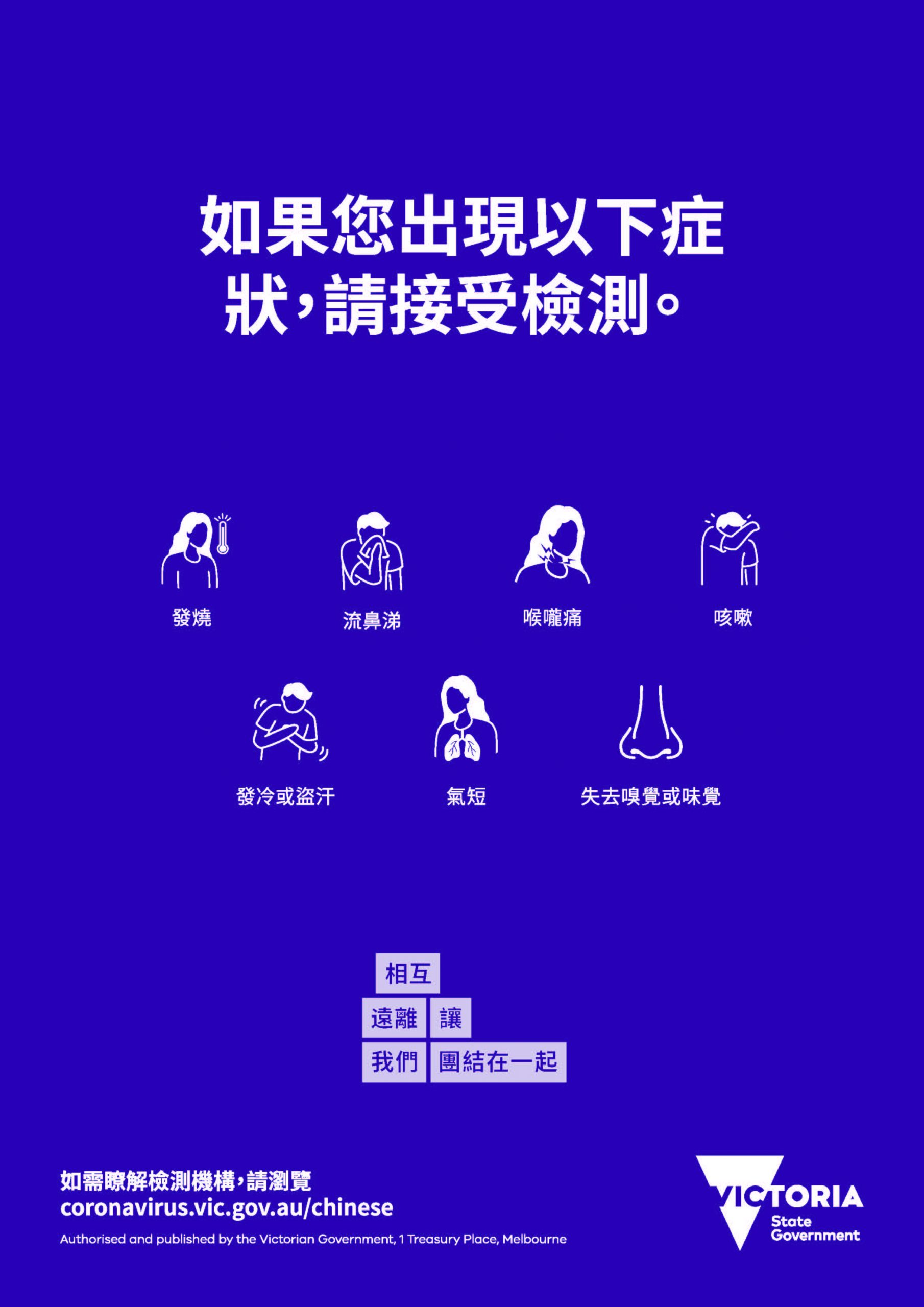
如果您出現以下症狀,請接受檢測。

How to wear a face mask 怎麼戴口罩

保护您自己和家人 – 咳嗽和打喷嚏时请捂住
UAE Fully Suspends Trade and Financial Ties with Iran
Victorian Liberal Candidate Counselled Over Volunteer Internship Program

Trump signs order banning “birth tourism” and further restricting birthright citizenship

SpaceX Rocket Debris Hits the Moon, Renewing Concerns Over Space Junk

Australia Sets New Standards for Men’s Behaviour Programs
Trending
-
 Cuisine Explorer6 years ago
Cantonese Mango Sago
-
Tagalog6 years ago
FILIPINO: Kung nakakaranas ka ng mga sumusunod na sintomas, mangyaring subukan.
-
Uncategorized6 years ago
如果您出現以下症狀,請接受檢測。
-
 Uncategorized6 years ago
How to wear a face mask 怎麼戴口罩
-
Cantonese - Traditional Chinese6 years ago
保护您自己和家人 – 咳嗽和打喷嚏时请捂住
-
 Uncategorized6 years ago
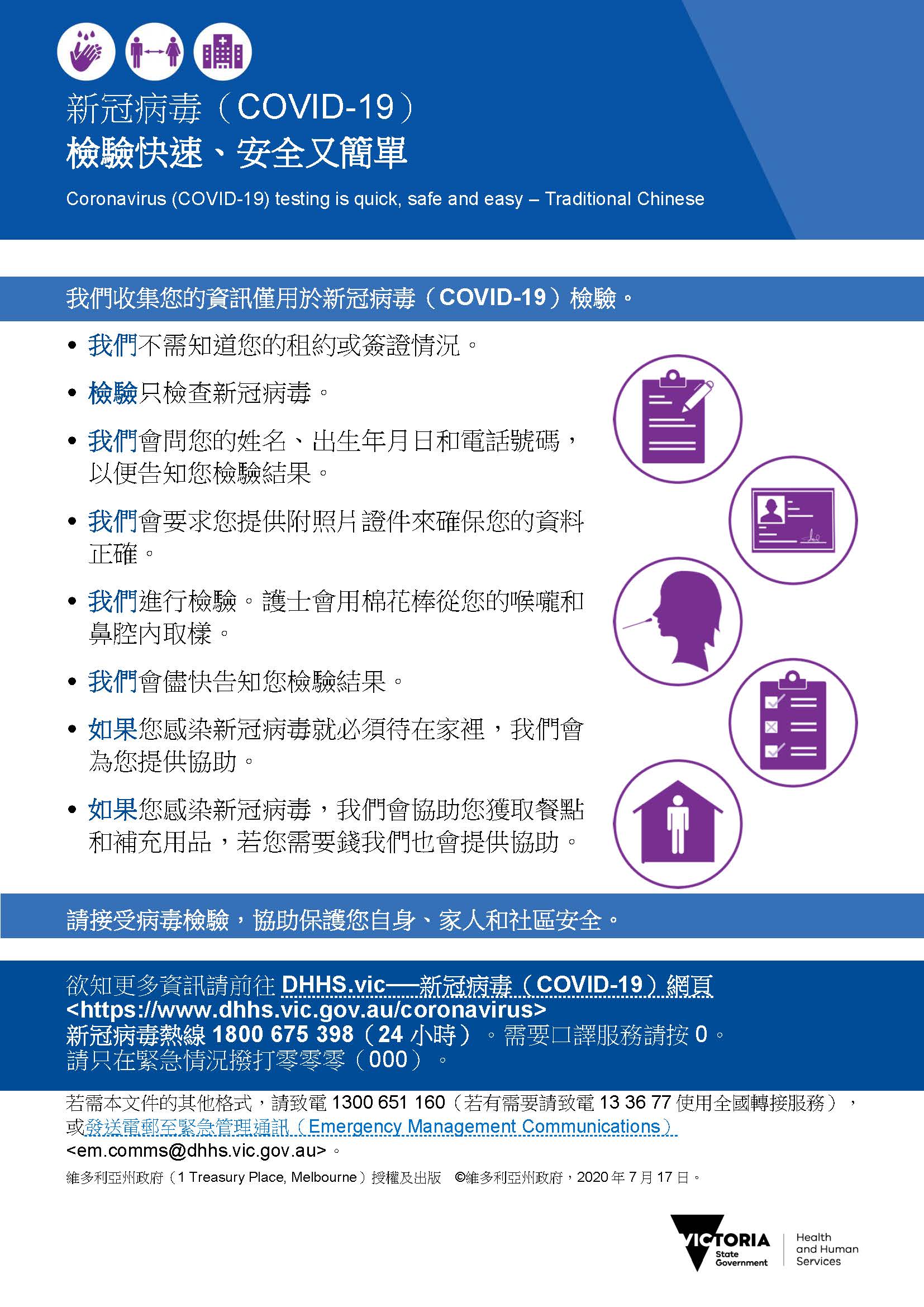
COVID-19 檢驗快速 安全又簡單
-
Uncategorized6 years ago
在最近的 COVID-19 應對行動中, 維多利亞州並非孤單
-
 Cantonese - Traditional Chinese6 years ago
保護您自己和家人 – 咳嗽和打噴嚏時請捂住
