
National News
Melbourne Anti-Immigration Rally Clashes with Anti-Racism Protesters

On October 19, 2025, large-scale anti-immigration protests erupted in Melbourne’s city center, coinciding with counter-protests against racism. The two groups clashed violently, resulting in two police officers being hospitalized. Police plan to use extensive CCTV and body-worn camera footage to identify and prosecute individuals who engaged in violent behavior. One woman may face charges.
The anti-immigration rally, organized by March for Australia, opposed what organizers describe as mass migration policies and attracted a large crowd. Victoria Police used flashbangs, pepper spray, and rubber bullets to control crowds and prevent escalation. Superintendent Wayne Cheeseman said members of the counter-protest, “United Against Racism: Migrants and Refugees Are Welcome,” were desperately trying to confront the anti-immigration demonstrators.
Protesters threw large rocks, glass bottles, and rotten fruit at police during the chaos. One female officer reportedly suffered a suspected broken hand from being kicked, and a male senior constable sustained a leg laceration. Cheeseman commented, “Melbourne has had enough. Protesters threw rocks and glass bottles at police, set bins and flags on fire — this has gone too far.” He emphasized that police used force in response to protesters’ actions, not proactively.
Victoria Premier Jacinta Allan condemned the violence, stating that protesters who acted violently must face serious legal consequences. She also said new security legislation scheduled for November would help prevent similar incidents.
Victoria Police union secretary Wayne Gatt compared the scenes to Northern Ireland in the 1970s, calling them “filthy and disgusting,” and criticized that only police rights were unprotected while extreme protesters were “completely out of touch with reality.”
Counter-protesters criticized police for restricting the demonstration rights of thousands and allegedly tolerating the racist intent of the anti-immigration rally. They claimed that at least five protesters were hospitalized, although police said no reports had been received.
Similar protests took place in Sydney and Brisbane on the same day, but without the severe violence seen in Melbourne.

Daily News
NDIS Plans to Be Computer-Generated

Daily News
Victorian Government U-Turns, to Criminalize “Coercive Control”

National News
Victoria Police Admit Eight Years of Illegal Weapons Searches

A Short Break Before Continuing the Journey
A Glimmer of Hope Amid Disaster
Tai Po Inferno Was a Man-Made Disaster
One Year Countdown: Support for Both Major Parties Declines – Where Is the 2026 Victorian Election Heading?

Southeast Asia Floods Leave More Than 1,300 Dead

Fraudulent ivermectin studies open up new battleground

Cantonese Mango Sago

FILIPINO: Kung nakakaranas ka ng mga sumusunod na sintomas, mangyaring subukan.

如果您出現以下症狀,請接受檢測。

保护您自己和家人 – 咳嗽和打喷嚏时请捂住
Southeast Asia Floods Leave More Than 1,300 Dead

US–Russia Talks Fail to Yield Results; No Progress in the Russia–Ukraine War

Chinese Beverage Chains Flood Into Hong Kong and Other Global Cities

NDIS Plans to Be Computer-Generated

China and Russia Jointly Pledge to Firmly Resist Japanese Militarism
-
 COVID-19 Around the World4 years ago
Fraudulent ivermectin studies open up new battleground
-
 Cuisine Explorer5 years ago
Cantonese Mango Sago
-
Tagalog5 years ago
FILIPINO: Kung nakakaranas ka ng mga sumusunod na sintomas, mangyaring subukan.
-
Uncategorized5 years ago
如果您出現以下症狀,請接受檢測。
-
Cantonese - Traditional Chinese5 years ago
保护您自己和家人 – 咳嗽和打喷嚏时请捂住
-
 Uncategorized5 years ago
COVID-19 檢驗快速 安全又簡單
-
 Uncategorized5 years ago
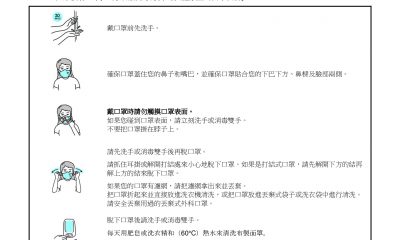
How to wear a face mask 怎麼戴口罩
-
Uncategorized5 years ago
在最近的 COVID-19 應對行動中, 維多利亞州並非孤單
