
National News
Colleges warned not to take advantage of student visas

Private colleges have issued nearly 3,000 last-minute enrolments to a diploma course that is being cancelled after allegedly being “misused” by non-genuine students, as Labor threatens to suspend providers that are manipulating new rules.
Guardian Australia revealed in September that private colleges were offering discounts to rush students into the graduate diploma of management (learning) ahead of its deregistration on 5 October, which the government says was being used by some non-genuine students to remain in the country. The assistant minister for international education, Julian Hill, said at the time the system had been “misused”.
The regulator says since the ban was announced on 4 September, more than 1,300 new enrolments had been issued and more than 1,500 students have had their future enrolments brought forward. Some immigration education agents have offered promotions for the month of September, including in WhatsApp messages and texts, encouraging students to join the course or those who have a future enrolment to study now. Several ads promote discounted course fees or a free certificate of enrolment to join immediately.
As part of the rule changes, students who have “packaged” a lower-level vocational course with the graduate diploma will need to enrol on to a higher-level course to meet their visa requirements. By fast-tracking the start date of the graduate diploma, that could mean studying two courses at the same time.
The Department of Home Affairs has issued letters of concern to several providers asking them to explain their behaviour and practices. Hill also stated he was prepared to use powers not previously exercised on colleges that have breached the rules, preventing them from being able to recruit new students.

National News
NSW passes ‘human compost’ laws

Several New South Wales MPs say they want their own bodies turned into “human compost” after Australian-first laws allowing the unusual practice were passed on Wednesday to provide a third legal option other than burial and cremation for the treatment of bodies.
The private member’s bill was introduced by independent Sydney MP Alex Greenwich, who travelled to Germany and the US to research the practice, which is allowed in some parts of both countries.
The practice, known as natural organic reduction, termination or human composting, involves placing the body in a temperature-controlled vessel with organic matter such as alfalfa, straw or mulch. Once inside, the vessel is turned or rocked to circulate air. The introduced matter reacts with the air and feeds the body’s naturally occurring microbes to rapidly decompose the body. The process creates heat that, after about 30 days, transforms the body into soil. When rested for about 30 days more, the vessel contains about 110kg of “dry, rich soil that is fertile and free of pathogens”, Greenwich told the legislative assembly earlier this year.
In the legislative council on Wednesday, John Ruddick, a Libertarian MP, said he backed what Greens MP Dr Amanda Cohn said in supporting the bill: he thought it was likely he would choose this burial method over a burial plot or cremation.
Liberal MP Susan Carter urged the government to consider when it implemented the bill how to ensure the dead were respected. Emma Hurst MP, the Animal Justice MP who introduced the bill into the legislative council, told parliament on Wednesday that terramation had significant environmental benefits, explaining that it avoids the need for large burial plots and can be wholly carbon neutral, compared with cremation, which she said was energy intensive and released substantial greenhouse gas emissions.
National News
House prices falling in every Australian capital city for first time in 15 years

House prices are falling across every capital city for the first time in 15 years and the second time on record, according to figures from Domain’s September Quarter 2026 House Price report.
House prices in Melbourne have fallen for the third consecutive quarter, slumping 3.3% in the September quarter, but remains in the million-dollar club, marginally, with a median price of $1.014m after experiencing its largest quarterly house price fall in four years.
“Geographically, the downturn has broadened, but also across property types with houses and units also falling,” Domain’s chief residential economist, Nicola Powell, said. Morgan Stanley economists agreed, predicting the market will bottom out in the second half of 2027. They expect the downturn to run as deep as 15% from peak to trough.
National News
MP Helen Haines amputated after deliberate vehicle attack

Helen Haines, the independent federal MP for the Victorian seat of Indi, has had both legs amputated but is in a stable condition after an alleged attack in Wangaratta on Monday afternoon.
Security agencies will review safety precautions for MPs’ homes and offices after numerous federal politicians told police and Asio in safety briefings that they were worried about widening threats after the alleged attack on Haines.
The Labor government and politicians across the parliament are still considering how they will respond when they return to Canberra next week, with ideas being floated including a new committee on MPs’ safety, greater resources for police, and motions of condolence for Haines, who lost both her legs after Monday’s incident. Renewed calls from the crossbench for reforms to question time and the tone of debate in parliament are unlikely to be taken up by the major parties.
In safety briefings with the Australian federal police and Asio granted to Labor, Coalition and crossbench MPs on Wednesday, security of homes and electorate offices was a common concern, according to Guardian Australia interviews with 10 MPs. While a broad review of safety and security is unlikely at this stage, multiple MPs across the political spectrum admitted they had spent thousands of dollars of their own money to install safety features based on the advice of the federal police.
Federal ministers receive stronger security assistance but numerous backbenchers said they felt under-resourced, saying many angry constituents may see all politicians as a homogenous group, and may not differentiate between cabinet members and ordinary local MPs.

Airbnb scraps check-out chores for guests under new rules
Meta ordered to pay New Mexico $US25 billion for deceiving users about privacy on Facebook
NSW passes ‘human compost’ laws
House prices falling in every Australian capital city for first time in 15 years
MP Helen Haines amputated after deliberate vehicle attack

Cantonese Mango Sago

如果您出現以下症狀,請接受檢測。
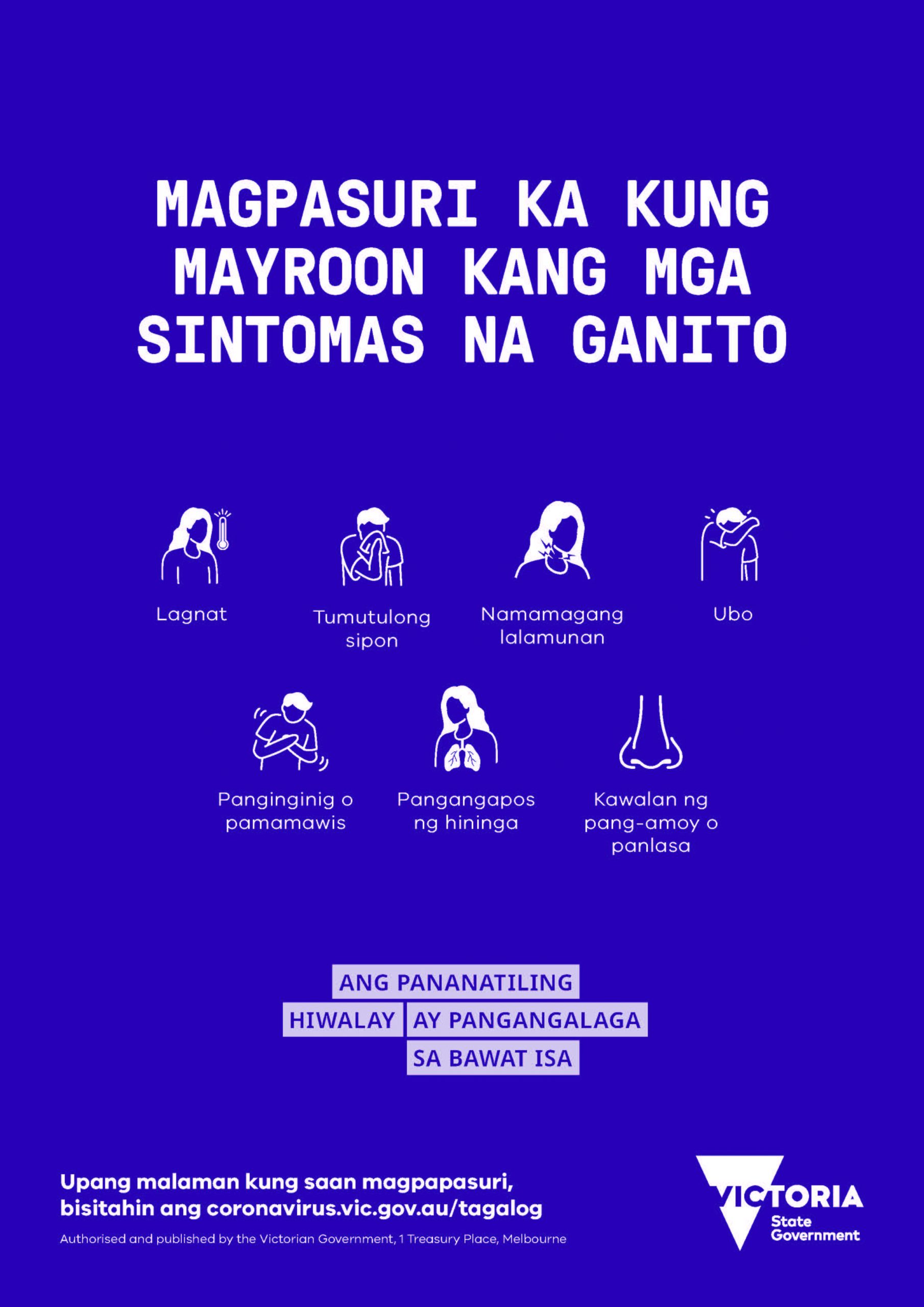
FILIPINO: Kung nakakaranas ka ng mga sumusunod na sintomas, mangyaring subukan.

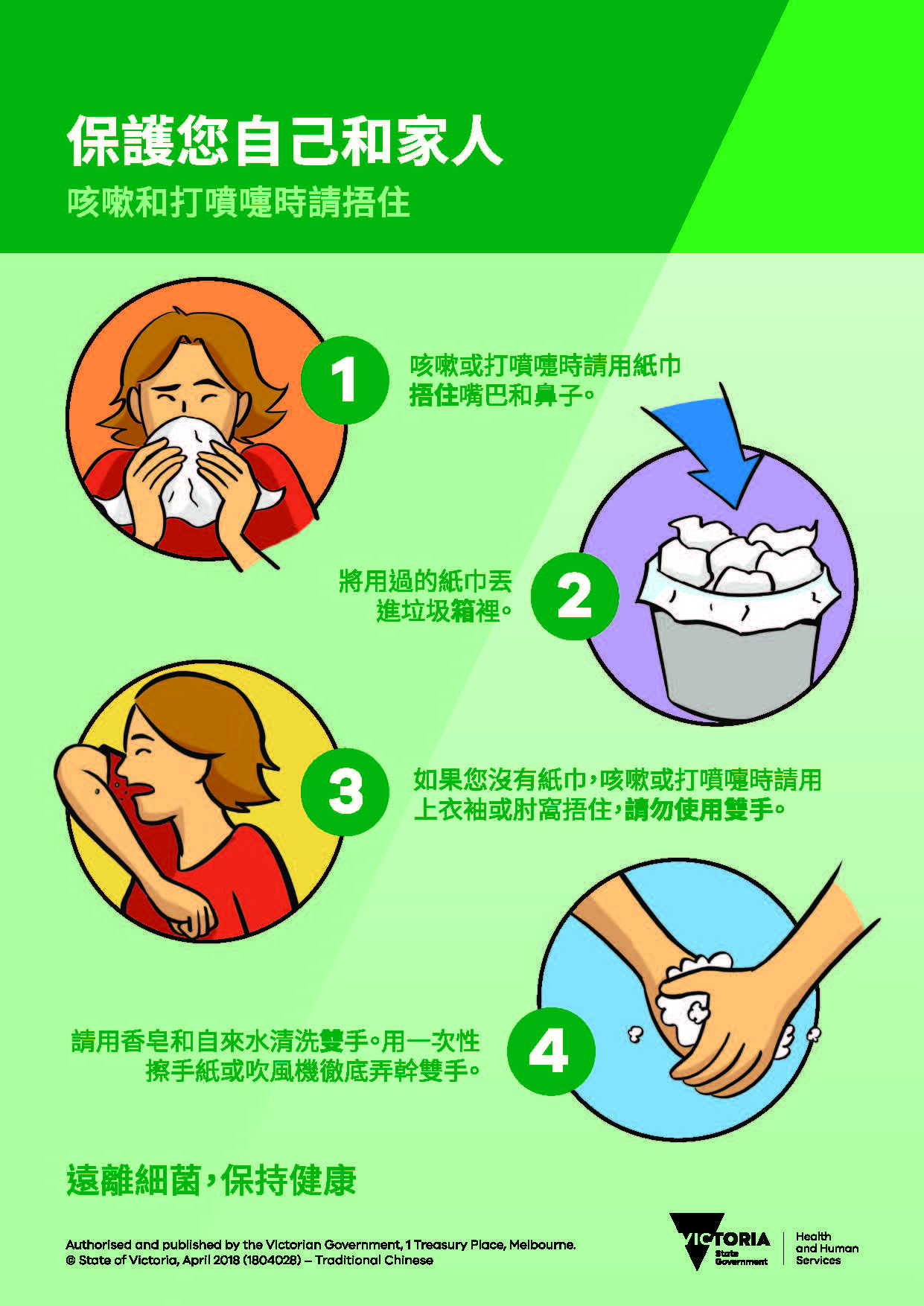
保护您自己和家人 – 咳嗽和打喷嚏时请捂住

How to wear a face mask 怎麼戴口罩
UAE Fully Suspends Trade and Financial Ties with Iran
Victorian Liberal Candidate Counselled Over Volunteer Internship Program

Trump signs order banning “birth tourism” and further restricting birthright citizenship

SpaceX Rocket Debris Hits the Moon, Renewing Concerns Over Space Junk

Australia Sets New Standards for Men’s Behaviour Programs
-
 Cuisine Explorer6 years ago
Cantonese Mango Sago
-
Uncategorized6 years ago
如果您出現以下症狀,請接受檢測。
-
Tagalog6 years ago
FILIPINO: Kung nakakaranas ka ng mga sumusunod na sintomas, mangyaring subukan.
-
Cantonese - Traditional Chinese6 years ago
保护您自己和家人 – 咳嗽和打喷嚏时请捂住
-
 Uncategorized6 years ago
How to wear a face mask 怎麼戴口罩
-
 Uncategorized6 years ago
COVID-19 檢驗快速 安全又簡單
-
Uncategorized6 years ago
在最近的 COVID-19 應對行動中, 維多利亞州並非孤單
-
 Cantonese - Traditional Chinese6 years ago
保護您自己和家人 – 咳嗽和打噴嚏時請捂住
