Connect with us

Features

Britain Talks Division: Could Australia Have Another Western Australia?

Published

on

If a place has its own government, parliament, as well as a unique history, culture and identity, could it one day choose to leave the country it belongs to?

This question has recently once again become a focus of British politics. On September 14, political leaders from Scotland, Wales and Northern Ireland held a summit and signed a joint memorandum, collectively putting forward demands for self-determination and calling for greater powers for each region to decide its own constitutional future.

These remarks may carry an element of political declaration, but the issue they reflect is not limited to the United Kingdom. When regional governments, parliaments and identities gradually take shape, where should the boundary of power between regions and the central government lie? If self-determination and independence are brought back onto the political agenda across the UK, could an Australian state one day also leave the federation?

Different Histories, Different Identities

To understand why the UK has seen this debate over independence and self-determination, it is first necessary to understand that the UK itself was not a country gradually built around a single nation and a single political centre. England, Scotland, Wales and Northern Ireland each have different histories, cultures and political identities.

Scotland was originally an independent kingdom, with its own legal system, educational traditions and political history. It was not until 1707 that it united with England to form the Kingdom of Great Britain. Wales, meanwhile, was conquered by England and incorporated into its rule at the end of the 13th century, and its language and cultural traditions also came under pressure. Northern Ireland was also occupied by England and experienced a long history of British rule, population movements, religious divisions and political conflict.

For Scotland, Wales and Northern Ireland, regional identity already has deep historical and cultural roots. Political demands for autonomy or independence have, to some extent, also been built on these existing identities. Regional identity did not suddenly emerge because of political disputes in recent years, but has long existed within society.

In other words, today’s UK is a country formed through the long-term political integration of different historical communities, and these histories themselves have shaped how local societies understand identity, power and central rule. When these identities come into conflict with the power of the central government, cultural policies or national identity, existing regional identities may further develop into political demands for autonomy, self-determination, or even independence.

Devolution

This history also influenced Britain’s later political system. Beginning in the 1990s, the UK introduced “devolution”, establishing regional parliaments and governments in Scotland, Wales and Northern Ireland and transferring some domestic powers back to the regions. Policies on education, healthcare and transport, among others, can in part be decided by local governments, while foreign affairs, defence and matters concerning the UK’s overall constitutional arrangements remain largely under the control of Westminster.

Devolution was originally intended to give regions greater autonomy, but it also made regional political identities more visible. Once regions had their own parliaments and governments and could handle many policies themselves, demands for further powers, and even political space to discuss independence, also increased. Scotland held an independence referendum in 2014. At the time, 55% of voters supported remaining in the UK, while 45% supported independence, but the issue of independence did not disappear as a result.

In recent years, nationalist parties in Scotland, Wales and Northern Ireland have gained greater political influence, bringing this constitutional debate back into focus. The political objectives of the three regions are not exactly the same. Scotland and Wales mainly debate independence, while Northern Ireland involves Irish reunification. But all three share one common demand: that the central government should further recognise the regions’ right to determine their own constitutional futures.

The Differences Between Local Autonomy in the UK and Australia

Looking back at Australia, we can also see a similar institutional arrangement. Scotland, Wales and Northern Ireland have their own parliaments and governments, while Australia’s states also have their own state governments and parliaments.

The key difference worth comparing is the position these regional governments occupy within the overall national system. Scotland, Wales and Northern Ireland have gained a certain degree of autonomy within the sovereign state of the UK through devolution. Australia’s six states, by contrast, are themselves important components of the federal system, with the powers of state governments divided and protected by the Australian Constitution. In other words, both sides have regional autonomy, but the historical and constitutional foundations that created this autonomy are different.

What makes Australia particularly distinctive is that, in addition to the federal and state levels, there are also local governments, creating three levels of government: federal, state and local. Each level is responsible for different areas of affairs, allowing political power to be distributed across different levels. For ordinary residents, issues such as education, healthcare and public transport can be handled by state governments, while local roads, planning and community services are handled by local governments. National matters such as defence, foreign affairs and immigration are handled by the federal government.

For an Australian state, moving from a federal system to a sovereign country would not simply mean expanding the powers of the state government slightly further. It would mean crossing an entire set of national-level institutional issues involving law, population, defence, foreign affairs, currency and borders.

Western Australia Once Considered Leaving Too

Compared with the UK, Australia has a shorter history. Before federation was established in 1901, the six states were originally separate British colonies, each with its own government and parliament, before later forming Australia through the federal system. Western Australia, in particular, once sought to leave the Australian Federation because of dissatisfaction with the federal system.

Western Australia was the last colony at the time to decide to join the federation. The gold rush in the late 19th century drove rapid population and economic growth, but Western Australia was geographically distant from the eastern states, and its economic structure and local interests were also different. The state had abundant mineral resources and vast areas of land. As resource development continued, Western Australia later became an important resource and export base for Australia. Iron ore, gold, natural gas and lithium remain important pillars of Western Australia’s economy today.

However, joining the federation did not eliminate the differences between Western Australia and the eastern states. In 1900, Western Australian voters voted in favour of joining the federation, but after federation was established, disputes over tariffs, resources and economic interests continued. Some Western Australians believed that Western Australia provided large amounts of resources and export revenue to the country, but federal policies did not necessarily adequately reflect local interests. As these grievances accumulated, the idea of leaving the federation regained attention in the 1920s, while the Great Depression further deepened dissatisfaction with the federal system among some Western Australians.

By 1933, this separatist sentiment finally reached the stage of a referendum. Western Australia held a referendum on April 8 on leaving the Australian Federation, with more than two-thirds of voters supporting separation. The Western Australian government subsequently sent a delegation to Britain to seek support, but the British side ultimately considered that Western Australia could not legally leave the federation without the approval of the Australian Parliament. Western Australia ultimately remained part of the Australian Federation.

Could Western Australia Become Independent Today?

Whether Western Australia could become an independent country today can be considered from four aspects: law, population, the economy, and identity.

(1) Law

To discuss whether Western Australia can leave Australia, we can first return to the establishment of the Australian Federation. Before 1901, Australia’s six states were still British colonies, each with its own government, parliament and legal system. They were not a unified country. As there was a need to handle matters such as defence, immigration and trade collectively, the colonies eventually chose to form a federation and establish Australia as a common country under the same system.

Once this federal system was established, whether a state could leave on its own was no longer simply a matter that could be decided within the state. The Australian Constitution does not specify how existing states can leave the federation. Instead, its opening provisions describe the Australian Commonwealth as “indissoluble”, meaning indivisible. In other words, the current Constitution does not provide a legal procedure for a state to independently withdraw from the federation.

If a state were to legally leave Australia, the Constitution would first have to be amended, and constitutional amendment requires a national referendum. In addition to receiving support from more than half of voters across Australia, a majority of voters in a majority of states would also have to support it. This arrangement in fact reflects the way the federation was originally established: since Australia was formed as a federation through the agreement of different colonies, changing the constitutional arrangements of the federation itself cannot be decided unilaterally by just one state.

Therefore, even if Western Australia held its own referendum and obtained majority support, a state-level vote alone would not be enough to complete secession. If Western Australia were genuinely to leave Australia, it would need not only the consent of Western Australians, but also the agreement of the entire federal political community to a change in the constitutional arrangements. Therefore, under the current system, it is not simple for an Australian state to move towards independence.

(2) Population

But assuming that this legal obstacle were genuinely resolved one day, would Western Australia have the basic conditions to become a country?

Population is one important factor. As of March 2026, Western Australia’s population was more than 3 million, while Australia’s total population was approximately 27.92 million. This in itself does not mean that it could not become a country, but the size of the population would directly affect the institutional costs it would have to bear after independence.

Functions currently handled by the federal government, including defence, foreign affairs, borders, immigration and some financial and administrative functions, would all need to be established and maintained by Western Australia itself after independence. Therefore, the real question concerning population is not simply “how many people are there?”, but whether this population size could support the institutions and public services required by a fully sovereign country.

(3) Economy

On the other hand, Western Australia does have a very strong economic foundation. According to the latest data from the Western Australian Government, Western Australia’s gross state product was approximately A$461.7 billion in 2024–25, accounting for around 17% of Australia’s economy. In the year to May 2026, Western Australia’s merchandise exports reached A$237.7 billion, accounting for 44.5% of Australia’s total merchandise exports.

But the question is how much of this economic strength could be directly converted into the capabilities of an independent country.

Western Australia’s current exports, businesses, labour market and financial system do not operate within the framework of an independent country. Large-scale resource exports require international trade arrangements, businesses would need to deal with new tax and regulatory systems, while residents would also have to deal with currency, banking, passports, borders and immigration issues that are currently handled uniformly under the federal system. Even if Western Australia retained the Australian dollar, maintained an open border with Australia, or signed a defence cooperation agreement with Australia, these arrangements would all have to be renegotiated rather than naturally continuing after independence.

(4) Identity

Beyond population and the economy, there is another factor that is more difficult to quantify: identity.

Unlike Scotland and Wales, although Western Australia has its own history, geographical environment and regional identity, this does not mean that Western Australians generally see themselves as a nation separate from Australia. Regional identity and Australian identity can coexist. Therefore, separatist demands that have emerged in Western Australia in the past may not necessarily have been based primarily on cultural or national identity. They can also be understood as dissatisfaction with the federal system, central government policies, and the distribution of interests between the states.

In other words, believing that “leaving Australia” would give Western Australia greater autonomy is different from believing that “Western Australia is a nation separate from Australia”. For a genuinely independent country, in addition to having its own government, economy and territory, there must also be sufficient political will for residents to accept a new national identity.

Western Australia today is not a place lacking the conditions for independence, but neither is it a place that could simply leave the Australian Federation after holding a single referendum. The real key would still require fundamental changes to both Australia’s constitutional system and Western Australia’s own political choices.

Three Levels of Government Provide Space Beyond Independence

Australia’s federal system actually provides a relatively important buffer.

The three-level government system has of course not eliminated conflicts between the central government and the regions, but it means that regions do not necessarily have to choose between “completely obeying the central government” and “leaving the country”. State governments already have certain legislative and policy powers. They can formulate state-level policies according to local needs, manage public services, and represent their states in negotiating fiscal and policy arrangements with the federal government.

For Western Australia or other states, this means that even if a state government believes that the distribution of resources under the federal system is unfair, it can still demand reform within the federal framework. Even if it believes that states should have greater autonomy, it can put forward demands for greater state powers. Local interests do not need to first be transformed into demands for independence in order to have political space for expression.

This is one of the important functions of a federal system: it does not require every region to be exactly the same, but within the same country, it allows different regions to retain a certain degree of autonomy.

The Australian Constitution establishes the basic framework of this system by dividing powers between the federal and state governments. The three levels of government then distribute different areas of public responsibility. This arrangement may not prevent all conflicts between the central government and the regions, but it at least provides different levels of political responses.

Therefore, if regional consciousness in an Australian state were to strengthen further in the future, the question would return to the federal system itself: can Australia’s existing federal system continue to accommodate the interests and demands of different regions, allowing regions the space to seek greater autonomy within the federal framework?

Countries Do Not Remain Unchanged, and Institutions Must Respond to Society

From a broader perspective, the UK’s experience is not only about Scotland, Wales or Northern Ireland. It also reflects a more universal question: the relationship between the state and society has never been fixed. Population movements, economic development, generational change, rising levels of education, and the gradual formation of regional identities can all change how society understands power, identity and autonomy. These changes do not necessarily lead directly to independence, but they may cause political arrangements that were once taken for granted to gradually come under renewed scrutiny.

This change does not exist only in the UK or federal countries. For other countries, and even centralised states such as China, how the relationship between the centre and the regions, and between the state and society, should be adjusted is also an issue that needs to be addressed. Central power can be very strong, but maintaining a stable community over the long term depends not only on laws and political institutions, but also on whether institutions can respond to the constantly changing needs of different regions and social groups.

Returning to Australia, the issue facing Western Australia today is still mainly about the distribution of power and interests within the federation, rather than the breakup of the country. But Western Australia already held a secession referendum a century ago, while self-determination debates have re-emerged in the UK today. Looking at these two histories together shows that the relationship between regions and the centre is not fixed. The integrity of a country can be established by laws and institutions, but for a community to remain together over the long term, institutions ultimately need to have the ability to respond to changes in society.

Continue Reading

Features

The Death of Jianming Feng: Who Sees the Migrant Workers on the Margins of the System?

Published

on

From the gig economy and urban safety to migrant worker protections, a tragedy exposes systemic issues

On the evening of 6 November 2026, in Melbourne’s CBD, near Queen Victoria Market, a food delivery rider was found lying in a pool of blood on Frederick Way.

His name was Jianming Feng. He was 47 years old and came from Xi’an, Shaanxi Province, China. He had lived and worked in Australia for many years, making a living through food delivery. According to his family, he had always lived frugally, hoping to send as much of his income as possible back to his hometown to support his parents, wife and two children. For him, every delivery order was more than just a job. It was also a source of livelihood for a family living far away.

On the night of the incident, Jianming Feng and another delivery rider noticed someone tampering with their parked vehicles. The two approached the individual to confront them, and a confrontation subsequently broke out. Jianming Feng was stabbed and later died in hospital, while the other rider was also injured. Police subsequently arrested a 51-year-old man and charged him with murder and intentionally causing serious injury, among other offences. The case remains subject to judicial proceedings, and criminal liability must be determined by the court in accordance with the law.

The news sparked deep grief within the Chinese community. Members of the public and community representatives held memorial events and organised fundraising efforts for the victim’s family. Within a short period, the community demonstrated a moving sense of solidarity and compassion.

However, as we mourn Jianming Feng’s death, we should also ask a deeper question:

Why might someone who spends every day travelling through the city’s streets to deliver food to the public lack adequate safety protections while doing their job? Does our system truly recognise the circumstances these workers face?

A Criminal Case, or a Wider Warning to Society?

First, it is important to be clear: Jianming Feng’s death was a serious violent crime. Without sufficient evidence, the incident should not be reduced to the direct consequence of any particular social group, mental illness or individual policy.

Currently available public information is insufficient to establish whether the suspect was homeless, had a long-term mental health condition, or whether the case was directly connected to food delivery platforms’ deduction policies. These questions require police investigations, judicial proceedings and reliable evidence, rather than public speculation.

However, avoiding the treatment of unverified details as facts does not mean we cannot question the systemic issues behind the incident.

A tragedy can raise several issues that deserve serious attention from society: public safety in the CBD, mental health and homelessness support, occupational safety for platform workers, and the rights of temporary visa holders and migrant workers.

Government officials and the City Council have emphasised that people have the right to live and work safely on the streets. This is essential. But if public discussion stops at increasing patrols, strengthening law enforcement and cracking down on crime, we may overlook another important question: Do the people who work on our streets every day have adequate institutional protections?

Food Delivery Platforms: Flexible Work, or Risks Shifted onto Workers?

Food delivery platforms have made urban life more convenient and provided a source of income for many new migrants, international students and other workers. Workers can accept orders through their phones and, to some extent, arrange their own working hours. Platforms, meanwhile, connect customers, restaurants and delivery riders.

However, this model raises an important question: when platforms control mechanisms such as order allocation, ratings, income calculations and account management, while riders are classified as independent contractors, how should responsibilities be distributed between the two parties?

Independent contractor status should not become an excuse for platforms to avoid reasonable responsibilities. Riders have to bear the costs of their vehicles, fuel and maintenance, as well as the risks associated with their work. If an accident occurs, can they access adequate insurance and support? When problems arise with an order, are the platforms’ deduction and appeals systems fair and transparent?

These issues are not new. Previous surveys conducted by the Transport Workers’ Union of Australia have already highlighted the difficulties food delivery riders face in securing workplace protections. A 2019 survey involving 234 riders found that approximately 75 per cent of respondents held temporary visas. A 2020 union survey also found that among respondents who had been injured, approximately 81 per cent said they had received no support from their platforms. These findings relate to specific years and survey samples and should not be treated as representative figures for all delivery riders across Australia today. However, they demonstrate that these problems have existed for some time.

From 17 August 2026, Australia’s first minimum standards order covering eligible food delivery platform workers officially came into effect. It covers matters including minimum income calculations, vehicle expenses, insurance, record-keeping, platform consultation and dispute resolution. This is an important development and reflects the government’s recognition that platform workers still require a certain level of institutional protection, even if they are not classified as traditional employees.

However, the new standards do not mean that all riders automatically become employees, nor do they guarantee protection for every working hour, accident or occupational risk. Having regulations in place is one thing, but are they being properly enforced? Is the insurance coverage adequate? Do platforms have clear support and reporting mechanisms when riders encounter dangerous situations? These are all issues that require ongoing scrutiny.

Following Jianming Feng’s death, the Transport Workers’ Union raised questions about platform safety responsibilities and deduction arrangements, and called on WorkSafe to investigate. The union also relayed reports from riders who said they had been charged for meals that were lost or stolen. HungryPanda, meanwhile, stated that the company did not have a policy automatically requiring riders to compensate for stolen meals, and that there was no evidence linking Jianming Feng’s death to its meal compensation arrangements.

We should not treat the union’s allegations as established facts, but neither should the platforms’ denials put an end to further questions. What needs to be clarified is whether platforms’ everyday management practices are fair, whether riders have safe and reasonable procedures to follow when facing theft, threats or other dangerous situations, and whether platforms place workers’ personal safety ahead of commercial efficiency.

“Migrants” Are Not a Homogeneous Group

Jianming Feng had lived in Australia for many years. However, there is insufficient publicly available information to confirm his specific visa category or work rights status. We should not assume that he was working illegally, nor should we portray all food delivery riders as illegal workers.

This distinction is particularly important.

When discussing migration, Australian society often groups people from different backgrounds under the broad label of “migrants”. But migrants are not a group of people who share the same living conditions or enjoy exactly the same rights.

Some have obtained permanent residency, while others have become Australian citizens. Some hold student visas, others hold work visas, while some are on bridging visas or going through other specific immigration processes. Work rights, access to healthcare and eligibility for welfare benefits vary between visa categories and should not be treated as the same.

Some new migrants have professional qualifications, stable employment and established social networks. Others, however, may be restricted to unstable, long-hour and higher-risk jobs because of language barriers, difficulties getting their qualifications recognised, financial pressures or visa restrictions.

They are equally part of Australian society and play a role in keeping cities running every day. But do they have sufficient information to understand their rights? When faced with unpaid wages, deductions, workplace injuries or unfair treatment, do they know where to seek help? If they fear losing their jobs or affecting their visa status, would they dare to make a complaint?

These are questions that governments, unions, community organisations and platform companies need to address together.

More importantly, temporary visa holders should not automatically be equated with illegal workers, just as independent contractors should not automatically be regarded as having no workplace rights. Australia already has relevant laws and regulatory frameworks. What needs to be examined is whether these systems can effectively cover workers across different employment arrangements and immigration statuses.

Urban Safety Requires More Than Increasing Police Presence

Jianming Feng’s death has also renewed public attention on safety in Melbourne’s CBD.

Public safety certainly requires effective law enforcement, appropriate police deployment and a serious response to violent crime. However, a safe city cannot be built through policing and criminal penalties alone.

Accommodation support for homeless people, mental health services, crisis intervention, community services and public space management are equally important components of urban safety.

If people have been living on the streets for extended periods without access to appropriate accommodation and support, the government needs to examine whether existing services are sufficient. If someone experiences a serious mental health crisis, it is also worth asking whether medical and social support systems can intervene in time.

However, we must avoid drawing a direct link between mental illness, homelessness and violence. The vast majority of people with mental health conditions do not harm others. The real policy challenge is how to ensure that those in need receive appropriate treatment and support early, while also safeguarding the wider community.

Similarly, an overall decline in crime statistics does not mean residents’ safety concerns can be dismissed. Broad figures can help governments understand trends, but they cannot replace the lived experiences of residents, business owners and night-time workers. Governments need to address both the trends reflected in the data and the specific concerns raised by the community.

The Responsibility of the Media and Community: Mourning Must Be Followed by Questions

Following the incident, mainstream Australian media reported on the circumstances of the case, the suspect’s court appearances, community memorials and the government’s response to public safety concerns. Some reports also went further to examine working conditions on food delivery platforms and rider safety. Therefore, it would be inaccurate to say that the media completely ignored these issues.

However, we can still raise another question: as media attention gradually shifts elsewhere, will the protections afforded to platform workers, the circumstances faced by migrant workers and the regulatory responsibilities shared between government agencies continue to receive attention?

A murder case may dominate headlines for several days, but institutional reform requires sustained public scrutiny. If, after the incident, people only remember a memorial, a fundraising campaign and a few promises to strengthen public safety, without continuing to ask how platforms protect riders, how governments regulate the industry and how workers can seek help, the public lessons of this tragedy may gradually disappear.

The Chinese community demonstrated a strong sense of solidarity during this incident, and that deserves recognition. However, the community’s role should not be limited to fundraising, memorial events and expressing grief to the government.

We also need to develop a more sustained capacity for advocacy: helping workers understand their workplace rights and visa regulations; ensuring that those in need know how to access legal, medical and social services; establishing communication channels with unions, community organisations and government agencies; and demanding that platforms make their safety and complaints procedures more transparent and effective.

The responsibility of community representatives is not only to speak on behalf of the community, but also to bring the circumstances of those whose voices are rarely heard into public discussion.

Re-examining Society Through the Life of One Individual

Jianming Feng’s death is, first and foremost, an irreparable loss for a family. His wife has lost her husband, his two children have lost their father, and his elderly father has lost his son. No matter how many policies the government introduces in the future, nothing can return this family to the way things were.

We should not use his death as a political slogan, nor should we assign blame to any particular group or institution before the investigation is complete.

But respecting the deceased means more than holding memorials and making donations. True respect means allowing his experience to remind us that, even in a prosperous city, there are still people who work long hours in all weather conditions, potentially without adequate protection. And in a society that takes pride in its multiculturalism, there are still migrant workers whose voices have not genuinely made their way into the centre of policymaking and public discussion.

Multiculturalism in Australia should not be reflected solely through festivals, food, languages and cultural performances. More importantly, it should be reflected in fair working environments, equal institutional protections, meaningful participation in society, and accessible avenues for seeking help when anyone encounters difficulties.

A truly inclusive society does not simply welcome people from different backgrounds to come here. It must also ensure that they receive the respect and protection they deserve when working, living and building families here.

Jianming Feng’s life cannot be brought back. But we can choose not to let this tragedy become just another fleeting news story.

Moving from mourning to accountability, and from sympathy to reform, is the least we owe him, his family and everyone who works tirelessly on the margins of our cities.

Continue Reading

Features

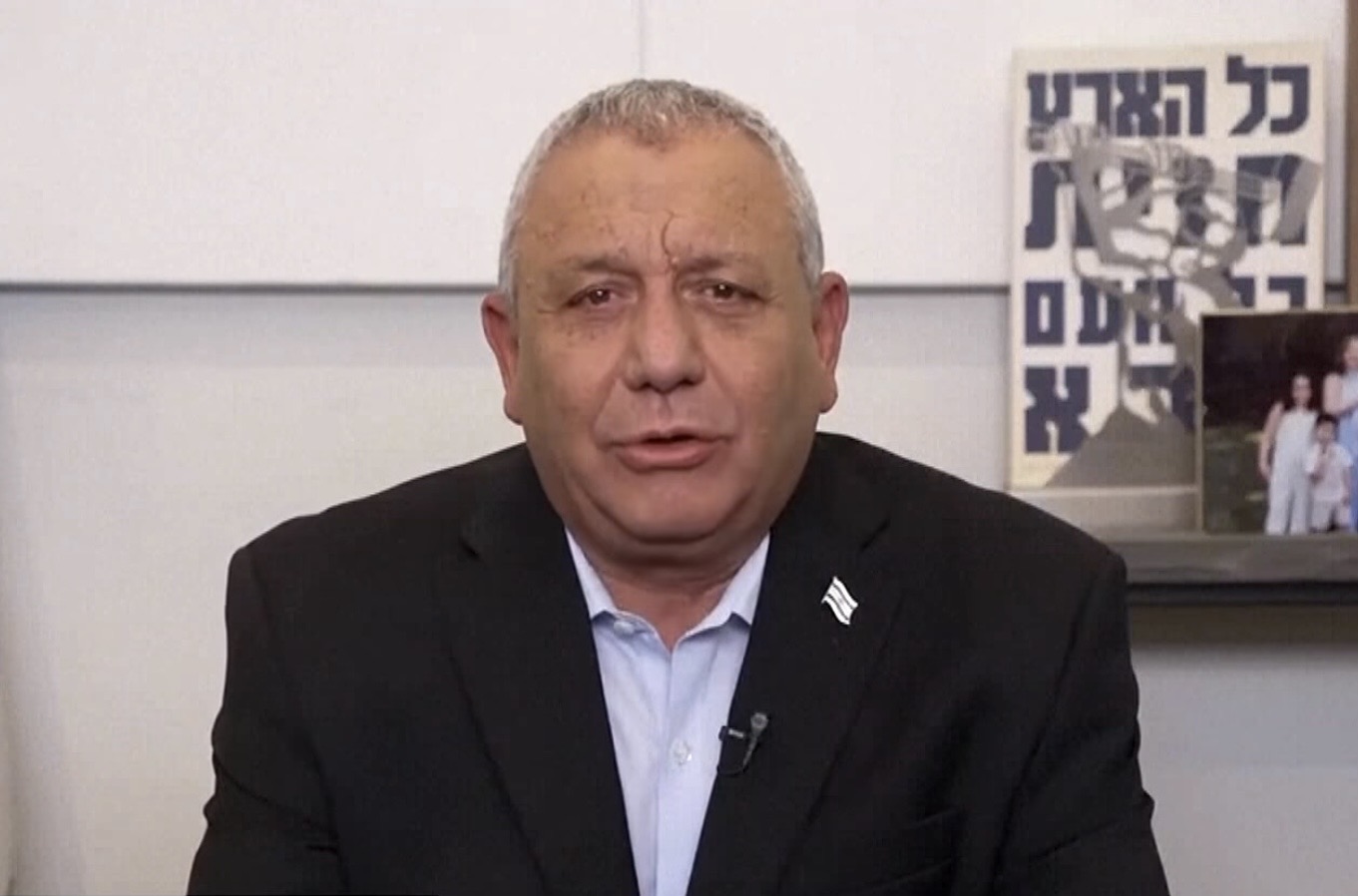
Who Will Form Israel’s Next Government After the Election?
Published

on

Three major political forces are locked in a power struggle, with Arab parties holding the balance of power. Israel’s democracy, war policies and Middle East diplomacy face a major test.

Israel held its Knesset election on 27 October 2026. The Central Elections Committee officially approved the results on 4 November, but no political bloc secured the 61 seats required for a parliamentary majority. Coalition negotiations have therefore become the focus of Israeli politics.

Although the Likud Party, led by Prime Minister Benjamin Netanyahu, won the most seats, his right-wing coalition failed to retain its parliamentary majority. Meanwhile, opposition leader and former military chief of staff Gadi Eisenkot secured support from Arab parties, receiving a higher number of recommendations from lawmakers. However, political differences between the two major blocs, as well as some parties’ refusal to cooperate with certain political groups, have left the prospects of forming a government highly uncertain.

More significantly, Netanyahu and his allies have questioned the election results, alleging possible interference by foreign forces. The election has therefore become more than a contest over a change of government. It is also a major test of Israel’s democratic institutions, social cohesion and future direction.

What impact will this election have on Israel and the wider global situation?

1. Netanyahu’s Political Career: Long-Term Leadership and Political Division

Benjamin Netanyahu’s career as prime minister has spanned several decades. He has served three terms as prime minister, leading successive coalition governments.

He first took office from 1996 to 1999, becoming the youngest prime minister in Israel’s history and the first prime minister to have been born after the country’s establishment. From 2009 to 2021, he began his second extended period in office, remaining in power for 12 consecutive years and surpassing the cumulative tenure of David Ben-Gurion, Israel’s first prime minister. After briefly leaving office, Netanyahu returned to power in late 2022 by forming a coalition with right-wing and far-right parties, beginning his third period as prime minister.

As leader of the conservative Likud Party, Netanyahu has long pursued a hardline, security-first approach. He has emphasised the need to counter Iran’s nuclear programme and regional armed groups, while maintaining a tough stance on Palestinian statehood and peace negotiations.

On the economic front, he has promoted free-market reforms, the privatisation of state-owned enterprises and the development of the high-tech industry. Israel’s success in the technology sector is certainly linked to his economic policies, but it is also built on earlier investments in education, scientific research, military technology and the accumulation of skilled immigrant talent.

In foreign affairs, Netanyahu oversaw the signing of the Abraham Accords, through which Israel established or improved diplomatic relations with several Arab countries.

However, his political career has also been marked by controversy. He has faced multiple corruption and bribery charges, making him the first sitting prime minister in Israel’s history to stand trial on criminal charges. His government’s push for judicial reforms also triggered large-scale protests across the country, intensifying public debate over judicial independence, democratic institutions and the separation of government powers.

Following Hamas’s attack on Israel on 7 October 2023, the government’s intelligence and security failures also came under intense scrutiny. The prolonged war, the issue of hostages held in captivity and the government’s handling of the conflict have further weakened public confidence in Netanyahu among sections of the population.

As a result, this election is not simply a routine change of political parties. It represents a significant political test of Netanyahu’s long-standing leadership.

2. Election Results: Three Major Political Forces, None Securing a Majority

Israel’s parliament, the Knesset, has 120 seats. A government must secure the support of at least 61 members to take office.

According to the officially announced election results, the major parties won the following number of seats:

Political Party Seats
Likud 27
Yashar (led by Eisenkot) 21
Together (Be’Yahad) 12
Joint List 11
The Democrats 8
United Arab List (Ra’am) 8
Yisrael Beiteinu 7
Otzma Yehudit 7
United Torah Judaism (UTJ) 7
Shas 6
Religious Zionism and Zehut 6
Total 120

From a political perspective, the results can be divided into three major blocs:

Netanyahu’s bloc: 53 seats. Mainly comprising Likud and other right-wing and religious parties.

Anti-Netanyahu bloc: 48 seats. Comprising Yashar, led by Eisenkot, and other opposition parties.

Arab parties: 19 seats. Including the Joint List with 11 seats and the United Arab List with eight seats.

The Arab parties collectively won 19 seats, the highest number in Israel’s history, making them a political force that cannot be overlooked in the coalition negotiations.

Prime Ministerial Endorsements: Eisenkot Secures Support from 67 Members of the Knesset

Israeli President Isaac Herzog is responsible for consulting political parties and deciding which member of the Knesset should be appointed to attempt to form a new government.

As of 5 November, a total of 67 lawmakers from six parties had recommended Eisenkot for prime minister, while parties supporting Netanyahu had 46 lawmakers behind him. United Torah Judaism did not recommend anyone.

The result gives Eisenkot a clear lead in the number of recommendations, but it does not mean he already has a coalition capable of governing stably.

President Herzog said that although the endorsement numbers appeared clear, mutual vetoes between the political blocs could make it difficult to form a government. He said he would continue discussions with party leaders and expected to decide on 8 November (Sunday) whom to appoint to form a government.

The person appointed will have 28 days to form a government, with the president able to grant a further 14-day extension. If the attempt still fails, another general election may be necessary.

The Challenges Facing Eisenkot in Forming a Government

Eisenkot secured recommendations from 67 lawmakers, largely because of the support of Arab parties.

However, this does not mean that the opposition has reached an internal consensus. Some right-wing and secular opposition leaders have previously made it clear that they are unwilling to form a coalition government with Arab parties.

If Eisenkot wants to form a government, he will therefore have to make certain political compromises.

One of the major points of contention is the exemption of ultra-Orthodox Jewish men from military service. Israel has long required most Jewish men to serve in the military, but ultra-Orthodox communities have historically enjoyed varying degrees of exemption. The prolonged war has left the military facing personnel shortages, making this issue increasingly contentious.

If Eisenkot hopes to secure the support of United Torah Judaism, he may need to reconsider the requirements for military service among the ultra-Orthodox.

Another issue of greater historical significance is whether Arab parties can genuinely participate in forming an Israeli government.

United Arab List leader Mansour Abbas has said that Arab parties are willing to serve as a bridge between different communities in Israel and support efforts to oppose terrorism and violence. However, considerable political resistance remains over whether other parties are willing to accept Arab parties as part of a coalition government.

This leaves Eisenkot facing a dilemma: he needs the support of Arab parties to secure a parliamentary majority, but some potential coalition partners are unwilling to work with them.

The Credibility of the Election Comes Under Scrutiny

Another issue complicating the situation is that Netanyahu and his allies have questioned the election results.

They have alleged that Arab parties may have received foreign financial support and that there were interference operations aimed at increasing voter turnout in Arab communities. Shin Bet director David Zini has also referred to a foreign interference investigation involving 100 million shekels.

However, it is important to distinguish between political allegations and facts that have been established.

On 4 November, Israel’s Central Elections Committee officially approved the election results, stating that its investigation had found no irregularities sufficient to undermine the integrity of the election or alter its outcome. President Herzog also accepted the official results and called on all sides to respect the voting rights of Arab citizens and avoid using racial rhetoric to discredit voters.

Therefore, there is currently insufficient publicly available evidence to prove that the election was manipulated or “stolen”.

The controversy reflects a deeper democratic issue: when political leaders refuse to accept election results and treat the political participation of minority voters as suspicious, the credibility of democratic institutions may be undermined.

3. Why Is This Election So Important? Israeli Society Faces Deep Divisions

This election comes at one of the most challenging periods in Israel’s history since its establishment.

Following Hamas’s attack on Israel on 7 October 2023, the war in Gaza broke out. The conflict subsequently extended into Lebanon and involved direct confrontations between Israel, Iran and its regional allies.

Prolonged, high-intensity conflict has placed enormous pressure on the Israel Defense Forces in terms of manpower, logistics and national finances. With society having remained in a prolonged state of war, the public also holds differing views on the government’s security policies, war objectives and the hostage issue.

Internationally, Israel is facing increasing criticism. The humanitarian crisis in Gaza has attracted international attention, with some Western countries calling on Israel to improve humanitarian aid and restrict military operations. Legal proceedings involving Israel before international judicial bodies, as well as violence by extremist settlers in the West Bank, have further complicated its diplomatic position.

However, deeper than these external pressures are the political and social divisions within Israel itself.

First, the intelligence and security failures surrounding 7 October 2023 have prompted demands for the government to take responsibility and establish an independent commission of inquiry.

Second, the prolonged war has intensified disputes over military service and religious exemptions. Secular Jews, religious communities and ultra-Orthodox groups have different understandings of civic responsibility and military obligations.

Third, the political conflict triggered by judicial reforms has created serious divisions within society over democratic institutions, judicial independence and the limits of government power.

Finally, this election has demonstrated that the political participation of Arab citizens has become an important factor in forming the Knesset coalition. This is not simply a question of how political power is distributed between parties. It also concerns how Israel, as a Jewish nation-state, can safeguard the equal political rights of its Arab citizens.

4. Arab Parties Win 19 Seats: A Major Test of Democratic Participation in Israel

One of the most significant developments in this election is that Arab parties collectively won 19 seats.

Arab citizens account for approximately one-fifth of Israel’s population. They have the right to vote and stand for election, but for a long time, they have generally occupied a relatively marginal position in the formation of Israel’s central government and the development of national policies.

The Arab parties’ record-breaking number of seats in this election has transformed them from a general parliamentary opposition force into a key political force that could influence the formation of a government.

However, Arab parties do not share entirely identical positions. The Joint List and the United Arab List differ in their political ideologies, religious backgrounds and views on Israel’s national identity.

United Arab List leader Mansour Abbas has previously attempted to secure improvements in public services, community safety and economic development for Arab communities by supporting coalition governments. This strategy of political participation differs from that of some Arab parties that favour remaining in opposition or place greater emphasis on ethnic and national political demands.

This election raises an important question: how can a democratic country whose core identity is centred on being a Jewish nation-state ensure that citizens from different ethnic and religious backgrounds have genuinely equal opportunities for political participation within its institutions?

If the support of Arab parties can influence the formation of a government, this does not necessarily mean that Israel’s national identity will immediately change. However, it at least reflects that the votes and political views of Arab citizens can no longer be ignored during coalition negotiations.

This is also an important indicator for observing the future development of Israel’s democratic system.

5. Implications for the Global Situation

This election is not only about Israel’s domestic politics. It could also affect US-Israel relations, Middle East diplomacy, energy markets and regional security.

1. US-Israel Relations and Diplomatic Normalisation

If the new government is led by a more pragmatic opposition and is willing to improve communication with the United States and its European allies, it may help repair some diplomatic relationships.

However, US-Israel relations will not change completely simply because of a change in prime minister. The United States’ security commitments to Israel, the issue of Iran, the war in Gaza and domestic American politics will remain important factors shaping bilateral relations.

In addition, negotiations over diplomatic normalisation between Saudi Arabia and Israel are also affected by the Palestinian issue. Even if Israel changes its government, Saudi Arabia may still require Israel to make substantive commitments on the Palestinian question.

Therefore, a new government may improve the atmosphere for negotiations, but a diplomatic breakthrough is not necessarily likely in the short term.

2. Energy and Global Supply Chains

Israel has certain connections to natural gas development in the eastern Mediterranean, the Port of Eilat and security conditions around the Red Sea.

If conflict in the Middle East continues to escalate, it could increase regional shipping insurance and transportation costs, affecting energy markets and global supply chains. Conversely, if hostilities ease, regional trade and energy cooperation may have an opportunity to recover.

However, global energy prices are still affected by oil supplies, international demand and the policies of other oil-producing countries. They cannot be assessed solely on the basis of Israel’s election results.

6. Will the New Government Adopt a More Inclusive Approach Towards the Palestinians?

If Eisenkot succeeds in forming a government, would this mean that Israel will adopt a more inclusive policy towards the Palestinians?

This question needs to be approached with caution.

Mainstream Israeli politicians do not all share Netanyahu’s position on national security, opposition to armed groups and Palestinian statehood. Eisenkot himself is a former Chief of Staff of the Israel Defense Forces who places great importance on national security and military strength. He cannot simply be characterised as a pro-Palestinian or anti-war politician.

Therefore, even if there is a change of government, it does not necessarily mean that Israel will immediately make major concessions towards a two-state solution.

Nevertheless, the new government’s policy approach may still differ in several areas:

Humanitarian aid to Gaza: It may be more willing to improve humanitarian aid corridors and international coordination.

The West Bank: It may take stronger action against violence by extremist settlers, reducing diplomatic friction with Western allies.

Palestinian statehood: In the short term, there may still be insufficient political consensus to achieve any substantive breakthrough.

Arab citizens of Israel: If the government needs the support of Arab parties, improving community safety, public services and economic development in Arab communities may become important issues in coalition negotiations.

Regional diplomacy: The new government may be more willing to seek cooperation with Arab countries, but it will still have to address the Palestinian issue and domestic political resistance within Israel.

Therefore, the new government may not become a direct driving force behind Palestinian statehood. However, if its policies can reduce conflict, improve humanitarian conditions and increase diplomatic cooperation, they could still create some breathing space for the Middle East.

7. Israel and the World: This Is More Than a Change of Government

Regardless of whether Netanyahu remains in power or Eisenkot succeeds in forming a new government, Israel will have to confront deep domestic political divisions, the security and financial pressures brought about by prolonged war, and growing international scrutiny of its policies.

Perhaps the most important significance of this election is not simply who can secure the 61 seats needed to form a government, but whether Israel can rebuild trust in its democratic institutions amid ethnic, religious and political divisions.

The Arab parties’ 19 seats have made minority political participation an unavoidable issue in the coalition negotiations. Meanwhile, allegations of electoral fraud and the Central Elections Committee’s confirmation of the results serve as a reminder that democracy is not only about the right to win an election, but also the responsibility to accept its outcome.

At the same time, even if there is a change of government, Israel must still answer a more fundamental question: can national security coexist with democracy, equality and peace?

This question affects not only the people of Israel, but also the future of the Palestinians, peace in the Middle East and the roles of the United States and other countries in regional crises.

On 8 November, President Herzog will decide whom to appoint to form a government. This is only the beginning of a new round of political negotiations. What is truly worth watching is whether the new government can establish a stable political consensus within a divided society and bring a different direction of development for Israel and the Middle East.

Continue Reading

Features

Have We Asked the Right Questions After the Tragedy?

Published

on

A Look at Political Safety, Mental Health, and Journalism Ethics Through the Attack on MP Helen Haines

Data current as of October 21, 2026. The case is still before the courts, and the accused man has not been convicted.

On October 19, 2026, federal independent MP Helen Haines was attacked outside her electorate office in Wangaratta, Victoria, when a car was driven into her. Aged 65, she represents the northeastern Victorian electorate of Indi. She has suffered severe injuries, resulting in the amputation of both her legs. This is a heartbreaking tragedy, and the victim and her family deserve the full support of the entire community.

In the wake of this tragedy, beyond caring for the victim, we should ask another question: when the motive remains undetermined, how do politicians and the media explain what happened to the public? Are we striving to understand a complex case, or are we prematurely fitting it into pre-existing political narratives?

This is a question for politicians, and it is also a question for the journalism profession.

What We Know and What We Don’t Know

What is known (based on reports from police, courts, and mainstream media):

Monday, October 19, around 3:35 PM: Haines was struck by a white Toyota LandCruiser outside her electorate office. According to eyewitnesses, after striking her, the vehicle turned around and hit her a second time.

She was transported to The Alfred Hospital in Melbourne. Her left leg was amputated on the day of the incident, and her right leg could not be saved as of the afternoon of October 21. Her husband stated that her condition is stable.

A 43-year-old man from Tarrawingee has been charged with three offenses: dangerous driving causing serious injury, intentionally causing serious injury, and injuring a Commonwealth public official. He did not apply for bail and will appear in court again next February. Police have not ruled out further charges, including attempted murder.

Police stated that the attack was deliberate but appears to be an isolated incident, with no prior specific intelligence indicating he would target Haines. At the same time, a Joint Counter Terrorism Team comprising Victoria Police, the Australian Federal Police (AFP), and ASIO is investigating, with establishing whether there was a political motive listed as a top priority.

Victoria Police Chief Commissioner Mike Bush stated that police are reviewing social media connections and speaking with witnesses, friends, and colleagues, while also investigating whether there was any personal relationship between the parties. Statements issued by the accused man’s father and partner noted that Haines has been a friend of theirs for over twenty years.

In court, his lawyer mentioned that he suffers from a neurological condition and a concussion, raising concerns about his mental state. However, he has not been diagnosed with any mental health conditions, and when asked if he had been evaluated by a doctor, the lawyer stated it was “unclear.”

What is unknown:

What was the motive? Was it politically motivated?

Was there any personal relationship between the two parties?

What was his mental state, and was it related to the incident?

Did anyone seek help from relevant agencies beforehand? What actions, if any, did those agencies take?

This list is vital because all subsequent discussions must remain within its boundaries.

What Politicians Are Saying

Following the incident, Prime Minister Anthony Albanese stated that it was a deliberate attack, but the motive remained unclear. He subsequently issued another call for all sides to “tone down the temperature.” Opposition Leader Angus Taylor remarked, “We do not resolve differences through violence.”

Statements from other MPs went further. Minister for Finance Katy Gallagher noted that standards in Parliament have declined, fueled by “algorithmic amplification” on social media that intensifies online piling-on. MP Zali Steggall attributed the heightened tension to online polarization and talkback radio hosts. According to reports, Eden-Monaro MP Kristy McBain shared that she has added a personal alarm and altered her daily routines and travel routes; in her electorate alone, three individuals have been arrested for threatening an MP.

These concerns are not unfounded. The threats faced by parliamentarians are real, and the involvement of the Joint Counter Terrorism Team demonstrates that authorities take the matter seriously. Safeguarding democratic institutions includes ensuring that elected officials can safely engage with their constituents.

However, the problem lies here: while the motive behind the event remains unknown, the narrative of “political culture” has already become the central axis of public discussion. Can a single case prove that political violence in society is on the rise? We need to distinguish between three things: known facts, reasonable speculations, and judgments yet to be verified.

What the Media Did and What It Missed
To be fair: many media outlets did a respectable job. In the days following the incident, mainstream media reported on the charges, police statements, counter-terrorism investigations, the defense lawyer’s statements regarding neurological conditions and concussions in court, as well as the statement from the accused man’s family. Some reports also quoted neighbors saying there had been shouting heard at the residence and that police had visited multiple times.

Yet, we also saw another side. Take a news agency report—which we read and saw republished by multiple outlets—as an example: it quoted several MPs criticizing online polarization and algorithms, but failed to cite any official threat statistics or quote any political figures urging caution while the motive remained unclear. Another media outlet ran a headline directly linking the event to an “aggressive political culture.” Every quote in these reports may well have been accurate, but taken as a whole, what readers primarily absorbed was the politicians’ interpretations.

This is merely our observation within a limited scope, not a comprehensive statistical study of all media coverage. Truly assessing overall balance would require a more systematic comparison. But this question is worth asking:

Reporting on a context and fully analyzing a context are not the same thing. Including a piece of information in the news does not mean it received sufficient space, placement, or follow-up.

While the motive remains unclear, journalists can press further: Is this an established fact, or a politician’s judgment? Are there other possible explanations? What do current data support, and what do they fail to support?

Do Not Let Politicians’ Safety Replace Community Safety
The safety of MPs deserves serious attention. However, political figures are not the only individuals facing risks.

This incident also brings up another issue: Can individuals in the community experiencing severe crisis receive appropriate support in a timely manner?

Caution is necessary here. Mental health issues cannot be equated with violence; the vast majority of people with mental health conditions do not commit violent acts against others. The accused man has not been diagnosed with a mental health condition; what his lawyer presented were concerns and a request for evaluation. Descriptions provided by neighbors and past acquaintances represent piecemeal observations—these are individual perceptions, not medical diagnoses, and certainly not proof of motive. We cannot assert from this that shortcomings in the mental health system were the cause of this case.

However, this does not mean we should stop questioning public policy. Victoria has undergone a Royal Commission into Mental Health and subsequent reform commitments. The government has a responsibility to account to the public on the extent to which these reforms have been implemented and whether community services are adequate. If investigations reveal that concerns had been raised previously and relevant agencies failed to intervene, we must ask: How well is the support system functioning? Is there coordination across departments?

These questions should not be set aside simply because the safety of political figures has taken center stage, nor should conclusions be drawn prematurely before investigations are complete.

The Risk of Prematurely Defining Meaning

Social division is not a label that can be arbitrarily applied.

When a tragedy occurs, the public naturally wants to understand why. Politicians and the media also need to offer explanations. However, if people rush to frame the event within grand narratives like “political hatred is rising” or “society is deeply polarized” before evidence is sufficient, the public may mistake unverified judgments for facts.

This does not mean political violence does not exist. The three arrests mentioned by McBain and the added security measures taken by MPs demonstrate that threats are real. But asserting that political violence is on the rise requires long-term data: how many threats against MPs have occurred, what were their sources, what were the motives, and how have these numbers changed over recent years? Relying on a single case is insufficient to answer this question.

Asking these questions does not diminish support for the victim; rather, it protects the public’s right to understand the incident clearly.

What Does This Incident Have to Do with Us?

This matter is not far removed from the Australian Chinese community.

First, on November 28, Victoria will hold its state election. During election periods, candidates hand out flyers, hang posters, and engage with voters on the streets and in local neighborhoods. This is a staple of a democratic society, as well as the time when candidates are most exposed to risk. How the community protects this openness is something worth pondering.

Second, Chinese-language media carry the same responsibility. We frequently translate and republish English-language news. If we merely translate politicians’ statements without marking the boundaries between “what is known” and “what is unknown,” we become part of the problem.

Third, mental health remains a taboo subject in many Chinese families. When discussing this incident, we must be especially careful not to link mental health issues directly to violence, lest we deepen existing stigma.

Finally, there is a image worth remembering: on the day of the incident, local residents at the scene stepped in to help restrain the suspect, and emergency responders quickly attended to the injured. Community safety relies not only on institutions and governments, but is also built on the willingness of ordinary people to help one another in moments of crisis.

Scrutinize Rather than Just Transcribing Power

This tragedy should not be used to downplay the threats faced by MPs, nor should it be used to argue that a particular political camp inevitably causes violence, and it certainly should not serve as a reason to ignore mental health services, community support, and public institutions.

We can acknowledge three things simultaneously:

The attack on Helen Haines was extremely severe;

The motive must be established by evidence through investigations and the courts;

The interpretations of the event by politicians and the media should themselves be subject to public scrutiny.

For politicians, the responsibility is not to package unverified judgments as definitive conclusions. For the media, the responsibility is not to let politicians’ statements become the endpoint of reporting.

A mature democratic society needs safe elected representatives, as well as a news media unswayed by political narratives; it needs to condemn violence, while maintaining the ability to make rational judgments free from fear.

When tragedy strikes, what truly warrants our vigilance is not just the tragedy itself, but whether we still retain the capacity to ask the right questions.

When politicians rush to explain an event, the media’s most important job is precisely to ask: What do we actually know, and what remains unknown?

Continue Reading

Trending