Connect with us

Daily News

Victorian Government Issues Historic Apology to Indigenous Peoples
Published

on

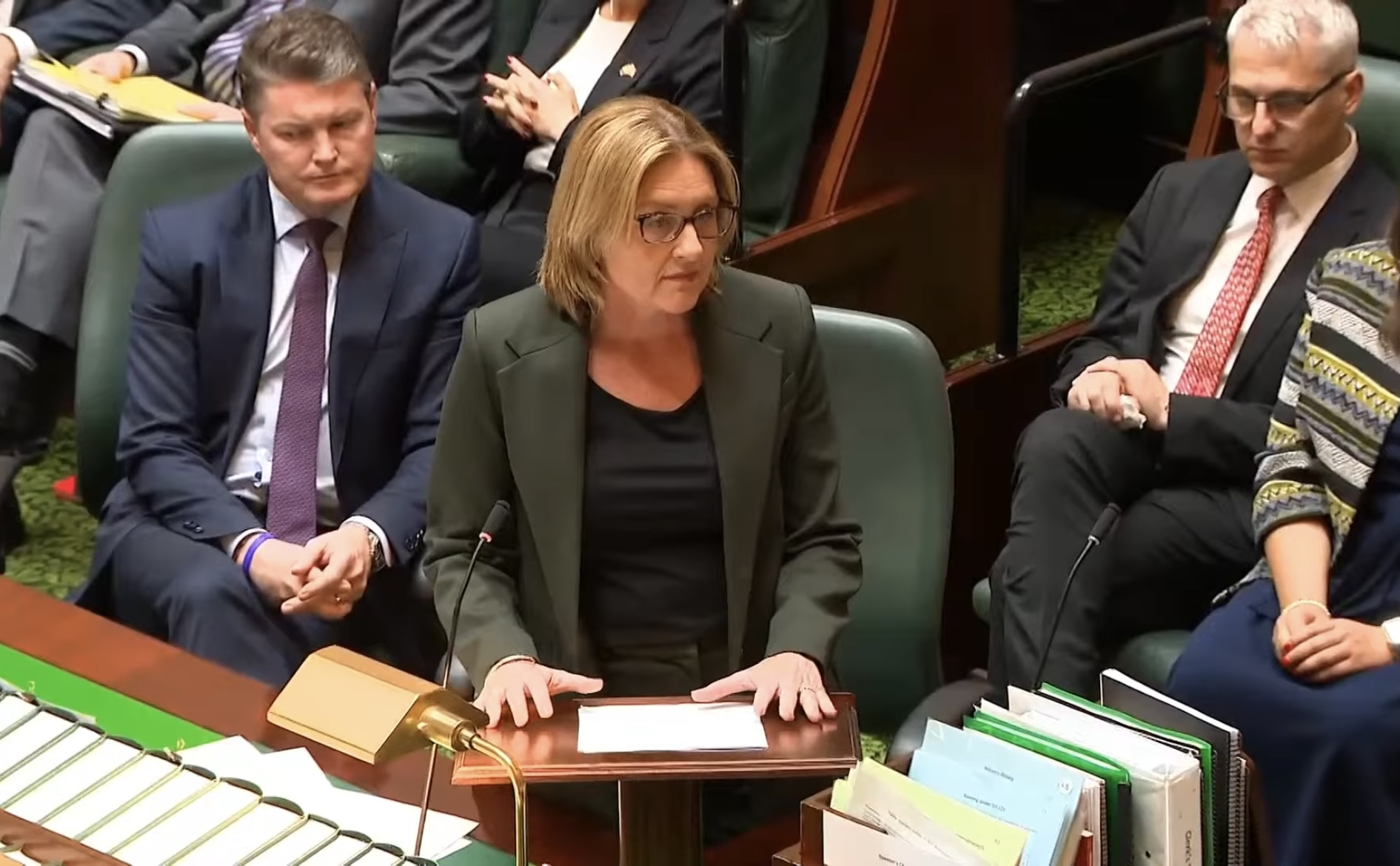
The Victorian Government today delivered a historic apology to the state’s Indigenous peoples during a special parliamentary session, marking one of the first public actions following the formal signing and legislative enactment of the state-level treaty agreement last month.

The apology forms a central component of the treaty negotiations, aiming to acknowledge the systemic injustices inflicted on Indigenous communities by the state government through laws, policies, and institutional practices, including violence, land dispossession, exclusion, and discrimination. The First Peoples’ Assembly of Victoria emphasized that the government must confront “the profound harms caused by colonialism and the state government, both past and present,” describing the moment as a significant step toward rebuilding relationships.

The treaty agreement notes that the apology is not intended to assign blame but to recognize the ongoing effects of historical injustices and to choose a path forward. The agreement, shaped through nearly a decade of consultation, positions Victoria at the forefront of national treaty and truth-seeking initiatives. The apology also implements recommendations from the Yoorrook Justice Commission, which, during its four-year truth investigation, received formal apologies from more than ten state officials and ministers.

However, the move has not secured cross-party support. The Victorian opposition criticized the inclusion of treaty language in the apology and reiterated that it would repeal the relevant legislation if in government. Opposition leader Jess Wilson, in a letter to the Premier, stressed that the disagreement lies in the policy methods for closing the gap rather than the goal itself, and expressed a willingness to seek mutually acceptable wording to gain bipartisan support.

Commentary:

Victoria’s historic apology represents not only a key component of the treaty agreement but also a pivotal moment for Indigenous justice and reconciliation in Australia. For Indigenous communities, the apology cannot erase historical pain, but it symbolizes the government’s willingness to assume responsibility, acknowledge systemic trauma, and lay the groundwork for rebuilding relationships—a necessary and long-overdue step for groups who have endured over two centuries of colonial oppression.

However, the opposition’s insistence on removing treaty references from the text highlights a deeper resistance to the treaty framework itself, rather than a mere dispute over wording. While the opposition frames the disagreement as one of policy approach rather than intent, this stance may impose significant political pressure on the future reconciliation process, potentially complicating efforts to achieve meaningful bipartisan support for ongoing treaty implementation.

Continue Reading

Daily News

Victorian Liberal Candidate Counselled Over Volunteer Internship Program

Published

on

Victorian Liberal Party candidate for Glen Waverley, Jacky Sun, has been counselled by the party following questions over a “volunteer internship program” recruiting international students for political volunteering.

The issue arose at a Mandarin-speaking university student orientation event held in North Melbourne this Saturday. Bilingual posters were distributed promoting a “volunteer internship program” running from August to November. Tasks included door-knocking, letter-dropping and attending campaign fundraising events. Participants were also offered opportunities to meet politicians and obtain reference letters.

The posters did not identify any political party or candidate. However, a Liberal campaign poster featuring Jacky Sun was displayed on the other side of an A-frame sign holding the volunteer posters. One student said that after asking the recruiters, she was told the program was for “the opposition”, would mainly operate in Glen Waverley, and required participants to speak Mandarin.

A Liberal spokesperson did not directly answer whether the program was recruiting volunteers for Jacky Sun or the Liberal Party. The spokesperson said Sun was not present at the event and stressed that “this is not Liberal Party material”. The party also confirmed that Sun had been “counselled” over the matter, but did not explain the specific reason.

The issue also involves Jacky Sun’s wife, scientist Danzi Song. The email address listed on the English poster was associated with “Daisy Song Consulting”, while Danzi Song uses the English name Daisy Song on LinkedIn. However, the ABC could not independently confirm whether the email address belongs to her, and she did not respond to inquiries.

Commentary

The program was promoted as an “internship”, community service opportunity and a chance to receive a reference letter, while also offering access to politicians. However, the posters did not clearly identify which political party or candidate was involved. For international students with limited political experience or knowledge of Victorian politics, this could easily appear to be a general community volunteering opportunity, raising questions about transparency.

More notably, contact details associated with Jacky Sun’s wife appeared on the poster. While there is currently no evidence proving a direct connection between the two, the link itself raises questions about whether the recruitment program was connected to Jacky Sun’s campaign.

For a political candidate, questions surrounding political recruitment, transparency and electoral rules can affect public perception. With the Liberal Party confirming that Sun was counselled but providing no specific explanation, failing to clarify the questions surrounding the program could have a negative impact on his political image.

Continue Reading

Daily News

Colombia Earthquake Death Toll Rises to 250
Published

on

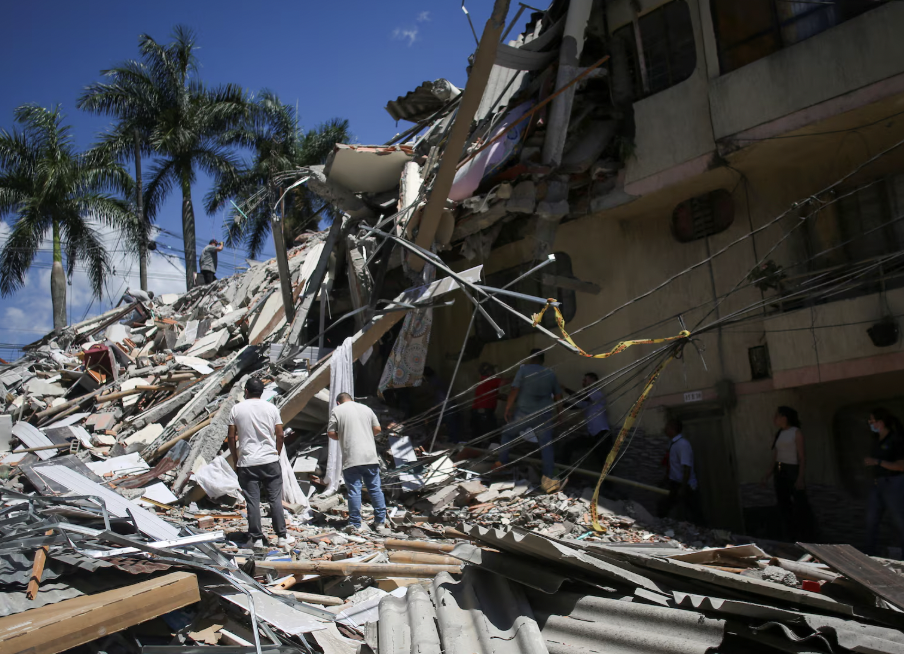
A powerful 7.4-magnitude earthquake struck western Colombia, with the official death toll rising to at least 250. Rescue workers worked through the night searching for survivors in collapsed buildings and rubble, racing against time during the critical rescue window. Authorities warned that the death toll could continue to rise as search and clearance operations continue.

The UN Office for the Coordination of Humanitarian Affairs initially estimated that around 5,000 homes were damaged, with dozens of buildings collapsing and hundreds of other homes sustaining varying degrees of damage, highlighting the severe impact on infrastructure and residential areas.

Rescue operations remain focused on the worst-hit areas, where emergency workers are using heavy machinery and manually clearing rubble in an effort to find survivors who may still be trapped inside buildings. As the extent of the damage in some areas remains under assessment, the full number of casualties and the scale of property losses have yet to be determined.

The international community has also begun providing emergency assistance. The United States announced US$15.5 million in aid to provide temporary shelters and food in affected areas, as well as support damage assessment efforts. The Inter-American Development Bank said it had prepared US$50 million in funding that could be made available for post-earthquake reconstruction if needed.

The local government is currently prioritising search and rescue operations, medical care and temporary accommodation. As further assessments are carried out in affected areas, authorities will gradually determine the overall extent of the destruction caused by the earthquake.

Continue Reading

Daily News

Australian Police Trial Real-Time AI Facial Recognition

Published

on

Western Australia Police have launched Australia’s first public-facing trial of real-time AI facial recognition, using cameras in Perth and Fremantle to scan pedestrians’ faces in real time and compare them against police watchlists, raising concerns over privacy and the expansion of surveillance powers.

Police began using technology company NEC’s NeoFace m40 system in June. In its first week, the system scanned more than 130,000 faces and compared them against a watchlist of around 4,000 people. The list includes people suspected of serious crimes, missing persons, and individuals police believe may pose a risk to themselves or others.

Police said the trial had delivered encouraging initial results, triggering 33 alerts and contributing to 18 arrests. Authorities said real-time facial recognition could help officers identify people of interest more quickly, improving public safety and law enforcement efficiency.

However, privacy experts and legal advocacy groups have questioned how police decide who is placed on the watchlist, how the data is stored, and the risk of misidentification, arguing that there is insufficient transparency. The choice of trial locations has also attracted scrutiny, with concerns that the technology could result in disproportionate surveillance of Indigenous communities.

Unlike “one-to-one” facial recognition, which is used simply to verify an individual’s identity, real-time “one-to-many” systems can scan and compare faces on a large scale in public places.

Continue Reading

Trending