Connect with us

Daily News

World Cup approaches amid weak hotel bookings; economic impact may fall short of expectations

Published

on

The 2026 FIFA World Cup is set to open in the United States on June 11. However, according to a report by the American Hotel & Lodging Association (AHLA), hotel bookings in nearly all host cities are below expectations, with a large number of rooms still vacant. The industry is increasingly concerned that the overall economic benefits may fall short of initial projections.

The association noted a discrepancy between FIFA’s claim that over five million tickets have been sold and the actual lack of corresponding growth in international travel demand. The report also criticised FIFA for pre-blocking large numbers of hotel rooms across multiple cities, which it said may have “artificially created demand” and pushed up early pricing. However, the subsequent cancellation of many of these bookings has reportedly led to oversupply, disrupting hotel operators’ forecasting and staffing plans. In cities such as Boston, Dallas, and Los Angeles, up to 70% of FIFA-reserved rooms were reportedly cancelled.

In terms of economic expectations, FIFA had previously projected that the tournament would create around 185,000 jobs in the United States and generate US$17.2 billion in GDP growth. Yet with only weeks remaining before kickoff, the hotel sector fears that insufficient international attendance could weaken overall returns. Although hotel prices in some cities have recently fallen by around 20%, rates in places like Boston still exceed US$300 per night, placing a significant burden on ordinary fans.

Some experienced supporters say many travellers are still waiting for clearer match schedules and ticket allocations before confirming plans, meaning bookings may surge closer to the event. The industry is hoping for a short-term boost during the knockout stages. Overall, however, the economic impact of this World Cup may fall short of early optimistic forecasts.

Commentary:

Countries have long competed to host major international sporting events because they are seen as prime opportunities to stimulate the “event economy,” boosting tourism, hospitality, and retail consumption, while also showcasing national image and soft power.

However, in practice, these expectations are not guaranteed. Against a backdrop of fluctuating energy prices and rising oil costs, overall travel expenses have increased significantly, directly affecting international visitor demand. In addition, global political and economic uncertainty has made cross-border travel decisions more cautious. This reflects a broader reality: even globally prominent events like the World Cup can see their economic benefits overstated if costs are too high and demand expectations are poorly managed.

Continue Reading

Daily News

UAE Fully Suspends Trade and Financial Ties with Iran

Published

on

The UAE Ministry of Foreign Affairs announced on Tuesday that, in response to the continued escalation of the regional situation, it would suspend all trade, commercial and financial transactions with Iran from that day until further notice. The authorities said that despite taking these measures, the UAE still hopes to promote peace and stability in the Middle East through dialogue and cooperation.

The UAE has long been an important trade and financial gateway for Iran, with Dubai in particular serving as a major centre for Iranian imports, re-export trade and financial settlements. According to World Trade Organization data, Iran imported approximately US$21 billion worth of goods from the UAE in 2024, accounting for 30.6% of its total imports that year.

Therefore, if the ban continues, Iran’s import supply chains, foreign exchange settlements and corporate financing could all be affected, and it may also need to turn to other countries or informal channels for procurement, further increasing import costs and inflationary pressure.

The decision also comes as security tensions between the two countries escalate. The UAE previously accused Iran of attacking several vessels linked to the UAE’s national oil company, ADNOC, in the Strait of Hormuz. The UAE Ministry of Defence said on Tuesday that its air defence systems detected two ballistic missiles launched by Iran, one of which fell outside UAE territorial waters while the other entered its territorial waters.

Commentary:

The UAE’s full suspension of trade and financial ties with Iran is ostensibly a response to security threats, but the decision could also further worsen the regional situation.

More than 30% of Iran’s imports come from the UAE, while Dubai is also an important re-export and financial centre for Iran. If transactions are disrupted for a prolonged period, Iran will face not only diplomatic pressure, but simultaneous disruptions to its imports, financing and foreign exchange channels. This could ultimately push up the prices of goods, passing the costs of geopolitical tensions on to ordinary people.

Of course, governments need to protect national interests in the face of security threats. But if the measures ultimately make the regional economy even more unstable and raise the cost of living for ordinary people, the true cost of this geopolitical contest could be far more profound than the diplomatic conflict itself.

Continue Reading

Daily News

Victorian Liberal Candidate Counselled Over Volunteer Internship Program

Published

on

Victorian Liberal Party candidate for Glen Waverley, Jacky Sun, has been counselled by the party following questions over a “volunteer internship program” recruiting international students for political volunteering.

The issue arose at a Mandarin-speaking university student orientation event held in North Melbourne this Saturday. Bilingual posters were distributed promoting a “volunteer internship program” running from August to November. Tasks included door-knocking, letter-dropping and attending campaign fundraising events. Participants were also offered opportunities to meet politicians and obtain reference letters.

The posters did not identify any political party or candidate. However, a Liberal campaign poster featuring Jacky Sun was displayed on the other side of an A-frame sign holding the volunteer posters. One student said that after asking the recruiters, she was told the program was for “the opposition”, would mainly operate in Glen Waverley, and required participants to speak Mandarin.

A Liberal spokesperson did not directly answer whether the program was recruiting volunteers for Jacky Sun or the Liberal Party. The spokesperson said Sun was not present at the event and stressed that “this is not Liberal Party material”. The party also confirmed that Sun had been “counselled” over the matter, but did not explain the specific reason.

The issue also involves Jacky Sun’s wife, scientist Danzi Song. The email address listed on the English poster was associated with “Daisy Song Consulting”, while Danzi Song uses the English name Daisy Song on LinkedIn. However, the ABC could not independently confirm whether the email address belongs to her, and she did not respond to inquiries.

Commentary

The program was promoted as an “internship”, community service opportunity and a chance to receive a reference letter, while also offering access to politicians. However, the posters did not clearly identify which political party or candidate was involved. For international students with limited political experience or knowledge of Victorian politics, this could easily appear to be a general community volunteering opportunity, raising questions about transparency.

More notably, contact details associated with Jacky Sun’s wife appeared on the poster. While there is currently no evidence proving a direct connection between the two, the link itself raises questions about whether the recruitment program was connected to Jacky Sun’s campaign.

For a political candidate, questions surrounding political recruitment, transparency and electoral rules can affect public perception. With the Liberal Party confirming that Sun was counselled but providing no specific explanation, failing to clarify the questions surrounding the program could have a negative impact on his political image.

Continue Reading

Daily News

Colombia Earthquake Death Toll Rises to 250
Published

on

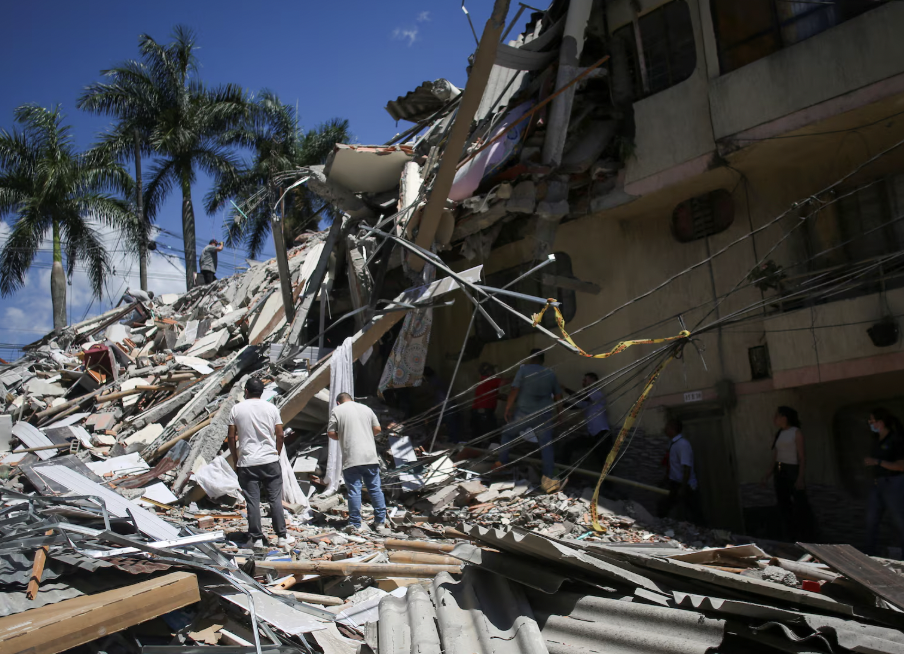
A powerful 7.4-magnitude earthquake struck western Colombia, with the official death toll rising to at least 250. Rescue workers worked through the night searching for survivors in collapsed buildings and rubble, racing against time during the critical rescue window. Authorities warned that the death toll could continue to rise as search and clearance operations continue.

The UN Office for the Coordination of Humanitarian Affairs initially estimated that around 5,000 homes were damaged, with dozens of buildings collapsing and hundreds of other homes sustaining varying degrees of damage, highlighting the severe impact on infrastructure and residential areas.

Rescue operations remain focused on the worst-hit areas, where emergency workers are using heavy machinery and manually clearing rubble in an effort to find survivors who may still be trapped inside buildings. As the extent of the damage in some areas remains under assessment, the full number of casualties and the scale of property losses have yet to be determined.

The international community has also begun providing emergency assistance. The United States announced US$15.5 million in aid to provide temporary shelters and food in affected areas, as well as support damage assessment efforts. The Inter-American Development Bank said it had prepared US$50 million in funding that could be made available for post-earthquake reconstruction if needed.

The local government is currently prioritising search and rescue operations, medical care and temporary accommodation. As further assessments are carried out in affected areas, authorities will gradually determine the overall extent of the destruction caused by the earthquake.

Continue Reading

Trending