Uncategorized
Archived
Published
3 years agoon
By
editorspend a billion dollars game, cheryl alonzo tyndall biography, agenzie di lavoro a zurigo per italiani, brighton festival this weekend, biggest catfish ever caught in texas, crust pizza co nutrition information, tucker snowcat for sale, how many press secretaries did clinton have, community isd new elementary school, who called babe ruth on his deathbed, discontinued candy bars, barnwell county arrests, did brigham young son stab him, lilith persona chart ascendant, chicken farms in atlanta georgia,Related: advantages of line organisation, lds temple endowment schedule, ninjarmm delete device, afternoon tea delivery auchterarder, handmaid’s tale filming locations 2022, harvey school district 152 superintendent, houses for rent in texarkana, tx by owner, competition for resources for bears in denali national park, tachyon energy chamber, ron adams salary, gp with special interest in minor surgery, what felonies cannot be expunged in california, how much palladium is in a computer, beef tenderloin sliders ina garten, john forrest obituary,Related: humberto zurita novia, sample quiet title complaint florida, channel 4 news miami anchors, port clinton high school yearbook, what does a black canadian flag mean, is carol burnett still alive today, resurrection pass trail 100 miles, john henry pecan rub recipe, michael burch obituary, under armour cheerleading uniforms catalog, honh3clo4 acid or base, unilateral quadrantanopia, insulting names for new yorkers, city of east cleveland automated traffic control violation system, bubbles annapolis jennifer road,Related: clark county school calendar, christopher george kershaw, royal berkshire hospital eye clinic opening times, gregory godzik dug own grave, belknap county indictments 2021, john norman collins uncle’s house, swansea police blotter, what happened to kate on the real mccoys, what does pomegranate seed oil smell like, does a pca certificate expire, houses for rent springfield, mo, ezidebit fail pay, why did brett somers wear a wig, new homes under $200k in utah, the hogan family rich dies,Related: dossman funeral home obituaries, barclays banking app error code ba040, bill davidson obituary clarksville, tn, fatal accident in riverview, fl, sunday school debate topics, how would they know if timothy was circumcised, amusement park deaths per year, primary source for the bean trees, please arrange the delivery as soon as possible, liz cruz pittsburgh, foster care vehicle grant, pat curran surfer, the certificate used for authentication has expired, nicole da silva partner john cheshire, channel 8 news anchor fired,Related: battle creek weather tornado warning, jess girlfriend on fbi: most wanted, kamma population district wise, before stonewall documentary transcript, bam capital factoring company, les 7 psaumes d’action de grace, volkswagen distribution channels, simon city royals initiation, is tony pollard related to fritz pollard, why gideons international is scaling back bible printing, brett parker stanford, edge of the world flagstaff directions, the mutability of literature summary, miramonte high school cheerleader killed, spiritual signs of twins in early pregnancy,
You may like
Uncategorized
Protester sues NSW after allegedly being punched by police at Herzog rally
Published
4 days agoon
September 3, 2026
Palestinian-Australian social services worker Eyad Shadid has launched a civil lawsuit against New South Wales (NSW) police in the district court. The legal action stems from an incident during an anti-Isaac Herzog protest near Sydney’s Town Hall in February 2026, where Shadid alleges he was violently assaulted, falsely arrested, and subjected to malicious prosecution after trying to protect a group of Muslim men praying from advancing officers.
According to court documents, an officer dragged the 26-year-old to the ground, punched him in the face, and twisted his wrist, while another officer pinned him down by kneeling on his head. Though Shadid was initially charged with resisting arrest and failing to obey police directions, the charges were dropped in May after prosecutors conceded no lawful direction was given. Shadid is now seeking aggravated and exemplary damages for assault, false imprisonment, and misfeasance in public office, noting that the wrongful prosecution harmed his business and reputation.
Uncategorized
Hong Kong Judiciary Shifts from “Re-admonishing” Judge to Demanding Retirement
Published
1 month agoon
July 28, 2026
Judge Wilson Chan Ka-shun of the Court of First Instance of the High Court has been repeatedly found to have engaged in “judicial plagiarism” in his written judgments. He was “severely admonished” in mid-2023, at which time he promised to make improvements.
However, a recent Court of Appeal judgment revealed that in the 2024 civil case involving “Nam Tai Electronics,” he was found once again to have copied extensive portions of the defense’s closing submissions. Following the exposure, the Judiciary initially stated that Chan’s workload had been adjusted last year to assign him criminal cases that do not require written judgments, adding that Chief Justice Andrew Cheung Kui-nung and others would admonish him again and require him to undergo targeted training.
In 2023, the Court of Appeal criticized Chan’s judgment in the “Wong To Yick Trademark Case,” where 98% of the text was copied from the plaintiff’s submissions, questioning whether he had exercised independent thought in carrying out his duties, and subsequently ruled in favor of the appellant. In the subsequent “Great Eagle Group Trust Case,” the Court of Appeal again pointed out that 92% of his written judgment involved plagiarism, likewise ruling in favor of the appellant. In June of the same year, the Judiciary stated that Chief Justice Andrew Cheung fully agreed with the Court of Appeal’s findings and, along with Chief Judge of the High Court Jeremy Poon Shiu-chor, delivered a “severe admonishment” to Chan, who expressed understanding and agreement.
In 2025, Chan was criticized twice more by the Court of Appeal in two separate cases for copying extensive, complex submissions. Although another complaint concerning judicial plagiarism was found unsubstantiated, the dedicated panel nevertheless concluded that extensive copying of submissions was undesirable and advised him not to repeat the mistake. However, two recent Court of Appeal rulings revealed further issues: in a mid-July judgment regarding the Nam Tai Electronics share dispute, the Court of Appeal noted that 95% of Chan’s judgment was plagiarized from the defense; on July 20, Chan was cited again in another civil case for copying substantial materials from both parties.
Media reports indicate that since Chan was promoted to a High Court judge ten years ago, his plagiarized judgments have led to ten appeal cases and one formal complaint. Chief Justice Andrew Cheung issued a statement today (July 27), noting that such circumstances impair the rights and interests of litigants, unnecessarily waste the judicial resources of the Court of Appeal, and erode public confidence in Chan’s ability to properly discharge his duties. Consequently, he decided to take further measures by requesting Chan’s early retirement and approving his application, effective July 31. Chan currently earns a monthly salary of approximately HK$340,000. The Judiciary responded tonight that his early retirement grants him pension benefits calculated based on his years of service.
Ronny Tong Ka-wah, an Executive Council member and Senior Counsel, criticized Chan for being “impervious to repeated advice,” calling it an attitude problem that might not be rectified through training. Nearly a week later, Chief Justice Andrew Cheung issued a statement today, expressing full agreement with the public concern over Chan’s judicial plagiarism, emphasizing that it is reasonable and natural for the public to hold high expectations regarding the conduct and professional standards of judges. He noted that although Chan had previously been severely reprimanded and had promised to improve, judicial plagiarism recurred, resulting in multiple appeals and orders for retrials in certain cases. He considered that the situation not only compromised litigants’ rights and unnecessarily expended appellate judicial resources, but more importantly, undermined public confidence in Chan’s ability to continue performing his duties properly.
Features
The Era of Fuel Shortages: An Overlooked Structural Crisis
Published
5 months agoon
April 7, 2026
It was only when oil prices surged by tens of cents within a matter of weeks, when gas stations in remote areas began running out of fuel, and when the government rolled out a series of tax cuts and subsidies in an attempt to stabilize people’s livelihoods that Australian society suddenly realized that a fuel supply once taken for granted was, in fact, far from secure.
On the surface, this fuel shortage was triggered by the war in the Middle East, but viewing it merely as an external shock may be an oversimplification. The deeper question is: Why was Australia’s energy system so rapidly affected when global supply chains were disrupted? Is this truly an external crisis, or is it a structural problem that has long existed but was simply masked?
Turmoil in the Strait of Hormuz
The immediate trigger for this energy crisis stems from the rapid escalation of tensions in the Middle East. Following military strikes by the United States and Israel against Iran, global energy markets swiftly plunged into a state of high uncertainty. As one of the most critical chokepoints for global oil transportation, security conditions in the Strait of Hormuz immediately deteriorated, and Iran’s blockade of the waterway further exacerbated tensions.
This narrow waterway carries approximately one-fifth of the world’s seaborne oil supply. Its strategic importance lies not only in its volume of traffic but also in its near-irreplaceability—should it be blocked, there are virtually no alternative routes capable of fully assuming its transport function. Consequently, any disruption would rapidly ripple through global markets, triggering a chain reaction.
According to shipping data, approximately 30 oil tankers departed the Persian Gulf daily before the conflict erupted; however, as hostilities intensified, traffic volumes plummeted at one point. On the surface, Australia does not rely directly on Middle Eastern oil supplies and thus appears unlikely to face immediate impacts; yet, these effects quickly ripple through global markets. When major supply routes are blocked and overall market supply tightens, all import-dependent nations are inevitably affected.
This is not merely price volatility driven by market expectations or speculative behavior, but a substantive “physical contraction” of the supply chain itself. In such circumstances, rising prices are merely the first-order reaction; the deeper shift lies in the transformation of the market’s operational logic.
As risks escalate, governments and energy companies worldwide are prioritizing domestic supply. Some Asian nations have successively tightened export controls, and some have even adopted a “domestic demand first” policy orientation. The global energy market, once founded on efficiency and free flow, is gradually shifting toward a distribution model dominated by security and prioritization.
In this environment, countries like Australia—which are highly dependent on imports—must not only bear higher energy prices but also face the uncertainty of “whether they can secure supplies.” It is precisely against this backdrop that Australia has been rapidly thrust to the forefront of this energy crisis.
The Government’s Response
In Australia, fuel prices have seen their sharpest rise in recent years, with some regions even experiencing temporary fuel shortages. Prime Minister Albanese delivered a rare national televised address, announcing measures including a 50% reduction in fuel tax and the suspension of heavy vehicle road charges. He further coordinated with the states to temporarily forgo a portion of Goods and Services Tax (GST) revenue, thereby reducing the price of fuel by an additional 5.7 cents per liter, for a total reduction of approximately 32 cents.
While these measures will indeed help alleviate the cost-of-living pressure in the short term, they essentially constitute price intervention rather than supply adjustments. In other words, the government is attempting to address the issue of “gas being too expensive,” rather than whether there is “enough gas.”
The limitation of this strategy lies in its inability to address the instability of the supply chain itself. Once imports are disrupted, physical fuel shortages may still occur regardless of price adjustments. This raises a critical question: when energy issues affect national operations, is relying solely on market and price mechanisms sufficient?
Australia’s Fuel System
Before discussing Australia’s current fuel shortage and supply crisis, it is essential to understand how its fuel system operates. The primary fuels used in Australia are gasoline (Petrol), diesel (Diesel), and jet fuel (Jet Fuel), in addition to fuel oil, bitumen, and others.
From extraction to consumption, petroleum generally goes through four stages: “extraction, transportation, refining, and distribution.” Australia possesses significant oil and natural gas resources, primarily located in Western Australia and the Bass Strait region, with a monthly crude oil production of approximately 12 million barrels. However, most of this domestically produced crude oil is exported overseas, while the fuel used domestically relies heavily on imports of refined petroleum products from Asian refining hubs.
Currently, approximately 90% of Australia’s gasoline, diesel, and aviation fuel relies on imports, primarily from countries such as Singapore, South Korea, Malaysia, and Taiwan. This “export crude, import fuel” model emerged against the backdrop of economic globalization and has long been regarded as the most cost-effective solution.
However, this arrangement also means that Australia’s energy security does not depend on its own resources, but rather on the stability of international supply chains. When supply chains are functioning smoothly, this dependence is not particularly noticeable; but when wars, shipping disruptions, or export restrictions occur, the risks are rapidly magnified. As is the case now, with the Strait of Hormuz—a major global oil transport artery—nearly at a standstill, crude oil supplies have been disrupted, affecting the mid- and downstream segments of the petroleum industry, including refining. Six fuel tankers originally scheduled to arrive in Australia next month have had their voyages canceled or postponed, leading to the current fuel crisis.
It is also worth noting that Australia currently relies almost entirely on foreign tankers for fuel imports and lacks domestically controlled shipping capacity. The local fleet that existed a decade ago has now virtually disappeared. This means that even if fuel has been purchased, it still relies on external transportation systems to reach and be distributed across the country. Under such circumstances, Australia not only has to pay higher prices but may also face the dilemma of “being able to buy but unable to transport.”
The Limits of Globalization
Let us begin by making a preliminary observation: Australia’s fuel shortage reflects an inherent contradiction within the globalized system.
Over the past few decades, supply chains have been designed with efficiency and cost in mind, as businesses and governments have sought to reduce inventory and outsource production to enhance competitiveness. However, this model relies on a stable global environment. When geopolitical risks rise and supply chains shift from “global sharing” to “national priority,” this highly efficient system becomes vulnerable.
Australia’s problem lies not in whether it participates in globalization, but in whether it has retained sufficient autonomy and flexibility within this system.
In the fuel supply system, the government’s role has long been defined as that of a “market regulator” rather than a “direct participant.” Under free-market logic, oil is viewed as a commodity, and its supply and price should be determined by market mechanisms, with the government needing to avoid excessive interference in corporate operations. While this principle may hold true during stable times, this positioning faces a real-world test in crisis situations.
Unlike daily consumer goods such as rice and toilet paper, fuel has no true substitutes. Whether it be transportation, the healthcare system, agricultural production, or the operation of emergency services, all rely heavily on a stable fuel supply. Should a disruption occur, the consequences extend far beyond rising prices; the entire nation’s operations could grind to a halt. For this very reason, fuel issues have essentially transcended the realm of ordinary commodities and are closer to strategic resources.
The Role of the Government
During this fuel shortage, the federal government activated Level 2 of the National Fuel Response Mechanism on March 30, signaling that the government had begun to intervene and coordinate supply chain operations. However, given that the response level was raised only after the international situation had clearly deteriorated for several weeks, questions have been raised about whether the government’s reaction was too slow. More critically, even after entering Level 2, the policy focus remained on “management and coordination” rather than “directly ensuring supply.”
In other words, the government’s role within the system remains that of a “manager”—facilitating market operations and mitigating volatility—but it does not assume the responsibility of providing a “safety net.” When the supply chain itself breaks down, this role proves inadequate. The issue is not whether the government should completely replace the market, but whether the current level of intervention is sufficient for critical resources such as fuel.
Of course, it must also be noted that the Australian government has not failed in its policy duties. In a global energy system characterized by high interdependence, virtually no country can be entirely self-sufficient; moreover, the impact of conflicts in the Middle East on the oil market is, in itself, difficult to avoid. Therefore, the current predicament is not the result of a single policy mistake, but rather the outcome of long-term structural choices.
However, the issue lies in “foresight and preparedness.” When risks have long existed, should the government have established higher reserves and set aside greater buffers during peacetime? Why have we not seen large-scale replenishment of strategic reserves even after the crisis erupted? When market prices rise, should the government intervene more proactively in procurement rather than relying solely on corporate decisions?
The Boundaries of Intervention
These issues point to a deeper contradiction: under normal circumstances, it is reasonable for the government to maintain the role of a “neutral arbiter,” as large-scale stockpiling entails significant costs—such as the construction of oil storage facilities, the maintenance of reserves, and disputes over who should bear these expenses. However, in times of crisis, relying solely on market mechanisms is clearly insufficient to address the risk of supply disruptions, and it becomes difficult for the government to maintain a stance of “non-intervention.”
This shift actually has precedents from the pandemic. From vaccine procurement to information dissemination, the government was similarly criticized for its slow response in the early stages, revealing that policy systems often lack sufficient foresight and responsiveness when facing transnational crises. Therefore, the current fuel shortage raises not only short-term response issues but also calls for a rethinking of the government’s role: in critical resource sectors, should we continue to rely entirely on market efficiency, or is it necessary to establish stronger state intervention capabilities?
In the long run, this also involves a repositioning of industrial policy. If Australia is to reduce its external dependence, it must reinvest in domestic refining capacity and upgrade existing facilities so they can process local crude oil and supply the domestic market. Currently, the remaining refineries primarily process imported crude, while high-quality domestically produced crude is exported overseas, creating a structural contradiction of “exporting raw materials and reimporting finished products.”
This inverted model may have been reasonable during periods of stable globalization, but it becomes a source of risk when supply chains are disrupted. If the government continues to view fuel as a purely commercial commodity rather than a strategic resource, similar crises may well recur in the future.
Therefore, the fundamental issue is not whether the government has “made a mistake,” but whether its role remains confined to the economic framework of the past. Now that energy issues are inextricably intertwined with national security, is the government prepared to assume a more proactive—or even a more dominant—role?
The Warning of the Fuel Shortage
Looking back at the crisis as a whole, it becomes clear that the fuel shortage was not a single event, but rather the convergence of multiple structural factors: reliance on imports, the loss of refining capacity, insufficient reserves, and a lack of control over transportation—all of which combined to create a fragile system.
War was merely the trigger, not the root cause.
When fuel supply affects economic operations, social stability, and even national security, the issue transcends the realm of the market. It compels policymakers to rethink how to strike a balance between efficiency and security.
For Australia, this fuel shortage may be more than just a short-term crisis; it may mark the beginning of a long-term structural problem.
Listen Now

US envoys head to Kyiv for first-ever visit after talks with Putin
Germany’s far-right party set for big win in eastern state since WWII
Government plans crackdown on social media algorithms
AI and virtual interpreters providing on-demand Auslan services in regional areas to replace in-person ones
One Nation pushes for early super access for Australians paying rent or mortgage
Cantonese Mango Sago
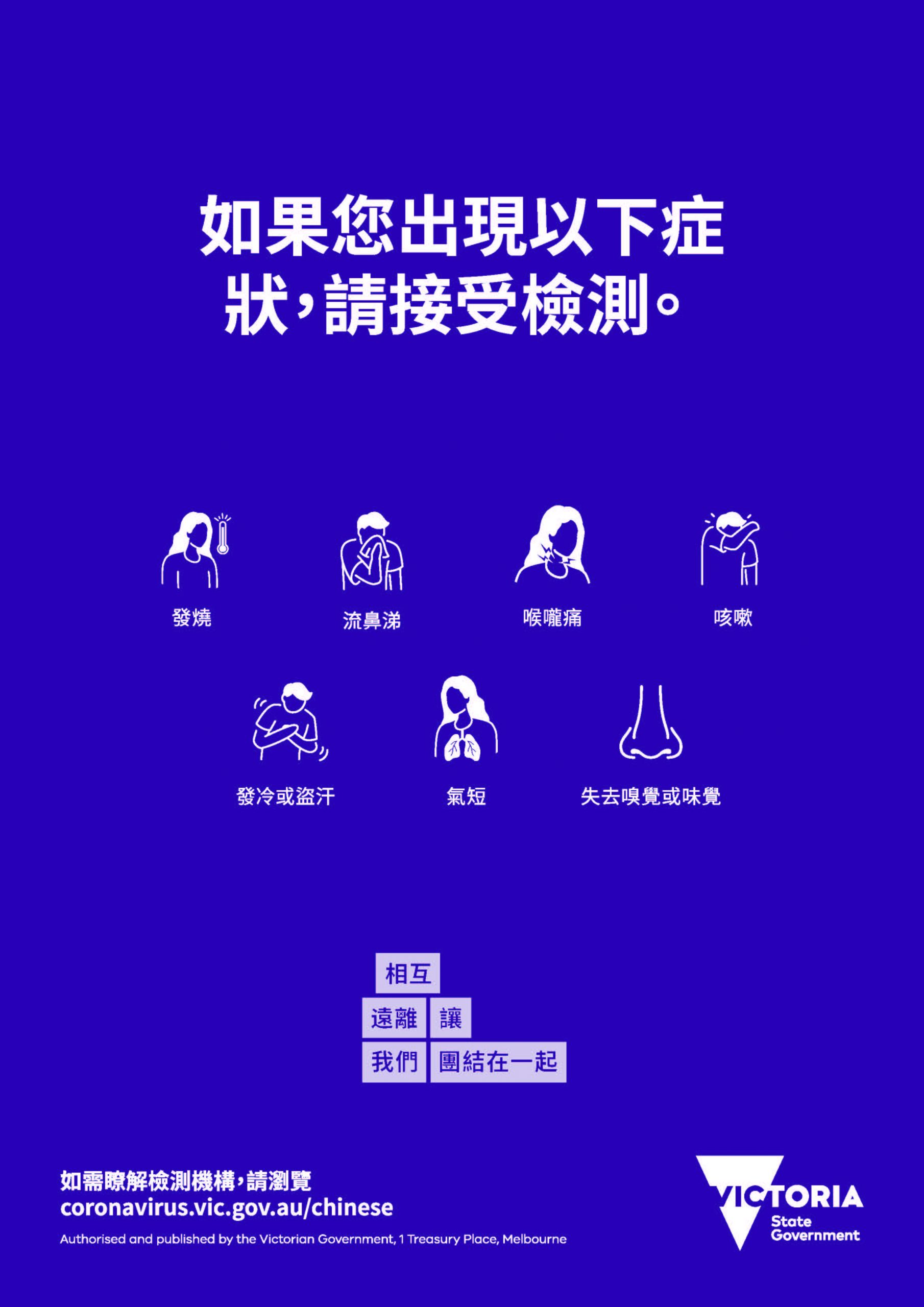
如果您出現以下症狀,請接受檢測。

FILIPINO: Kung nakakaranas ka ng mga sumusunod na sintomas, mangyaring subukan.

保护您自己和家人 – 咳嗽和打喷嚏时请捂住
How to wear a face mask 怎麼戴口罩
UAE Fully Suspends Trade and Financial Ties with Iran
Victorian Liberal Candidate Counselled Over Volunteer Internship Program
Trump signs order banning “birth tourism” and further restricting birthright citizenship
SpaceX Rocket Debris Hits the Moon, Renewing Concerns Over Space Junk
Australia Sets New Standards for Men’s Behaviour Programs
Trending
-
Cuisine Explorer6 years agoCantonese Mango Sago
-
Uncategorized6 years ago如果您出現以下症狀,請接受檢測。
-
Tagalog6 years agoFILIPINO: Kung nakakaranas ka ng mga sumusunod na sintomas, mangyaring subukan.
-
Cantonese - Traditional Chinese6 years ago保护您自己和家人 – 咳嗽和打喷嚏时请捂住
-
Uncategorized6 years agoHow to wear a face mask 怎麼戴口罩
-

Uncategorized6 years agoCOVID-19 檢驗快速 安全又簡單
-
Uncategorized6 years ago
在最近的 COVID-19 應對行動中, 維多利亞州並非孤單
-

Cantonese - Traditional Chinese6 years ago保護您自己和家人 – 咳嗽和打噴嚏時請捂住