Features
Harris in Battle, U.S. Election Uncertainty Continues
Published
2 years agoon
Article/Blessing CALD Editorial;Photo/Internet
19 mins audio
The 2024 U.S. presidential election, which seemed to have been written as a duel between former President Donald Trump and current President Joe Biden, has suddenly been completely rewritten with only three and a half months left before the vote. Biden, who for months believed he was the best candidate to beat Trump on Nov. 5, announced on July 21 that he was withdrawing from the race, and that his vice presidential partner, Kamala Harris, had already clinched the Democratic nomination to take over the election. Now, it seems that the Democrats’ temporary change of command will definitely add more uncertainties to the U.S. election in a hundred days. A change of command before the battle is a rare event for a U.S. president in more than 100 years, and in just over 100 days, it is even rarer. The entire campaign agenda has changed from the original competition between the two presidents, with the addition of age and ability, to a competition between men and women, whites and blacks, and conservatives and liberals, for the acceptance of Americans. It was like the plot of a Hollywood movie, so to speak.
Biden’s withdrawal shakes up the political scene
Since his poor performance in a live television debate with Donald Trump last month, the 81-year-old Biden has faced mounting pressure to withdraw from the race. While Biden’s situation is becoming more and more passive, his rival Trump’s attempted shooting on July 13 has strengthened the confidence of his supporters, making him a strong candidate who will not be surprised by any changes. In the eyes of some, the outcome of the presidential election has already been written. It can be said that Biden’s withdrawal was both expected and unexpected. In announcing his withdrawal from the presidential race, Biden said it was “in the best interest of the Democratic Party and the country” and that he supported the nomination of his deputy, Harris. Biden also said he would remain in office for the final six months of his term. While some have argued that if Biden were to withdraw, he should resign immediately and let Vice President Hershey succeed him, so that he could continue to compete with Trump for the presidency, so far Biden has no intention of resigning, and the focus of the community has shifted to changes in the race, not whether Biden resigns.
Biden’s decision to withdraw from the race has apparently reopened what seemed to be a dominant pattern: Democratic campaign fundraising, which had been sluggish since June 27, came back from the dead with the news that Vice President Harris might take over the race. The campaign raised $46.7 million in just one day, the highest amount ever raised in the 2024 election. Although Harris has not yet been officially named the presumptive new Democratic nominee, it seems logical that Harris, as the current vice president and Biden’s vice presidential partner, would take over the reins of the campaign. She apparently won a lot of support within the Democratic Party in the first hour of Biden’s withdrawal. The Democratic National Convention is scheduled for August 19-22 in Chicago. In less than a week, Democratic leaders, including former President Bill Clinton, Barack Obama, and Speaker Nancy Pelosi, have endorsed Biden, and all potential challengers to Harris have rallied behind her. Harris has shown in this week that she has become the consensus of Democratic leaders, and has removed the hesitancy that was previously associated with Baily’s reelection bid.
The change of command has reunited the Democratic Party, putting weeks of infighting over Biden’s political future behind them, and quickly rallying the most resources behind Harris to defeat Trump with just over 100 days left before Election Day. The Harris campaign has generated so much interest that more than 28,000 new volunteers have signed up since the announcement, a rate more than 100 times the daily average of Biden’s previous campaign, underscoring the enthusiasm for Harris. The past month has proved that the fate of the White House race can change quickly and permanently. Harris has already secured her ticket to the biggest stage in American politics, but now she must prove she can compete.
The future is uncertain
The U.S. ABC News recently released the results of a poll, Vice President Harris’s approval rate rose 8% to 43%, the Republican presidential candidate Trump holding rate fell from 40% to 36%. The poll noted that Harris has an advantage over Trump in terms of how enthusiastic Americans are about Harris as a nominee for the presidential race. 48% of Americans say they would be enthusiastic if Harris were to become the Democratic nominee, while 39% would be enthusiastic about Trump as the Republican nominee. The survey was conducted in English and Spanish among 1,200 adults nationwide and has a margin of error of 3 percentage points. Trump’s team attributed the temporary rise in the polls to the recent media coverage of Harris as the new Democratic nominee, which is likely to continue for a few days or so. However, it has been 10 days since Biden withdrew from the race, and the enthusiasm for Harris has not dropped significantly, suggesting that the Trump team cannot afford to take Harris lightly.
Speaking to campaign workers in Wilmington, Delaware, Harris admitted that the past few weeks have been a “roller coaster”, but expressed confidence in the new campaign team. She then pivoted to the theme of campaigning against Trump over the next 100 days, contrasting her experience as a prosecutor with Trump’s felony convictions and portraying herself as a defender of economic opportunity and abortion rights. At a time of unprecedented turbulence in modern American political history, Kamala Harris is having an unusually good time. Trump’s campaign pollster, Tony Fabrizio, has even called this phenomenon the “Harris honeymoon period” – a combination of positive media coverage and positive energy that has given the Democrat a strong momentum.
As the U.S. presidential election enters its 100-day countdown, the Harris campaign, from the Democratic camp, has been receiving an increasing number of donations in recent days, with the vast majority coming from first-time contributors. The U.S. presidential election has not been a mandatory vote like Australia’s. In the last three elections (2018 and 2022 congressional elections and 2020 presidential election), at most one-third of eligible voters voted, with whites making up the highest percentage. Women, blacks, Latinos and Chinese have consistently voted at lower rates. Harris, on the other hand, is of women, blacks and ethnic minorities (Jamaican and Indian), which makes her and Trump absolutely different from each other in attracting these voters who are traditionally uninterested in elections, and brings different variables to this election. It is widely believed that the race between the two candidates in the U.S. presidential election will be very intense.
However, there is another huge problem for Harris personally, that is, she cannot get rid of the impression that she is Biden’s understudy. Since Harris is running as Biden’s replacement, she will have to align her policies with Biden’s, making it difficult for her to create a fresh and independent image for herself. Coupled with the fact that Harris did not come up with a more appealing policy that demonstrated her independent stance during her tenure as vice president, the outcome of the election will probably still be favorable to Trump. If Harris is elected, she will become the first female president of the United States and the first South Asian president.
Same Country, Different Voters
Australia has mandatory voting, and the influx of immigrants from Asia and other parts of the world over the past three decades has transformed the country into a multicultural nation. It is clear that the traditional support for political alternation between the two major parties, which was based on people’s consideration and choice of two political paths, is no longer the norm. In the past few general elections, only about two-thirds of the electorate voted for the two major parties combined. The two major parties are caught in a dilemma, that is, they are unwilling to risk losing their traditional supporters, and actively reach out to the new multicultural voters to make policy breakthroughs. At the same time, they are unable to devote more resources to winning over ethnic minorities and attracting new immigrants. As a result, independent candidates or a small number of radical political parties have built up space, making it difficult for the winning party to gain an absolute advantage in the legislature.
There is no mandatory voting in the United States, but the election of Hamas seems to have touched a chord in the hearts and minds of those who seem to have a large population in the United States and who have long been apathetic about politics. The large number of first-time donors and volunteers suggests that the mix of voters in this election is likely to be different than in previous ones. And when people’s enthusiasm for political participation is aroused, it doesn’t usually cool off in a short period of time, which means that the United States is about to experience a shift to a different electorate in the same country. For both Democrats and Republicans, this is an agenda that leaders will have to revisit after the election.
The “Two Americas” Debate
With the recent conclusion of the U.S. Republican National Convention, the “Trump-Vance” group on the Republican side of the 2024 U.S. presidential race has been officially named. As the conservative successor to Trump’s MAGA (Make America Great Again) candidate, Vance, who is less than 40 years old and comes out of the Appalachian Mountains, has been pinned with the hope of continuing Trumpism in the post-Trump era. On the Democratic side, Biden has withdrawn from the race and supported the nomination of Vice President Harris, and whichever combination ends up in the race, it represents a very different side of America. This is not only a reflection of the liberal-conservative divide, but also a reflection of racial, religious, cultural, economic, and other differences in identity and direction of the United States.

With the 2024 U.S. presidential election just a hundred days away, the “two Americas” debate is not only the undercurrent of this election, but also the melody of America’s past for more than 200 years, and the competition for a long time to come. On the whole, the difference between conservatives and liberals lies in the relationship between culture and politics. In short, conservatives believe that culture determines the rise and fall of society and the success or failure of politics, while liberals believe that politics can change culture and customs. A “cultural America,” that is, a conservative America that is constantly confronted with the reality of economic and social inequality, believes that the fundamental solution to America’s problems lies in its culture; while a “political America,” that is, a liberal America that never stops realizing the ideals of freedom, equality, democracy, and the rule of law, believes that the solution to America’s dilemma lies in its politics.
As the first black/Indian female presidential candidate in history, the Democratic base, including labor unions, minorities, women’s rights, and young people, quickly took a stand in support of Harris. The Republican Party, which has lost the “old man card,” must also reshape the direction of the race. Somewhat surprisingly, Latinos are the fastest growing segment of eligible voters in the U.S. Historically, this group has traditionally supported the Democrats in presidential elections, but recent polls have shown that more and more Latinos are changing their voting preferences, a trend that poses a huge challenge to Harris, the incumbent vice president who is destined to be the Democratic presidential candidate, and who will have to spend the remaining 100 days fighting against the attraction of Trump’s hard-line border policy to Latinos. She has 100 days left to counter Trump’s appeal to Latinos with his hard-border policies. With just 100 days to go before the U.S. election, Biden’s withdrawal from the race and his full support for Harris, who has been temporarily thrust into the front line, versus Trump, whose popularity has skyrocketed as a result of the shootings, there are still countless unknowns about who will win. This election will be a showdown between the old and the new, the traditional and the innovative, the conservative and the liberal, and the future of this beacon of democracy will take a new direction that has never been seen before.
The Way Forward
The biggest fear of those in the Democratic Party who demanded Biden’s withdrawal was that once Biden withdrew from the election, he would not be able to rally the voters. However, the response of the voters in the past ten days or so has allayed their fears. Obviously, there is a new leader in the Democratic Party. What remains to be seen is whether the concern and support aroused by Ms. Ho Kam Lai can be sustained for a longer period of time, and turn into a new wave of impetus. In order to achieve this, Mario FUJITSU has to put in a lot of resources. The huge donations made in the past 10 days or so seem to have provided the ammunition for the Democratic Party to turn around. If Georgette Hogan’s campaign team can grasp this opportunity, I believe that after the Democratic Party convention in mid-August, the electioneering work will see a new atmosphere.
Perhaps then, we will see a clearer picture of the trend.
Trump’s team seems to have no choice but to make more personal attacks on Georgette in the meantime, in the hope of stopping the situation from getting worse. But until now, it seems that this strategy has not worked, and the picture is not yet clear.
You may like
Features
Australia’s AI Data Centre Boom: Wealth Opportunity or Energy Challenge?
Published
3 weeks agoon
September 8, 2026The AI data centre boom is becoming one of the most controversial new infrastructure developments in Australia. Global technology giants are investing billions, and even tens of billions, of Australian dollars in the country, driving a data centre construction boom worth more than A$150 billion.
Australia has land, renewable energy and a stable institutional environment, making it an ideal destination in the eyes of technology giants. But the enormous electricity, water and infrastructure demands behind data centres are also testing whether Australia can withstand this technology boom.
Will this data centre boom ultimately become Australia’s next wealth opportunity, or will it lead to higher energy and living costs borne by ordinary Australians?
However, before discussing the AI data centre boom, one premise needs to be clarified. This article is primarily based on the AI development model currently widely adopted by large technology companies — relying on high-performance chips, servers and large-scale data centres to provide computing power.
But AI does not necessarily have to follow only this development path. Take Chinese AI company DeepSeek as an example. Its lower-cost approach to model development has prompted the market to rethink whether AI really needs ever-increasing numbers of chips, computing power and data centres. As AI technology continues to advance, demand for large-scale infrastructure may also change in the future.
Why Are Global AI Giants Suddenly Looking to Australia?
In recent years, Australia has become a popular market for AI data centres worldwide, with technology giants stepping up their investments. Amazon’s AWS plans to invest around A$20 billion over the next five years, while Microsoft has also increased its AI investment in Australia to around A$25 billion. OpenAI plans to build the Stargate computing campus in Sydney, while Project Southgate, involving Nvidia, and Anthropic, the developer of Claude, also have plans for large-scale deployments. Although some projects are still in their early stages, Australia is becoming an important market for global AI companies.
There are actually common considerations behind so many technology giants entering Australia one after another. Australia’s conditions happen to meet the development needs of large-scale data centres.
One of the most direct advantages is land. Large data centres do not necessarily need to be located in city centres. Instead, they require large areas of land, as well as access to infrastructure such as power grids and telecommunications networks. There are still many areas around Sydney and Melbourne that can accommodate large-scale projects, making Australia more capable of accommodating increasingly large data centres than land-constrained markets such as Tokyo and Singapore.
The second factor is energy. Australia has abundant solar and wind resources, while what AI data centres need most is large amounts of stable electricity that can be secured over the long term. This means that when technology companies choose the location of their next large data centre, they are no longer considering simply whether there is enough electricity today, but whether electricity supply can continue to increase over the next decade. As a result, Australia’s enormous renewable energy potential has become an important factor attracting technology companies.
Third, Australia’s relatively stable political and legal environment is also an advantage. Once built, data centres often need to operate for many years, so companies naturally want to invest huge amounts of money in a place where the policy and investment environment is relatively predictable. In addition, Australia has close ties with the United States and possesses submarine cables and telecommunications infrastructure connecting Asia and North America, giving it a certain strategic value in the eyes of global technology companies.
The Energy Cost Behind Data Centres
However, the rapid expansion of data centres has also triggered a backlash in Australian society. These facilities require large amounts of electricity around the clock and use water for cooling. As the number of projects continues to increase, residents are beginning to worry: Where will the electricity and water come from? Can the existing power grid cope? And who will ultimately bear the cost of the additional infrastructure?
These concerns are not unfounded. The Australian Energy Market Operator, AEMO, estimates that data centres currently account for around 2% of electricity supplied through Australia’s power grid. But as AI demand increases rapidly, related electricity consumption could grow by around 25% per year, reaching approximately 12 TWh by 2030, accounting for about 6% of national electricity supply. By 2050, this could increase further to around 34 TWh, accounting for approximately 12%. In other words, data centres currently account for only a small share of Australia’s electricity demand, but over the coming decades they could gradually become one of the grid’s major electricity users.
Looking at the scale of individual projects makes it easier to understand the size of the issue. For example, in Plumpton, around 30 kilometres northwest of Melbourne, plans are underway to build a massive data centre precinct covering approximately 350 hectares. Around 140 hectares would be used to build four data centres, making the site almost six times the size of Chadstone Shopping Centre, with a maximum power capacity of up to 2.4 GW. This figure could even exceed the electricity demand of some of Victoria’s large traditional power generation facilities.
This is not an isolated case. Australia currently has more than 160 data centres in operation, most of them concentrated in New South Wales and Victoria, while at least another 90 projects are being planned or prepared. AEMO estimates that by 2030, data centres could account for around 11% of available electricity in Sydney, significantly higher than the current figure of around 4%. Melbourne also faces a situation worth watching closely. By then, data centres could consume around 8% of Victoria’s electricity, more than four times the current level.
And this is where AI data centres are most controversial: the issue is not whether Australia has the capacity to supply electricity, but whether Australia can increase generation, transmission and energy storage infrastructure quickly enough when dozens or even hundreds of large data centres emerge at the same time. If data centre growth far outpaces the construction of new renewable energy and grid infrastructure, the AI boom could become not just a technology investment boom, but a race to secure energy supply.
The Resource That Is Often Overlooked: Water
In addition to electricity, data centres have another easily overlooked “hidden cost” — water.
AI servers generate large amounts of heat when operating at high speeds for extended periods, so data centres must continuously provide cooling. Some cooling systems require large amounts of water, and as the computing power and energy consumption of AI equipment continue to increase, cooling requirements may also rise further.
Infrastructure Australia estimates that a large data centre of around 250 MW could use an amount of water each year equivalent to the household water consumption of between 5,000 and 35,000 homes, depending on the efficiency of its cooling system. Sydney Water also estimates that if the currently proposed data centre projects are developed on a large scale, Sydney’s data centres could require around 90 billion litres of water each year by 2035, equivalent to approximately 15% to 20% of Sydney’s current water supply.
For a country already facing drought, population growth and climate change, this is not a small figure. When data centres compete with households, agriculture and other industries for the same water resources, the question is no longer simply whether Australia should develop AI, but how many resources Australia actually has available to support this AI boom.
The impact of data centres therefore extends far beyond the technology sector. It involves energy, water resources, land and urban planning, and could ultimately affect the cost of living for ordinary households.
The Australian Government’s Solution
Faced with the electricity, water and infrastructure pressures created by the rapid expansion of data centres, the Australian federal government is attempting to establish nationwide rules.
In March this year, the government first announced a policy framework for data centre and AI infrastructure developers, covering areas including energy, water resources, national interest, local employment, research and innovation. In July, it proposed nationwide AI data centre standards. Last month, the National Cabinet also agreed to develop nationally consistent mandatory standards for energy, water resources and land use, with the government planning to legislate formally in early 2027.
The core concept of the policy is straightforward: data centres can invest in Australia, but they cannot leave the additional costs to society. The government wants large data centres to bear the costs of additional electricity supply and grid connections themselves, have the ability to adjust their electricity consumption when the grid is under pressure, reduce water consumption, and take into account the impact of projects on housing, schools, farmland and nearby communities.
One of the most closely watched requirements is the “bring-your-own-power” requirement. Under this approach, new large data centres would need to use renewable energy as their primary electricity source, together with sufficient backup power to ensure stable operations even when wind or solar generation is insufficient. In other words, the federal government wants to ensure that data centre expansion does not run ahead of Australia’s energy transition.
However, the federal government’s direction is not fully accepted by all states. Queensland and the Northern Territory want to use existing coal and gas-fired generation facilities to supply electricity to data centres. The reason is practical: these large projects represent enormous investment and economic activity, and state governments worry that if regulations are too strict, companies may invest elsewhere.
As a result, the latest national proposal ultimately retains some flexibility. The data centre standards do not completely rule out coal and gas. Energy Minister Chris Bowen said that if state governments can demonstrate that their existing coal and gas generation mix can provide cheaper electricity than renewable energy, the federal government would consider limited exemptions.
Can the Government’s Plan Really Solve the Problem?
On the surface, the federal government’s plan appears to have answered the most fundamental question: data centres cannot use public resources without limits, and the additional costs of energy and infrastructure should also be borne by companies themselves. But the real challenge is that requiring data centres to “bring their own power” does not mean Australia will suddenly have more electricity as a result.
Even if technology companies are willing to invest in solar, wind or batteries themselves, these energy projects still require land, transmission lines and other grid infrastructure. Planning, approval and construction can also take years. In other words, if data centres are built faster than renewable energy and grid infrastructure can expand, even if companies are willing to pay the associated costs, they may not be able to obtain enough clean energy in time.
More fundamentally, data centres are only one part of Australia’s future growth in electricity demand. As electric vehicles become more widespread, households gradually switch to electric appliances, businesses become further electrified, and the population continues to grow, overall electricity demand will also increase. Therefore, even if the government successfully limits the impact of data centres on the grid, this policy alone cannot solve Australia’s broader electricity supply problem.
The challenge Australia faces is not simply “what kind of electricity should data centres use?” It is whether the country’s entire electricity system can keep up with continuously rising future demand. If the construction of renewable energy, batteries and transmission networks continues to lag behind demand, even the strictest data centre standards may only limit electricity consumption without actually increasing supply.
Therefore, whether this policy succeeds will ultimately depend not only on whether the government can establish rules, but also on whether Australia can build the necessary energy and infrastructure in time before AI investment reaches a large scale. Otherwise, “bring your own power” could ultimately become a promise that sounds reasonable but may not be easy to fulfil.
Another Test: National Security
In addition to energy and water resources, the rapid expansion of AI data centres also raises another issue that cannot be ignored — national security and data security.
Data centres store and process large amounts of sensitive information, including government information, corporate data and personal information. As AI computing increasingly relies on large-scale data centres, if these facilities are subjected to cyberattacks, data breaches or even interference by foreign forces, the impact may extend beyond individual companies and potentially involve Australia’s critical infrastructure and national security.
Especially when large data centres are operated by overseas technology companies, the Australian government needs to consider not only how much investment these companies bring, but also who controls these infrastructure assets, where the data is stored, and the extent to which Australia can maintain control over its own AI computing capacity.
If the government focuses only on the speed of investment while failing to establish appropriate regulation and supporting measures in time, the economic opportunities brought by AI could also come with new social and security costs.
The Economic Opportunities Brought by Data Centres
CommBank estimates that data centre investment will become an important driver of growth in Australian business investment over the coming years. In 2026 and 2027 alone, related investment is expected to contribute around 0.2 percentage points to real GDP growth each year.
From construction through to ongoing operations, data centres will also create jobs, including for electricians, engineers, cooling system technicians, construction workers, network engineers and facilities management personnel. As large-scale projects are progressively developed, demand for relevant skilled workers in Australia will also increase.
However, data centres remain a highly capital-intensive industry. A single facility can involve billions of Australian dollars in investment, but once built, it does not require a large workforce. Meanwhile, core hardware such as AI chips, GPUs, servers and high-end networking equipment currently relies heavily on overseas imports.
In other words, overseas technology companies can invest in and build data centres in Australia. Australia can certainly benefit from construction, engineering, land, energy and some tax revenues, but the higher-value technologies, products and profits within the AI industry supply chain may not all remain locally.
Therefore, what Australia should truly seek is not simply how much investment data centres themselves can bring, but how these infrastructure assets can be used to further expand the domestic AI industry.
Letting Data Centres Drive the Development of Different Australian Industries
As demand for AI computing continues to increase, data centres can provide Australian businesses, universities, research institutions and start-ups with greater access to GPU computing power and cloud resources, making it easier for local AI technologies to move from research into commercialisation. The government’s “Buy Australian AI Partnership” also aims to increase the adoption of Australian AI products by local businesses and banks, further expanding the domestic AI market.
If these investments can form closer partnerships with local businesses, talent and research institutions, Australia could further develop talent and technology on the basis of its existing AI industry, and even take locally developed AI products to overseas markets.
At the same time, the enormous energy demand of data centres could also drive another supply chain.
AI requires stable and large amounts of electricity. In the future, demand for solar power, wind power, battery storage, transmission equipment, transformers, microgrids and energy management technologies will all increase. With its advantages in land and energy, Australia is well positioned to further develop the energy and infrastructure needed to support AI computing.
If this cycle can be established, the benefits brought by data centres will go beyond the investment itself. Technology companies’ demand for electricity and computing power can drive the development of renewable energy, the power grid and related technologies, while more advanced infrastructure can in turn improve the competitiveness of other businesses and industries.
Conclusion: Can Australia Become the AI Hub of the Southern Hemisphere?
For a country with vast land, relatively low population density and abundant energy resources, AI data centres are actually well suited to development in Australia.
But faced with investments worth billions or even hundreds of billions of Australian dollars, Australia does not need to move as quickly as possible. It needs to make more careful choices. The government should not focus only on investment and economic growth and rush to accept every data centre proposal. Instead, when approving large data centres, it should also take a long-term planning approach and assess the risks that future data centre expansion could pose to energy, the environment and national security.
More importantly, the costs of the AI boom cannot ultimately be passed on to Australian residents. Whether it is pressure on electricity and water resources, public infrastructure expenditure, or the impact of land development, carbon emissions, environmental pollution and ecosystems, ordinary households and local communities should not be made to bear the costs of large-scale technology investment.
If Australia can attract AI investment while requiring companies to bear the corresponding energy, infrastructure and environmental costs, and transform investment into the long-term development of local talent, research and the AI industry, data centres could bring more than just another infrastructure boom. They could allow Australia to make use of its land, energy, talent and existing AI advantages and, as AI reshapes the global industrial landscape, establish a more competitive and sustainable development model.
Only when a balance is achieved between economic opportunities and social and environmental costs will Australia have the opportunity to move from being a destination that attracts global AI investment to becoming an AI hub in the Southern Hemisphere that connects Asia with global markets and possesses domestic AI capabilities.
Features
How a Deadly Flash Flood Exposed the Himalayas’ Climate Crisis
Published
3 weeks agoon
September 7, 2026On August 26, a massive glacier and mountainside collapse struck the Himalayan region along the border between Nepal and Tibet, China. Huge volumes of ice, rock, soil and floodwater surged downstream through the river valleys at high speed, destroying roads, bridges, homes and hydropower infrastructure.
The disaster occurred in a high-altitude, mountainous area with extremely complex terrain, making rescue operations exceptionally difficult. As of August 31, the reported numbers of deaths and missing people in Nepal and Tibet were still rising rapidly, with figures varying between different sources. According to Reuters, the death toll had approached 800, while more than 3,000 people remained missing. Many of those missing were hydropower workers, local residents and travellers making pilgrimages to the Himalayas.
What makes this disaster particularly shocking is not only the scale of the destruction, but the fact that it occurred in an environment that is changing rapidly.
Scientists have long warned that global warming is making high-altitude regions increasingly unstable. Glacier retreat, thawing permafrost, changes in mountain structures, and the growing number of unstable glacial lakes may all increase the risk of landslides, ice avalanches and floods that were once relatively rare.
In other words, this is not a disaster that can simply be understood as “ice suddenly melting on the mountain.” It is more like a warning sign: when climate change begins to alter an entire mountain range, it is never only the ice on the mountains that is affected. The entire lifeline made up of mountains, rivers, farmland, cities, dams and people is affected as well.
And this lifeline connects nearly two billion people across Asia.
The “Third Pole” Is Losing Its Ice
When people talk about global warming, the Arctic and Antarctic are usually the first places that come to mind. Shrinking Arctic sea ice and collapsing Antarctic ice shelves have become some of the most recognisable images of climate change. But in another part of the world lies another vast frozen region.
Stretching from Afghanistan and Pakistan through India, China, Nepal and Bhutan, the Hindu Kush Himalaya contains the largest reserves of snow and ice outside the Arctic and Antarctic, and is therefore often referred to as the “Third Pole.”
These glaciers are not simply enormous blocks of ice sitting on mountains. They form a vast natural reservoir. Snow accumulates during winter and gradually melts during the warmer seasons, supplying water to rivers downstream. Many of Asia’s major rivers are connected to this high-mountain snow and ice system, including the Indus, Ganges, Brahmaputra, Mekong, Yangtze and Yellow rivers. This means that the ice in the Himalayas ultimately flows toward some of the most densely populated regions in Asia.
The problem is that this natural reservoir is shrinking. Research published in 2026 by the International Centre for Integrated Mountain Development (ICIMOD) shows that glacier loss across the Hindu Kush Himalaya has accelerated significantly since 2000, with the rate of ice loss now roughly twice what it was before 2000. Between 1990 and 2020, the region’s glacier area decreased by around 12%, while estimated ice volume fell by approximately 9%.
Even more concerning is that these changes are not happening at a steady rate. They are accelerating.
ICIMOD points out that only a small proportion of glaciers currently have long-term monitoring data that meet global standards. This means that although scientists already know conditions are worsening, there is still insufficient data to determine exactly how quickly changes are occurring in some areas. This is one reason why the crisis at the “Third Pole” can be easily overlooked.
Changes in the Arctic and Antarctic can be shown directly to the world through satellite images. But Himalayan glaciers are separated by mountain peaks thousands of metres high, narrow river valleys and remote terrain. As glaciers gradually become thinner, the changes often do not immediately attract global attention.
Until ice, rock and water suddenly come crashing down a valley together.
The Conditions for Mountain Collapse Are Changing
When discussing this disaster, it is also important to avoid an oversimplified explanation: not every flash flood can simply be described as being “caused by global warming.” Landslides and glacier collapses are usually the result of multiple interacting factors, including geological structure, rainfall, snowmelt, glacier fractures, rock stability and earthquakes.
Preliminary research into this disaster suggests that a massive collapse involving both glacier ice and bedrock produced a high-speed flow of ice, rock and soil, which eventually developed into a devastating flood. The collapse even generated seismic signals equivalent to a magnitude 5.2 earthquake.
But another issue deserves even greater attention.
Climate change is altering the underlying conditions in high-mountain regions. As temperatures rise and glaciers retreat, terrain that was once stabilised by ice and snow becomes increasingly exposed. Thawing permafrost may also weaken the stability of rocks and mountain slopes. At the same time, melting glaciers can create or enlarge glacial lakes, some of which are naturally dammed by loose glacial debris known as moraines.
If one of these natural dams breaks, enormous amounts of water can be released downstream within a very short period, creating what is known as a Glacial Lake Outburst Flood, or GLOF. Climate change may therefore not be the sole cause of any individual landslide, but it may be making the entire high-mountain environment increasingly fragile. And this growing vulnerability can ultimately be transmitted through rivers to places hundreds of kilometres away.
A Dangerous Paradox
One of the most easily misunderstood aspects of the Himalayan glacier crisis is that the phrase “melting glaciers” sounds as though it should mean there will be more water.
In the short term, that may indeed be true. As glaciers melt more quickly, more water flows into rivers. Some river basins may therefore enter what scientists call “Peak Water,” the stage at which glacier meltwater reaches its maximum level.
But glaciers are not unlimited reservoirs. As the volume of ice continues to shrink, there will eventually be less ice available to melt during the summer. Once glaciers retreat beyond a certain point, the amount of water rivers receive from them will actually begin to decline.
This creates a seemingly contradictory future: in the short term, there may be too much water; in the long term, there may not be enough.
This transition is especially important for rivers that depend heavily on glacier meltwater.
During dry and hot seasons, glacier meltwater often plays an important role in maintaining a stable base flow in rivers. As glaciers gradually disappear, river flows may become increasingly seasonal and extreme. Water levels may surge during the rainy season, while stable water supplies become scarce during the dry season. This means the problem facing the Himalayas is not simply the next flood.
The real long-term question is whether, once glaciers retreat beyond a critical point, people downstream will discover that the natural reservoir they have always relied on no longer holds enough water.
From Flash Floods to the Dinner Table
These hydrological changes will first affect mountain communities. Farmers need stable water supplies for irrigation, cities rely on rivers for drinking water, hydropower stations require consistent flows, while mountain roads, bridges and electricity transmission infrastructure are often built along river valleys. A single river can therefore support agriculture, cities, energy and transport at the same time.
When floods suddenly increase, farmland, roads and dams may be destroyed. When water levels fall during the dry season, agriculture and hydropower generation may also suffer. This is particularly important for food security across Asia.
The river systems of the Hindu Kush Himalaya support an enormous agricultural population. For downstream countries, the issue is not simply whether water exists, but when it arrives, how quickly it arrives, and whether it can be stored and used. If the rainy season and snowmelt period bring more floods, while the growing season or dry season experiences water shortages, agriculture may face both “too much water” and “too little water” at the same time.
The same is true for hydropower. The Himalayan region has enormous hydropower potential, and Nepal, India and Tibet in China have all invested heavily in related projects. However, hydropower plants are often located in narrow river valleys, which are themselves high-risk areas for flash floods, debris flows and landslides.
This disaster once again highlights the contradiction: humans hope to obtain lower-carbon energy through hydropower, yet as the high-mountain climate becomes more extreme, energy infrastructure designed according to historical hydrological data may face entirely new risks.
For Australia, This Is Not “Someone Else’s Disaster”
The Himalayas may seem so far from Australia that it is difficult to imagine any direct connection between the two. Australia does not have massive Himalayan-style glaciers, nor would the melting of a glacier in Nepal directly cause flooding in Australia.
But that does not mean Australia is unaffected. On the contrary, this disaster provides a clear example of why climate risks today can no longer be understood purely within national borders.
The First Connection Is Australia’s Place in the Indo-Pacific
Australia is itself an Indo-Pacific country. Climate disasters across South Asia, Southeast Asia and the Pacific can ultimately affect Australia through food, energy, trade, population movements and humanitarian crises.
When changes in Himalayan glaciers alter the amount of water flowing through Asian rivers, countries such as India, Nepal, Pakistan, Bangladesh and others may be affected first. But these countries are also important diplomatic, economic, trade and strategic partners for Australia. The Australian Government has long regarded climate change as an important security and development issue in the Indo-Pacific and has incorporated climate resilience, food security and water management into regional cooperation.
There is a very practical reason behind this: a climate disaster in one country does not necessarily remain within that country.
Declining agricultural production can affect commodity prices. Floods can damage ports and roads. Energy shortages can push up costs. Long-term water shortages may force people to leave their homes. Eventually, all of these changes can enter global supply chains.
The Second Connection Is That Australia Is Facing Its Own Climate Challenges
Australia’s challenges are, of course, completely different from those of the Himalayas. But they share one extremely important feature: water resources are becoming increasingly unstable.
Australia’s Bureau of Meteorology has stated that climate change is increasing drought risks in some regions. In southern Australia in particular, a warmer climate can make droughts more frequent or severe, while cool-season rainfall has declined in some areas over recent decades.
At the same time, Australia is also experiencing extreme rainfall and flooding. Data from the Australian Government’s State of the Environment report shows that the intensity of short-duration extreme rainfall has increased in some areas in recent years, while daily rainfall associated with thunderstorms has also increased compared with 1979.
Australia is therefore not simply moving from “water shortages” to “more water.” Instead, it may increasingly experience both extremes: long periods without enough rain, followed by too much rainfall in a very short period.
This has a certain similarity to the paradox of “flooding and long-term water shortages” now facing the Himalayas. The geography of the two regions is completely different, but the underlying problem is the same. Cities, farms, dams and transport systems were built around relatively stable historical climate conditions. Now, those historical averages themselves are becoming less reliable.
The Third Connection Is Australia’s Agriculture and Food Security
Australia is one of the world’s major agricultural exporters. On the surface, Australia could appear to be a “beneficiary” of a global water crisis. If other major agricultural producers experience declining output because of water shortages, demand for Australian exports could even increase.
But the situation is not so simple.
Australian agriculture itself depends heavily on water, and the global food market is an interconnected system. If densely populated agricultural regions in Asia are disrupted by changes to glaciers and rivers, global food prices and trade patterns may also be affected. The challenges facing Australian farmers would then extend beyond local water supply. Could global market prices fluctuate sharply? Will demand from Asian buyers change? Could certain agricultural products see higher demand because production has declined elsewhere? Could energy, fertiliser and transport costs be affected by climate disasters?
This is why climate change should not be understood as merely a local weather issue for Australian agriculture. It is also a global market issue.
The Fourth Connection Is Energy and Infrastructure
Australia is also rapidly expanding renewable energy. Low-carbon energy sources such as solar, wind and hydropower are seen as important parts of the energy transition. But climate change also reminds us that energy systems cannot focus only on “how to reduce carbon emissions.” They must also consider whether they can continue operating under extreme climate conditions.
Hydropower stations in the Himalayas may face flash floods and debris flows. Australia may face bushfires, heatwaves, floods, droughts and extreme storms. This means future energy infrastructure needs to meet two conditions at the same time: it must be low-carbon, and it must be resilient.
If an energy facility can reduce emissions but cannot withstand future extreme weather, then it may still become part of the climate risk itself.
This lesson is particularly important for Australia, because the country is currently at a critical stage of its energy-system transition.
The Fifth Connection Is That Australia Cannot Treat Climate Change as Only an Environmental Policy Issue
This may be the most important lesson the Himalayan disaster offers Australia. In the past, discussions of climate change in Australia have often focused on emissions reduction, energy policy and environmental protection. But the impacts of climate change have already extended far beyond environmental policy. They involve diplomacy, defence, agriculture, energy, infrastructure, migration, humanitarian assistance and national security.
Australian parliamentary research has identified climate change as an important security risk in the Pacific region, while the Australian Government continues to support climate adaptation and resilience in Pacific countries through regional cooperation.
The same logic can be extended to South Asia.
If the Himalayan water crisis continues to worsen, Australia may in the future face greater regional humanitarian assistance demands, more complicated diplomatic coordination and greater pressure in managing cross-border disasters.
And this is not simply a government issue. Australian society itself has deep connections with South Asia. A large number of Australian residents have South Asian backgrounds, and extensive family, business, education and tourism networks connect the two regions.
This disaster has already provided a very direct reminder of that connection. Although it occurred in the Himalayas, Australians were also among those reported missing or affected. As of August 31, the Australian Government was providing consular assistance and participating in related rescue and aid efforts, while Australian media reported that dozens of Australians were missing in the disaster. Climate risks, therefore, will only become increasingly globalised.
What We Really Need to Watch
Perhaps the most unsettling aspect of this disaster is not how many roads, bridges and homes it destroyed, but the fact that it gave us a brief glimpse of a world that is usually difficult to see.
Thousands of metres above sea level, glaciers are shrinking and mountains are changing. Yet when ice and rock suddenly collapse, the consequences may be felt by villages, cities, farmland and hydropower stations tens or even hundreds of kilometres away.
This is one of the most easily misunderstood aspects of climate change. It is not simply a change in global average temperature. It is a chain reaction: melting glaciers can create dangerous glacial lakes; a glacial lake outburst can become a flash flood; a flash flood can destroy hydropower stations and roads, affecting energy supplies and the economy; long-term glacier retreat can reduce dry-season water supplies; agricultural water shortages can turn into problems of food prices and supply; when people lose access to land and water, they may begin to migrate; and when rivers cross national borders, water resources can become issues of diplomacy and security.
All of this can begin with a small piece of ice at the top of a mountain.
What is happening in the Himalayas, therefore, should not be understood simply as a disaster in Nepal or Tibet. It is a glimpse of the changes taking place across the Third Pole. Ice is disappearing in the Arctic and Antarctic, while Asia’s high-mountain glaciers are also retreating at an accelerating rate. ICIMOD has warned that current glacier loss already poses a long-term threat to water security across Asia.
For Australia, perhaps the greatest lesson from this disaster is not whether Australia will experience the same kind of flash flood. Australia faces its own climate risks, including droughts, heatwaves, extreme rainfall, floods, bushfires and sea-level rise.
All of these risks are reminding us of the same thing: the climate of the past may not be the climate of the future.
When cities, agriculture, energy systems and national policies continue to be designed around what was considered “normal” over the past several decades, the greatest danger may not be a single extreme event, but the gradual transformation of extreme events into the new normal.
The ice in the Himalayas will not flow directly to Australia. But water crises, food risks, population movements, supply-chain disruptions and regional security challenges caused by climate change can cross national borders and eventually reach Australia.
That is why, when the world once again turns its attention to the flash floods in Nepal and Tibet, what we need to look at is not only what the floodwaters have swept away. We also need to look up at the mountain range that is gradually losing its ice and snow. Because when the “Third Pole” begins to melt, it is never just one mountain that changes.
Features
From Hua Luogeng to Wang Hong and Deng Yu: A Century-long Journey of Chinese and Chinese-Diaspora Mathematicians
Published
2 months agoon
August 12, 2026
Chinese mathematicians Wang Hong and Deng Yu were awarded the Fields Medal, known as the “Nobel Prize of Mathematics,” in July, sparking widespread discussion in China and around the world about the rise of Chinese mathematics in the 20th century. Wang Hong solved the famous three-dimensional Kakeya conjecture, while Deng Yu tackled the sixth of Hilbert’s 23 problems, proposed at the International Congress of Mathematicians in 1900, and achieved significant results.
I studied mathematics at university, as well as the history of mathematical development, and have also worked in mathematics education and training. Naturally, I am pleased to see Chinese mathematicians receiving international recognition. Through this feature, I hope to look back with readers at the arduous path taken by Chinese mathematical research over the past century. I believe this was not a smooth, linear path of upward development, but rather one marked by ruptures, the passing of the baton overseas, and subsequent new beginnings.
Many early mathematicians received their training outside China before returning to China to work hard to establish the foundations of mathematical research, only to suffer devastating setbacks during the Cultural Revolution. We then saw Chinese mathematicians who had settled overseas demonstrate the mathematical talent of the Chinese diaspora and advance mathematical research around the world. In the contemporary era, China has gradually developed a selection culture centred on mathematics competitions, against which a new generation of mathematicians has emerged.
The following section traces this generational journey through several representative figures. I offer this as a tribute to Wang Hong and Deng Yu, and to the Chinese people who have worked hard in mathematical research around the world for more than a century.
I. Pioneering and Interruption: From Xiong Qinglai, Hua Luogeng and Chen Shengshen to Chen Jingrun
The true beginning of modern mathematics in China cannot be separated from a group of early pioneers. They established departments, identified talent, developed academic traditions, and struggled to keep the flame of research alive during difficult times.
Xiong Qinglai (1893–1969) was known as the “Bole of the Chinese mathematical community.” He founded the Department of Mathematics and a research division at Tsinghua University and personally compiled Chinese-language textbooks. More importantly, he had a keen eye for talent. In 1930, after seeing a paper written through self-study by Hua Luogeng in the journal Science, he overcame opposition and brought Hua Luogeng, who had only a junior middle school education, to Tsinghua University as an assistant. This gave him the opportunity to sit in on mathematics classes and develop rapidly. Xiong later recommended him to study at Cambridge. Without this exceptional support, Hua Luogeng’s life trajectory might have been completely different.
Hua Luogeng (1910–1985) embarked on his mathematical career under Xiong Qinglai’s support. Born into a poor family in Jintan, he became a self-taught mathematician. In 1936, on the recommendation of Norbert Wiener during his study visit, Hua Luogeng went to Cambridge to study number theory under the mathematician Hardy, publishing 15 world-class papers within a year. Hua Luogeng later became a professor at the University of Illinois. In 1950, he gave up the favourable conditions he enjoyed in the United States and returned to China, becoming director of the Institute of Mathematics at the Chinese Academy of Sciences. He worked hard to establish China’s own mathematical research capacity and trained young talents, including Chen Jingrun.
During the Cultural Revolution, Hua Luogeng, like many other scientists, came under attack. Afterwards, he shifted significantly towards applied mathematics, actively promoting the “Optimization Method” and “Overall Planning Method.” He led small teams across more than 20 provinces and cities throughout the country, going deep into factories, rural areas and construction sites, applying mathematical methods directly to production practices and serving national economic development. This experience led him from pure theoretical research towards more practical applications and promotion, and became one of the best-known aspects of his later work.
At the same time, Hua Luogeng placed great importance on mathematics competitions from an early stage. After studying the Soviet mathematics Olympiad in the 1950s, he actively advocated for the organisation of mathematics competitions for secondary school students in China. In 1956, pilot competitions began in Beijing, Shanghai and other places. After the end of the Cultural Revolution, in 1978, he personally presided over the national secondary school mathematics competition involving eight provinces and cities, and wrote several popular mathematics booklets for young people. He hoped to stimulate interest and discover talent through competitions. These early efforts planted the seeds for the later Chinese tradition of selecting mathematical talent through competitions, although the highly competitive culture of competitions beginning in primary and secondary schools today only gradually took shape and became extreme after his death.
Chen Shengshen (1911–2004) completed his undergraduate education and early research training entirely in China. He studied at Nankai University (1926–1930) and Tsinghua University, completing his master’s degree at Tsinghua and beginning preliminary research in differential geometry. It was not until 1934 that he went to the University of Hamburg in Germany to pursue his doctorate. It was precisely this foundation established in China that enabled him to quickly emerge on the international stage. After completing his doctorate in Germany, he was invited to the Institute for Advanced Study in Princeton in 1943, where he completed important work. He later taught for many years at the University of Chicago and the University of California, Berkeley, and founded the Mathematical Sciences Research Institute in the United States in 1981. Although he became an American citizen, he remained deeply concerned about mathematics in China. After his first visit to China in 1972, he travelled back and forth frequently. In 1984, he was invited to establish the Institute of Mathematics at Nankai University, helping China reconnect with the international mathematical community. He often said, “Mathematics has no borders, but mathematicians have a motherland.” Chen Shengshen and Hua Luogeng were both leading figures in Chinese mathematics in the 1930s and 1940s. They met at Tsinghua, worked together at Southwest Associated University, and maintained a lifelong friendship.
Chen Jingrun (1933–1996) was a direct continuation of this line of inheritance during difficult times. After being recognised by Hua Luogeng, he was transferred to the Institute of Mathematics of the Chinese Academy of Sciences. Under extremely basic conditions, he made important progress on the Goldbach conjecture and became a symbolic figure of Chinese mathematics during that era.
However, precisely because of his excessive devotion to mathematics, he suffered greatly during political movements. During the Cultural Revolution, Chen Jingrun was criticised as a typical example of someone who “took the path of focusing on expertise while neglecting political ideology,” and was subjected to struggle sessions and isolation. He lived in a room of only about six square metres at the Chinese Academy of Sciences. Without a desk, he would lie on the bed and perform calculations. Despite being physically weak and suffering from multiple illnesses, he endured criticism during the day and secretly conducted research at night. On one occasion, he was so absorbed in a mathematical problem that he forgot the time of a meeting, resulting in harsher criticism.
This experience of being persecuted “because of his love of mathematics” was not an isolated case. During multiple political movements after the founding of the People’s Republic of China, many scientists devoted to academic pursuits were regarded as being “specialised but not politically committed.” Their research was forced to stop and their careers were damaged. The obvious decline and rupture in China’s domestic mathematical development during that period were closely connected to this environment.
This pioneering period suffered a devastating setback during the Cultural Revolution. Many mathematicians, including Hua Luogeng and Chen Jingrun, were attacked and persecuted, while normal research and teaching almost came to a halt. The development of mathematics in mainland China experienced a clear rupture during this period. The first stage of pioneering efforts came to an end.
II. Passing the Baton Overseas: Yau Shing-Tung and Terence Tao
When mathematics in China fell into a low period, Chinese mathematicians who had settled overseas became important successors in carrying the baton.
The trajectory of Yau Shing-Tung (1949–) is almost a complete illustration of “reaching the peak overseas while continuing to give back to China.” He grew up in Hong Kong and later went to the United States for further study, where he studied under Chen Shengshen. He taught at Harvard University for many years and achieved great accomplishments in the international mathematical community. But he never limited himself to the American academic community. Since his first visit to China in 1979, he has spent time in China and Hong Kong almost every year for more than four decades, promoting mathematics education and research, participating in the establishment of multiple mathematics centres, setting up awards and competitions, and helping to cultivate young people. In 2022, he retired from Harvard and returned full-time to Tsinghua University, focusing most of his efforts on cultivating mathematical talent in China. His choice symbolised the completion of a cycle for a generation of overseas Chinese mathematicians: “departure—reaching the peak—return.”
Terence Tao (1975–), meanwhile, represents another form of contribution. Born in Australia and with ancestral roots in Guangdong, he demonstrated extraordinary talent from an early age and became well known in the international mathematical community at a very young age. Unlike Yau Shing-Tung, whose focus was on institutional development, Terence Tao has contributed more through writing, lectures, blogs and public activities, promoting mathematical ways of thinking and research culture around the world. He has allowed many ordinary people to experience the appeal of mathematics and has also become an important role model for the younger generation.
Together, the two demonstrate the role of Chinese-diaspora mathematicians in carrying the baton after the Cultural Revolution: one became deeply involved in rebuilding mathematics within China, while the other enhanced the visibility and appeal of mathematics on a global scale.
III. Contemporary Faces Under Competition-Based Selection: Wei Dongyi, Liu Zhiyu, Wang Hong and Deng Yu
Entering the 21st century, China gradually developed a selection culture centred on mathematics competitions. Gold medals at the International Mathematical Olympiad and results in national competitions became important tickets to entering top universities. Wei Dongyi, Liu Zhiyu, Wang Hong and Deng Yu are all representatives who grew up in this environment, yet they have taken completely different paths.
Wei Dongyi (1991–) won full-score gold medals at the IMO twice. After being admitted to Peking University through direct recommendation, he chose to remain in China and is now a teacher at Peking University. Quiet and focused, he devotes almost all his energy to mathematics. Although prestigious overseas universities once extended offers to him, he chose to stay. His path is one of “putting down roots locally,” participating in the internal development of Chinese mathematics through long-term, stable research and teaching.
Liu Zhiyu (1988–) was also an IMO full-score gold medalist. After graduating from Peking University, he could have gone to MIT for further study, but instead chose to become a monk. More than a decade later, he returned to secular life and turned towards psychological counselling and related work. His story reminds us that mathematical talent does not necessarily have to follow the path of “continuing to conduct research.” The high-pressure elite education system and expectations associated with early achievement may lead people to reflect more deeply on the definition of “success.” His choice is not a failure, but another exploration of the meaning of life.
Wang Hong (1991–) and Deng Yu (1989–), meanwhile, represent the most common high-potential pathway today: completing their undergraduate studies in China (both studied at Peking University), then going overseas for further education, and ultimately achieving important accomplishments on the international stage. In 2026, the two were awarded the Fields Medal simultaneously, becoming the first mathematicians holding Chinese citizenship to receive the honour. Their experiences demonstrate that China’s current competition and undergraduate selection systems are capable of identifying world-class potential talent, but the most important breakthroughs often still need to be achieved in more mature research environments overseas.
The different choices made by these four people form a picture of the contemporary era: some choose to stay and deepen their work locally, some step outside the academic path to question the meaning of life, and some go overseas and achieve breakthroughs within global networks. None of these choices is superior to another.
IV. What These People Tell Us About Changes in Chinese Mathematics
Looking back over the past century, we can broadly identify several distinct generations:
The pioneering generation (Xiong Qinglai 1893–1969, Hua Luogeng 1910–1985, Chen Shengshen 1911–2004, Chen Jingrun 1933–1996): They worked to establish the foundations, but suffered severe disruption during the Cultural Revolution. Hua Luogeng turned towards application and promotion in his later years and planted the early seeds for mathematics competitions; Chen Jingrun, meanwhile, suffered severe persecution because of his devotion to mathematics, becoming a microcosm of the circumstances faced by intellectuals during that era.
The overseas baton-passing generation (Yau Shing-Tung 1949–, Terence Tao 1975–): They achieved accomplishments on the international stage while giving back to China in different ways.
The competition-based selection generation (Liu Zhiyu 1988–, Deng Yu 1989–, Wei Dongyi 1991–, Wang Hong 1991–): They grew up under a selection system centred on mathematics Olympiads. The system has been able to consistently produce young people with high potential, but how to truly transform this potential into original research remains a challenge.
From Xiong Qinglai to Hua Luogeng, then from Hua Luogeng to Chen Jingrun; from Chen Shengshen to Yau Shing-Tung; and then to today’s Wei Dongyi, Wang Hong and Deng Yu, this line of inheritance has experienced ruptures but has never been completely broken.
Today, Chinese mathematics has a huge population base and a rigorous selection system, while an increasing number of young people are choosing to stay or return. However, a research environment that genuinely allows long-term exploration, tolerates failure and does not rush for immediate results is still gradually taking shape.
The Fields Medal is not the end, nor is it a simple scorecard of national strength. What truly matters is whether talented young people can grow in a relatively relaxed and intellectually deep environment, while being allowed to make different choices in life.
From Hua Luogeng to Wang Hong and Deng Yu, this journey has already come a long way. But the road ahead may require even more patience and tolerance than the road already travelled.
Mr. Raymond Chow
Listen Now

Hong Kong court to rule on ex-Stand News editor’s appeal bid against sedition conviction in 6 months
Trump Meets Up with China and Venezuela Leaders
Albanese announces $60m for Ukraine at Zelenskyy meeting
Victoria’s crime rate continuously falls
Medicare portal being hacked by OpenAI according to Albanese
Cantonese Mango Sago
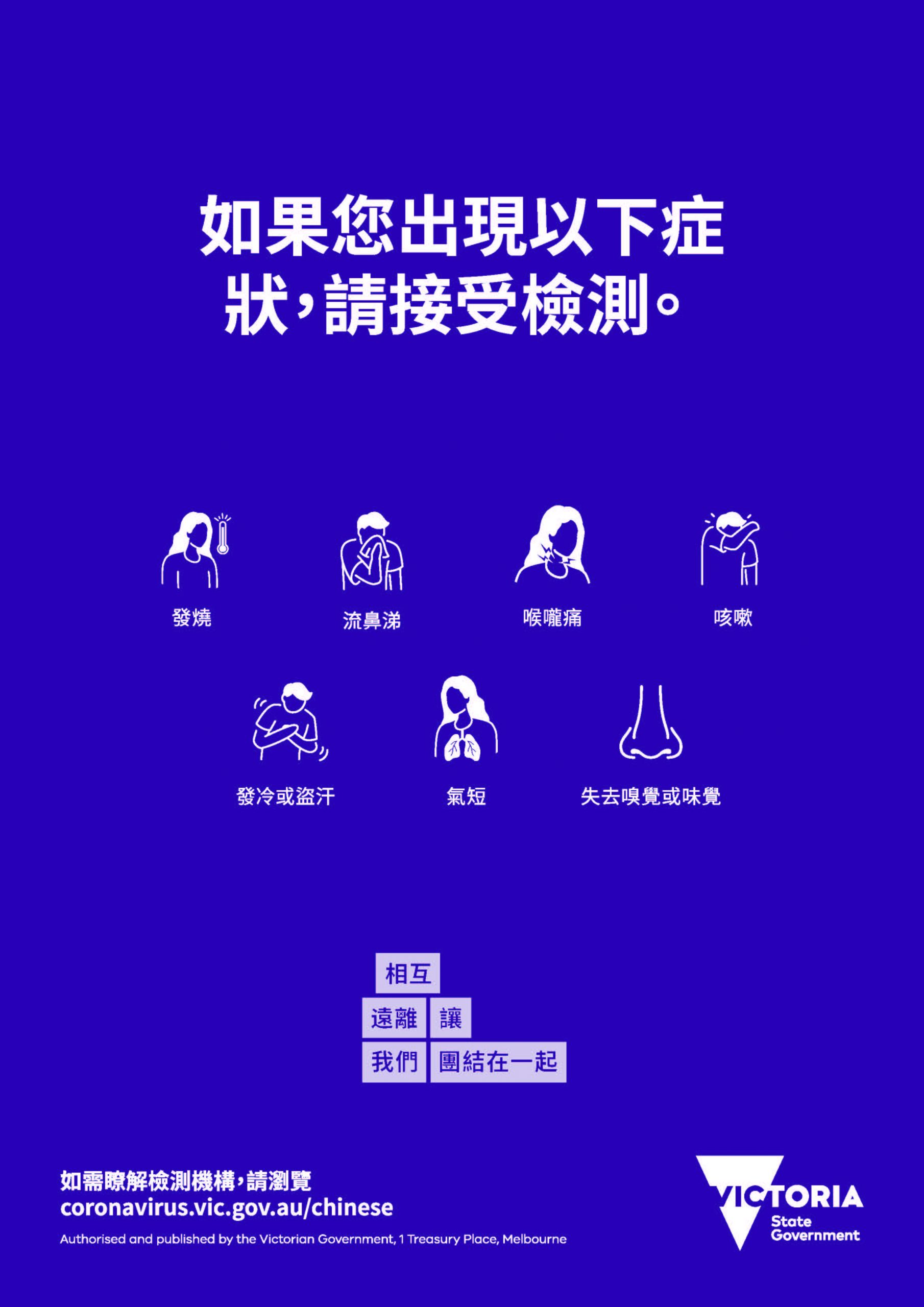
如果您出現以下症狀,請接受檢測。

FILIPINO: Kung nakakaranas ka ng mga sumusunod na sintomas, mangyaring subukan.

保护您自己和家人 – 咳嗽和打喷嚏时请捂住
How to wear a face mask 怎麼戴口罩
UAE Fully Suspends Trade and Financial Ties with Iran
Victorian Liberal Candidate Counselled Over Volunteer Internship Program
Trump signs order banning “birth tourism” and further restricting birthright citizenship
SpaceX Rocket Debris Hits the Moon, Renewing Concerns Over Space Junk
Australia Sets New Standards for Men’s Behaviour Programs
Trending
-
Cuisine Explorer6 years agoCantonese Mango Sago
-
Uncategorized6 years ago如果您出現以下症狀,請接受檢測。
-
Tagalog6 years agoFILIPINO: Kung nakakaranas ka ng mga sumusunod na sintomas, mangyaring subukan.
-
Cantonese - Traditional Chinese6 years ago保护您自己和家人 – 咳嗽和打喷嚏时请捂住
-
Uncategorized6 years agoHow to wear a face mask 怎麼戴口罩
-
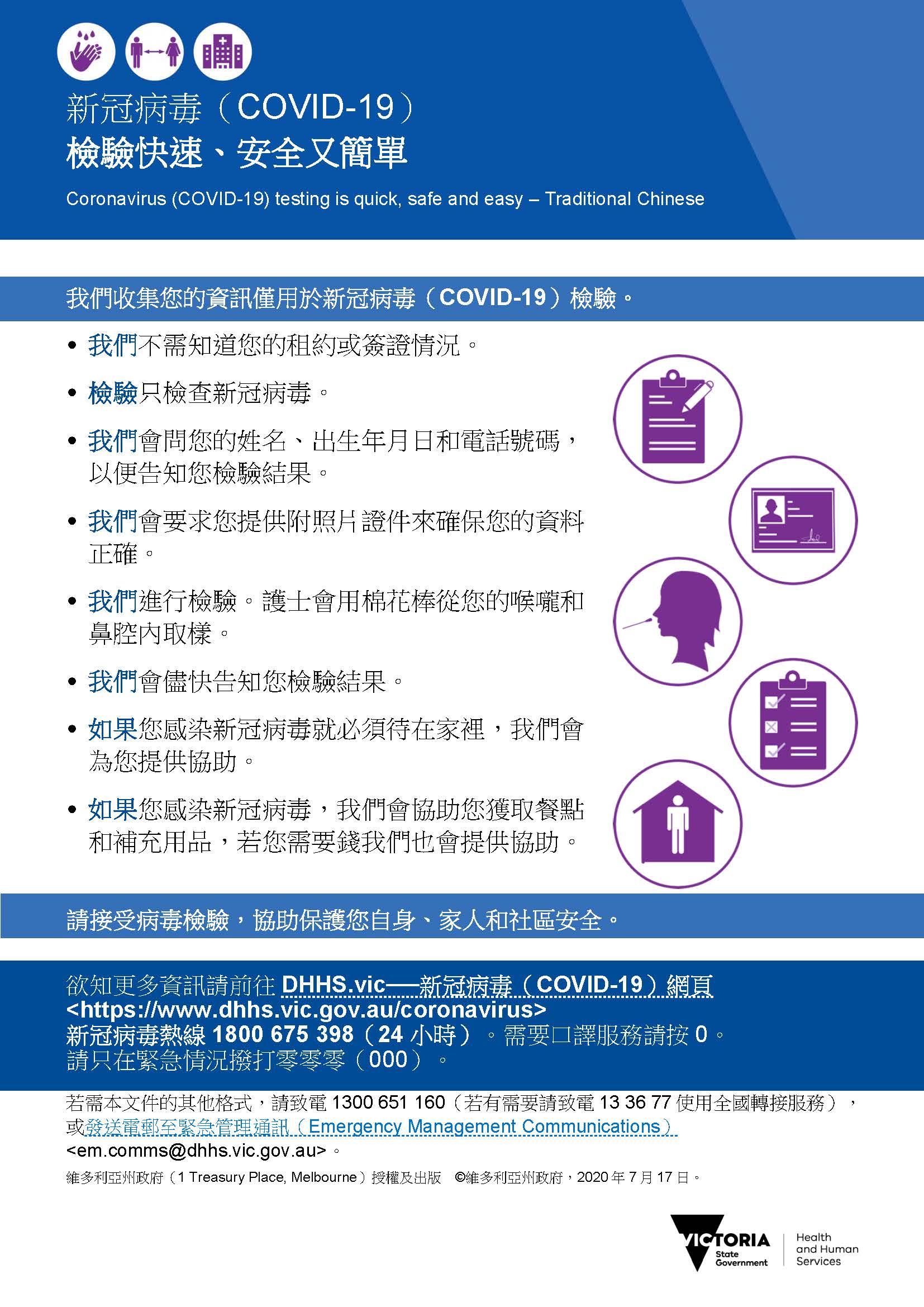
Uncategorized6 years agoCOVID-19 檢驗快速 安全又簡單
-
Uncategorized6 years ago
在最近的 COVID-19 應對行動中, 維多利亞州並非孤單
-

Cantonese - Traditional Chinese6 years ago保護您自己和家人 – 咳嗽和打噴嚏時請捂住