Connect with us

Daily News

China Becomes Top Destination for Australian Tourists, But Chinese Visitor Return Slows
Published

on

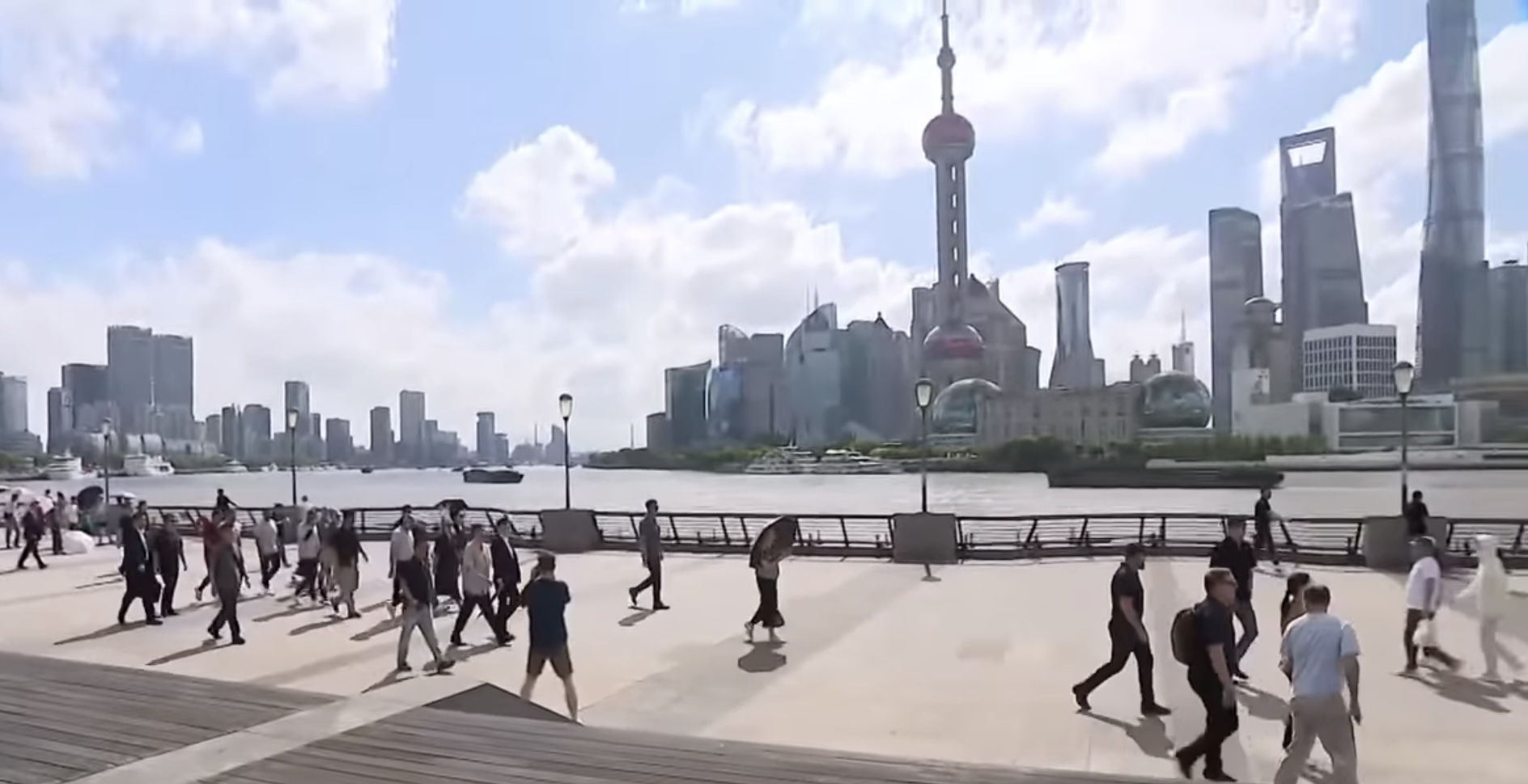
According to an Expedia report, Chinese cities have for the first time taken four spots in the top ten international destinations for Australian travelers, including the top three: demand for Shanghai rose 150% year-on-year, Shenzhen 130%, and Beijing 110%. Guangzhou, ranked sixth, also saw an increase of 55%.

Data from the Australian Bureau of Statistics shows that in July 2024, over 50,000 Australians returned from China, up 21% compared with the same period in 2019. However, Chinese tourist arrivals to Australia have been slower to recover, with only 112,900 visitors recorded in the same month—still 25% below pre-pandemic levels. Despite this, the industry considers China to remain the “fastest-growing inbound market.”

Margy Osmond, CEO of the Tourism & Transport Forum (TTF), noted that the slower-than-expected return of Chinese visitors has impacted retail, dining, education, and regional economies. In 2019, Chinese tourists spent A$10.3 billion in Australia across 1.328 million trips; by 2024, this had declined to A$8.1 billion and 829,000 trips.

To revitalize the market, Tourism Australia launched the A$130 million “Come and Say G’Day” campaign, featuring Chinese actor Yu Shi in promotional advertisements.

Continue Reading

Daily News

Trump Begins China Visit as U.S.

Published

on

U.S. President Donald Trump today begins a three-day visit to China, where he is expected to hold talks in Beijing with Chinese President Xi Jinping.

The trip marks Trump’s first visit to China since 2017 and the first face-to-face meeting between the two leaders since their meeting in South Korea in October last year. Both Washington and Beijing said discussions will cover bilateral relations and major international issues.

Trump wrote on social media that he is looking forward to the trip and described China as “an amazing country.” China’s Foreign Ministry said the two sides would conduct in-depth exchanges on China-U.S. relations, world peace, and global development.

According to U.S. officials, the summit will focus not only on trade cooperation but also on sensitive issues including Taiwan, Iran, artificial intelligence, nuclear weapons, and the Russia–Ukraine war. The Taiwan issue is widely viewed as one of the core areas of strategic competition between the two countries. U.S. Secretary of State Marco Rubio previously said Taiwan would likely become a key topic of discussion. China has long opposed continued U.S. arms sales and political support for Taiwan, while the United States maintains its role as one of Taiwan’s principal international backers.

On trade, both sides are expected to discuss extending the current truce in the China-U.S. trade war, including issues surrounding China’s continued exports of rare earth minerals to the United States. Sources indicated the two countries may formally announce the establishment of a “Trade Committee” and an “Investment Committee” as new mechanisms to promote bilateral trade and investment.

In addition, Beijing is reportedly preparing to announce new purchasing plans involving Boeing aircraft, U.S. agricultural goods, and energy products in an effort to stabilize economic relations. Ahead of Trump’s visit, Chinese Vice Premier He Lifeng is also set to travel to South Korea for a new round of economic and trade talks with U.S. Treasury Secretary Scott Bessent.

The case of Jimmy Lai, founder of Next Digital, is also expected to be raised during the visit. Trump recently said he would discuss Lai’s case during his meeting with Xi. More than 100 members of the U.S. Congress have also signed a joint letter calling on China to release Lai, highlighting continued attention to the issue within American politics.

Continue Reading

Daily News

Australia to Deploy Military Aircraft to Middle East for Strait of Hormuz Escort Operations

Published

on

The Australian government has announced it will deploy an E-7A “Wedgetail” airborne early warning aircraft back to the Middle East to participate in a multinational military operation led by the United Kingdom and France aimed at safeguarding shipping in the Strait of Hormuz.

Australian Defence Minister Richard Marles confirmed the deployment on Tuesday following a virtual meeting with defense ministers from several countries. He stressed that the mission is “strictly defensive in nature,” aimed at ensuring freedom of navigation rather than escalating regional conflict.

The E-7A Wedgetail is an advanced airborne early warning and command-and-control aircraft operated by the Royal Australian Air Force, equipped with long-range radar surveillance and airborne coordination capabilities. In March this year, Australia deployed the same aircraft type to the Middle East to help defend the United Arab Emirates against Iranian attacks.

Regional tensions have remained high since the United States and Israel launched airstrikes against Iran in late February, with shipping through the Strait of Hormuz heavily affected. Iran has repeatedly asserted control over the waterway and warned foreign powers against interfering in regional affairs.

Although a ceasefire between the United States and Iran has been in place since April, prospects for lasting peace remain uncertain. U.S. President Donald Trump recently described the ceasefire agreement as being in a “fragile” state, while Iran has rejected a U.S.-backed peace proposal. Multiple attacks on vessels and military standoffs have recently occurred near the strait, continuing to unsettle global energy markets.

Marles said Australia supports the restoration of freedom of navigation through the Strait of Hormuz and hopes the waterway can fully reopen. He added that the military deployment is intended to complement diplomatic de-escalation efforts rather than replace political solutions.

Continue Reading

Daily News

Permanent Migration Intake Maintained at 185,000

Published

on

Continue Reading

Trending