Features
History Written Under Control: Comparing East and West, and Resisting Twisted Narratives
Published
10 months agoon
East And West’s Different Historical Views
History helps us understand and learn from the past. Most people agree that it is important, but the way Eastern and Western countries record history can be very different. These differences can cause confusion, disagreements, or even disputes over what really happened.
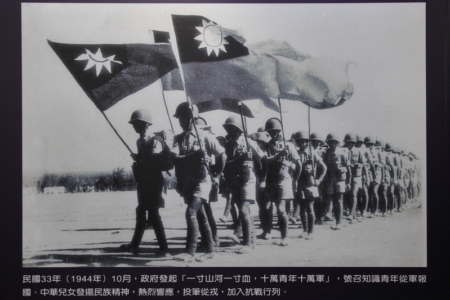
With the rise of digital media, how countries tell the story of WWII can be very different. China’s role in the war is described in various ways, showing how the media can sometimes twist history with propaganda or misinformation. We hope to cite examples of how the role of China in WWII has been documented differently, in order to detail the importance of the media’s role in twisting historical events through propaganda and disinformation.
First, China and Western countries record history differently. In the West, historical documents are stored in archives, and writers can usually record events freely. In contrast, historical China relied on a chain of official historians who copied records left earlier dynasties to write about the past dynasty. These recording historians couldn’t openly record events that will criticize the then emperors (such as iron fist rulership), as doing so could put them and their families in danger or even get exterminated.
Of course, Western history isn’t perfect either. From an outsider’s point of view, people often see the same events differently, even on how a country is invaded. For example, any elderly Chinese might strongly defend China’s actions in the Sino-Japanese wars, while western scholars may consider many factors like land disputes, political conflicts, and ideology when explaining about the war.
Western countries often value knowledge and individual thinking for everyone. China, on the other hand, has a long history of centralized control over information. Even before printing technology was established, China had a unified written language and centralized monitored historians, to allow government control on how history was recorded. Japan had a central government too, but regional differences in culture and record-keeping still existed. Smaller countries like Laos relied more on local communities and oral traditions to preserve historical records. These examples show that whether a society values individualism or collectivism can greatly affect how history is written and remembered.
Because of this difference, history can easily be twisted when personal or political interests are involved. Today, traditional historians are fading into the sunset, slowly being replaced by 24/7 news media. If countries continuously presenting biased or incomplete versions of events, the public’s understanding becomes confused and biased. Governments or storytellers may ignore events that don’t fit their desired narrative, leaving important truths hidden.
China’s current education on the Sino-Japanese Wars
For example, Chinese textbooks often present the CCP as the main force leading the fighting against the Japanese, but that’s not entirely accurate. The Nationalist leader Chiang Kai-shek actually led the early efforts, reluctantly joining forces with the CCP after the Xi’an Coup. In fact, Japan’s invasion of China began earlier than the 1937 Lugou Bridge / Marco Polo Bridge Incident.
The CCP often blames Manchukuo for allowing the Japanese army in invading Manchuria, but this reflects only part of the truth. While the Manchurians had some influence over that area, Manchuria was controlled by warlords, not the central Chinese government, that was Republic of China at that time. Puyi, the puppet leader, was influenced by advisors to took money from Japan and became a puppet. Looking at events from different perspectives shows how interpretations can be distorted. For example, one could ask: what if Chiang Kai-shek delayed action to avoid alerting the enemy? Even small changes like this can shape how we view the invasion’s seriousness.
The CCP also emphasizes that Chinese soldiers fought bravely while Western countries refused to help. Their narrative suggests that foreigners only cared about land and resources of China, but that’s only partly true. Britain did pressure the Qing dynasty to give up Hong Kong, but European countries and the USA avoided sending troops mainly for diplomatic reasons. Before Japan attacked Pearl Harbor, sending forces to China could have risked a more extensive war with Japan. Instead, the West provided weapons and supplies to the Nationalist government at that time. In hindsight, this situation is somewhat similar to the recent, three year-long Russian-Ukraine war.
The Tale of Australian William Donald
CCP influence has affected global perceptions, leading some Western countries to avoid independent research. Many Australians, for example, are unaware that some of their citizens had played key roles in the War in China with Japan. One notable figure is the Australian journalist William Henry Donald, who was deeply involved.
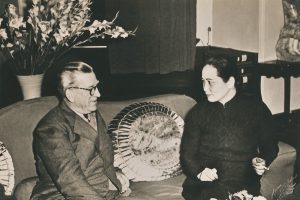
Donald started as a journalist and foreign correspondent before becoming an advisor of the Nationalist government in China. During the 1911 Revolution, he helped Dr Sun Yat-sen’s short-lived government negotiate with foreign powers, moving beyond reporting to active mediation. Initially, Donald admired Japan and even received a Japanese honour for his coverage of the Russo-Japanese War (1904–05). By 1915, however, he criticized Japanese imperialism and warned the West about its expansionist actions.
Donald played a crucial role during the Xi’an Coup, mediating between major Chinese leaders. His efforts helped secure Chiang Kai-shek’s release and the formation of a reluctant alliance with the CCP. Later, he disagreed with Chiang in 1940 over policy toward Germany. During the Pacific War, Donald was captured in Manila in 1942 but was freed in 1945. Afterward, his influence gradually declined.
Despite his decades-long involvement, historians have largely overlooked Donald’s contributions, whether advising Chiang, mediating coups, or supporting Dr Sun Yat-sen. His role is complex and less dramatic than headlines like “Chiang vs. Mao” or “Japan Invades”, so it is often ignored. In Australia, documentation about him is limited, with primary sources stored in China or specialized archives. Because Australian history education focuses more on colonial and ANZAC history, Donald’s contributions have faded from public awareness.
Chinese authorities rarely highlight Donald either. He was not a combat hero, and his advisory role could be politically inconvenient. The CCP tends to downplay internal compromises or foreign contributions, focusing instead on its own post-war achievements. Even in normal broadcasting, the media celebrating China’s journey post-war isn’t too different.
How CCP Centralization Affects Historical Documentation
Unlike many Western countries, which value history for education and heritage, China often emphasizes national pride over strict accuracy. This approach leaves younger generations unaware or unwilling to question historical events. The CCP has used systematic omission and withdrawal of all related records— sometimes called ‘amnesia therapy’ (失憶治療法) by scholars — to hide uncomfortable truths, like the Tiananmen Square Massacre. By controlling school curricula, the party successfully shapes collective memory, erasing or reframing events to suit its narrative.
In contrast, Western countries often debate controversial history publicly, offering multiple perspectives for critical analysis. The CCP also shapes views of other nations, like Japan, portraying it as a continued threat even though imperialism has ended. These examples show that history is rarely objective; it can be twisted to serve political goals. Recognizing these distortions is vital for developing critical thinking in future generations.
The CCP’s indoctrination is well-known but not unique in Asia. Postwar Japan focused on pacifism and democracy in textbooks, downplaying imperial aggression. South Korea and Taiwan have alternated between nationalist and democratic interpretations. Smaller countries like Vietnam, Laos, and Cambodia relied on oral histories and local records, allowing communities to shape memory. These examples show that centralized versus decentralized record-keeping strongly affects how generations perceive the past, emphasizing that control over history shapes national identity.
Australia’s Involvement in the Second Sino-Japanese War
The CCP’s influence on history goes beyond China. Cultural programs like Confucius Institutes promote party-aligned narratives internationally, shaping textbooks, museum exhibits, and media coverage abroad. Ignoring other perspectives, like those from Australia or Japan, can create a skewed understanding of WWII. This shows that controlling historical narratives isn’t just domestic indoctrination; it’s also a form of soft power.
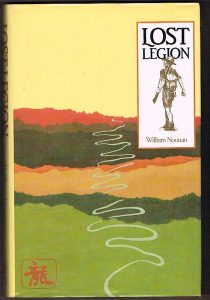
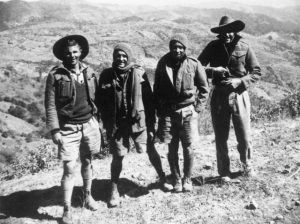
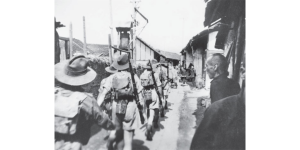
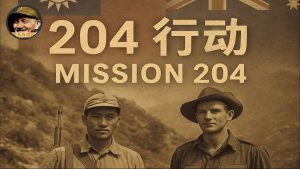
Australia has made its own mistakes in recording history. While it doesn’t claim any credit as the CCP, it has largely hidden its involvement in China through the little-known Mission 204. In 1942, around 250 Commonwealth troops, including 48 Australians from the 8th Division, were sent to aid Chiang Kai-shek. Despite logistical difficulties and tense relations with Chinese commanders, these troops carried out successful operations, including ambushes and a notable raid on Japanese barges near Poyang Lake.
Mission 204, however, was withdrawn in November 1942 due to internal politics and health issues in the unit. Later, the Chinese Nationalist Party was forced to retreat to Taiwan by the CCP. For decades, Australia largely ignored or hid this history, only resurfacing clues in 2023. While avoiding CCP politics is understandable, it’s unfair to deny the public knowledge of Australia’s wartime actions, which effectively allows the CCP to dominate the narrative.
These examples show that celebrations of China surviving the Sino-Japanese War and WWII are often shaped by political agendas and media control. This leaves the public with incomplete, biased, or deliberately obscured views. Without critical analysis or access to multiple sources, key figures, like William Henry Donald, and events can be forgotten or misrepresented.
Viewing History Through A Critical Lens
Furthermore, whether in textbooks or news reports, the same historical events can be portrayed very differently depending on who tells the story. Motivations such as national pride, political advantage, or control over public narrative all highlight the need for careful comparative study. Governments exploit each new, impressionable generation by spreading half-truths or even outright lies under the guise of patriotism and unity. When in reality, it’s about framing themselves as ‘heroes’. The longer this continues, the fewer people will question the fabricated histories imposed by those in power.
When reading history, we shouldn’t take it at face value. What gets celebrated is rarely the full story, as many crucial voices stay buried under mainstream narratives. To avoid being misled by half-truths or polished myths, readers must take proactive steps to seek balance and truth.
For example, readers can compare news sources from different cultural backgrounds. Take the case of war survival anniversaries: a Chinese state outlet might glorify its own soldiers, while a Western outlet could focus on diplomatic strategy, such as why Western powers, despite ties with the invaded nation, chose not to intervene militarily. These contrasts reveal how bias shapes every narrative.
Another approach is to encourage counterfactual thinking, which is by exploring ‘what if’ scenarios to engage with history critically. Asking questions like “What if Chiang Kai-shek had acted sooner?” or”How might events differ if textbooks included multiple perspectives?” pushes readers to think beyond surface facts. By presenting alternative viewpoints side by side, educators and media can remind younger generations that history is layered, contested, and never entirely fixed.
News Media’s Historical Responsibilities
Additionally, should news outlets depend less on governmental sources, in order to report historical events to newer generations? For instance, the CCP often promotes itself as the sole hero in the Sino-Japanese war, overlooking many other factors that contributed to Japan’s defeat. To provide a fuller picture, journalists should consult academic historians from diverse backgrounds and archives. If local reporters are unable to do so, international media should avoid over-reliance on Chinese outlets, helping to diversify perspectives. Even when governments provide data, reporters must cross-check multiple sources: comparing war casualty numbers, dates, and accounts from different national archives.
To combat biased or incomplete narratives, media organizations must embrace investigative journalism. Rather than relying solely on press releases or government celebrations, journalists should explore archives, personal accounts, and lesser-known sources. This approach can uncover overlooked contributors, hidden controversies, or forgotten stories, such as the decades-long influence of William Henry Donald in China. Without such diligence, these stories risk being lost to history.
Other than Official Historical Narratives
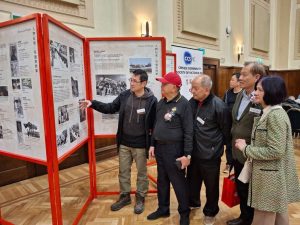
Historical events are rarely one-dimensional. To ensure accuracy, news outlets should present both domestic and foreign perspectives. For instance, reporting on the Sino-Japanese War should not rely solely on CCP or Chinese Nationalist sources; Japanese accounts, Western observers, and even oral histories from survivors’ descendants can provide valuable insight. By comparing these perspectives, readers gain a deeper understanding of the complexity of events and can see where bias, pride, or self-interest has shaped narratives.
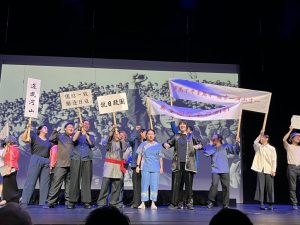
History is often told through the lens of nations, prominent leaders, or major battles, leaving countless contributors invisible. Unsung figures – nurses on the frontlines, translators bridging cultural and linguistic gaps, local militias defending communities, and ordinary civilians navigating war — have all shaped outcomes without formal recognition. Grassroots organizers and community leaders often mitigated famine, displacement, or political oppression, yet their stories rarely appear in mainstream textbooks. Highlighting these individuals challenges simplified nationalist accounts and invites readers to critically examine history from multiple angles. By including personal stories, letters, diaries, and oral histories, historians and educators can provide a richer, more nuanced understanding, showing that history is not only the story of leaders but also of ordinary people whose everyday decisions ripple across generations.
Importance of Multifaceted Historical Narrations
Historical narratives are not confined to academic debate; they actively shape contemporary geopolitics and international relations. The CCP’s control over historical interpretation has profoundly affected public perception of Taiwan, the South China Sea, Hong Kong, and Japan, often framing policies as defensive or restorative to fit a particular national narrative. Textbooks emphasizing the ‘century of humiliation’ or heroic struggles against foreign powers can reinforce domestic support for assertive policies abroad.
Understanding these manipulations shows how governments leverage history to justify policy, cultivate national sentiment, and shape international perception. Media, educational programs, and cultural diplomacy can extend this influence globally, subtly guiding how other countries interpret events involving China. Recognizing these dynamics is crucial for analysts, educators, and citizens, highlighting that history is not merely a record of the past but also a tool actively deployed to influence present-day politics and international relationships.
Digital Era’s Challenges Towards History
The landscape of historical narrative has further shifted in the digital age. Social media platforms are not just spaces for connection but arenas for ideological competition. TikTok, WeChat, YouTube, and Twitter/X have become battlegrounds for competing interpretations of history. Viral clips, memes, and algorithmically promoted content often shape perceptions more strongly than formal education. Algorithms tend to favor content that evokes strong emotions – national pride, outrage, or sensationalism – reinforcing particular viewpoints while suppressing others. Unlike these fast-moving but potentially biased feeds, traditional textbooks, though limited in perspective, are curated and vetted to ensure factual consistency.
For younger generations growing up online, cultivating media literacy, critical thinking, and the ability to cross-reference multiple sources is essential. This is not only to resist propaganda but also to engage with history in its full complexity. Encouraging discussions about the origins and credibility of online content empowers students to recognize how narrative manipulation occurs in real time. It prepares them to approach information critically throughout their daily lives.
Finally, historical reporting should be more understandable to younger generations. The media can leverage multimedia tools – short videos, infographics, timelines, and interactive articles – to break down complex events. Clear, engaging formats, using layman language and visuals, can prevent oversimplification and reduce the risk that a single, potentially biased narrative dominates public understanding.
In an age of propaganda, selective memory, and curated narratives, readers must approach history critically. By seeking multiple sources, questioning official accounts, and embracing diverse perspectives, we can resist half-truths and uncover the full story. History is not just a record of the past; it is a tool for understanding the present and shaping a more informed future. If media, educators, and citizens take these steps seriously, hidden figures like William Henry Donald and many others who shaped history behind the scenes can finally receive the recognition they deserve.
Editorial : Raymond Chow, Jenny Lun
Photo: Internet
Published in Sameway Magazine on 24 October, 2025
You may like
China launched a long-range missile without a warhead from a nuclear submarine toward the Pacific island region, prompting dissatisfaction from regional countries including Australia. There have been calls to make the Pacific a region of cooperative defense, and this initiative is likely to gain support from many countries.
China is not the only country to have launched missiles or conducted nuclear device tests in this region. China has also stated that it does not regard this launch as an act directed against countries in the region. Current affairs analysts believe this was a demonstration to the United States that China has the capability to launch long-range missiles, indicating that a large portion of the United States has come within the range of China’s military strike capability. The message to the United States is that if political conflicts between China and Taiwan or other countries lead to military action, the United States should understand that China possesses sufficient military strength to impact on the U.S. mainland.
For Australia, this long-range missile launch indicates that Australia has also come within the reach of China’s military capabilities. A missile launched from mainland China over a distance of 9,000 kilometres is capable of covering Australia’s major cities, but this does not mean that China is threatening Australia. Over the past thirty years or more, China has already demonstrated its influence in Australia through the economy, trade, manufacturing, and supply chains. Australia is not a military power and is unlikely to pose a threat to China’s security. Therefore, China has no real need to use force or military intimidation against Australia.
However, from the perspective of Australia’s own security and the protection of its citizens’ way of life, designating the Pacific region as a demilitarized zone and restricting military activities by all countries in the region would be a policy that is unquestionably beneficial to Australia and other countries of the region. Likewise, an agreement among the large and small countries of the region for joint defense—such as the “Ocean of Peace” mutual defense agreement signed last week between Australia and Fiji, the first of such agreement with a Pacific island nation outside New Zealand—is a step in that direction. The agreement also welcomes more countries to join, and New Zealand has already expressed strong interest. It is believed that more countries will join soon.
Historically, countries have often resolved conflicts over interests, ideology, religion, and other differences through war. However, since the First World War, Western countries have learned that ruling populations engaged in prolonged resistance is ultimately not in their own interests. Unless humanity returns to the barbaric practice of completely exterminating its enemies, otherwise using war to invade other countries is not an acceptable approach. I only hope that Australia’s political leaders will show true leadership by joining up the other small Pacific nations to advocate for peace throughout the region.
Mr. Raymond Chow
On July 4, I attended the Victorian New Life Association’s 30th Anniversary Charity Concert at the Whitehorse Centre, where, together with more than 400 supporters, we reflected on the unwavering care, compassion, and dedication that Mrs. Yiu Shum Yuen (Mrs. Yiu), who has served as the Association’s Chairperson since its founding, has shown to cancer patients and their families over the past thirty years. Through her efforts, those who must walk the uncertain journey of life alone no longer feel isolated and helpless. In this article, I will not be discussing people with autism for the time being. Instead, I wish to reflect on the loneliness faced by those whose lives are approaching their end.
The Lonely Journey of Life
There is no doubt that every person must ultimately walk the journey of life alone until the very last day. The recent passing of my mother has made me feel this even more deeply. From the moment we are born, however, we begin learning that the journey of life is not one we walk in loneliness. A baby who knows nothing feels hunger, cold, anxiety, and may cry even at the slightest sound. As long as the baby cries aloud, the parents will respond. Through their love and care, the baby develops a sense of security and the feeling that they are not living alone.
As we grow a little older, even before we can speak, we learn to communicate with others. Through movements and facial expressions, babies connect with their families, and through this process, we witness their continual growth. From knowing nothing at all, they gradually learn to understand the voices of others, the outside world, how to get along with people, and the pursuits of life. The path of a person’s life begins with self-interest, gradually develops into an understanding of the world, and may even reach a deeper knowledge of and relationship with the Creator who made the world.
As people grow, they gradually leave the environment of their family and enter schools, friendships, close relationships, workplaces, and the process of creating the world together with others. As a result, the number of people we know continues to increase. Yet because of differences in personality, life goals, attitudes, and personal preferences, we cannot necessarily maintain long-term and close relationships with everyone. As people grow older, they eventually realise that there are joys and sorrows, meetings and partings in life, and that the time we can spend together is never long. Even more sobering is the gradual realisation that everyone must one day face death and depart. The loneliness within each person’s heart becomes increasingly difficult to dispel as we ourselves grow old.
However, when one day a person is diagnosed with cancer, almost everyone experiences an overwhelming sense of loneliness. This is because most cancers today cannot be cured, their progression is unpredictable, and yet they can ultimately be fatal. The challenge cancer brings is that people have no certainty whether their lives will continue, and this directly exposes their helplessness. No one can say, “I have cancer. It doesn’t matter. It will get better by itself.” Those diagnosed with cancer are like people who have received a notice from the Creator that their lives may soon be coming to an end. From that moment onward, they walk the road of life alone.
A Journey of Life That Will Inevitably End
When young people are diagnosed with cancer or another incurable illness, many naturally feel unwilling to accept it. If someone in their teens or twenties loses their life while still studying, it always feels especially tragic. I cannot help but think of a university classmate who ended his own life by jumping from the rooftop of the campus because he could not achieve the academic results he had hoped for. His suicide reminded me most profoundly that young people, when they are temporarily unable to see a way forward, may make irrational decisions that leave those around them heartbroken. Because of this, I learned that I should never ignore the needs of those around me. Whenever I am able to offer them some help, I should do my best.
When I was in the prime of my life, I was diagnosed with a liver disease that was incurable at the time. When the university doctor who was also my colleague told me there was no cure, I discovered that what I faced was not a blow, but rather a reminder from God that life was never in my own hands, and that I was never truly able to plan my future. At that moment, I asked myself where I should invest whatever time remained in order to accomplish the things I had planned in life. What surprised me even more was the realisation that after more than ten years of hard work, everything I had accumulated would probably remain unused when the time came for me to leave. Since I had long resolved to serve God throughout my life and be His steward, how then should I face God?
I immediately decided to change the direction of my life. I left Hong Kong and returned to Melbourne, dedicating whatever time and resources I had left to expanding God’s Kingdom. What I thought about then was not how I should plan to use my wealth, but rather asking God how much longer He would allow me to continue serving as His steward. My serious illness reminded me to make the most of the present. Even my beloved wife and family could not determine whether they would continue walking beside me. Many friends cared deeply about me, but I still had to walk my own path alone. Yet every day I knew and experienced that God was walking with me.
The Loneliness of Growing Old Cannot Be Changed
When my parents reached their seventies, they began living with me permanently, allowing me to experience with them the later years of life’s journey. When I was younger, I knew my parents would one day grow old, but I had never personally experienced what ageing and death were really like. Fortunately, I have had the privilege of serving in a worship service for the elderly for the past eighteen years, witnessing the journeys of many elderly people from old age to death.
My parents gradually became less active. My father had few friends and spent most of his time with my mother. Their life was simple, yet he was content. He would spend his days tending flowers and working in the garden, and before he knew it, another day had passed. My mother enjoyed socialising and always hoped that different friends would visit her, and that she could go out and about. However, all of their peers remained in Hong Kong, and their lonely life in Melbourne could not be changed. As they grew older, their energy declined, and they spent more and more time living in loneliness.
After my father went home to the Lord eight years ago, my mother became truly alone in the nursing home. Although my sister, my younger sister, and I, together with our families, visited her frequently in Melbourne, my mother did not understand English and therefore could not communicate with either the other residents or the staff. Visits from her children became the only thing she looked forward to. After my father’s passing, my mother repeatedly said that she was ready to leave because the endless loneliness made her long even more for her heavenly home. She had married into my father’s family at the age of fifteen, joined the church, and became a Christian. She firmly believed that she now had more relatives and friends in heaven than on earth. To her, leaving this world to be reunited with her loved ones in heaven was better than remaining on earth to live in loneliness.
How Can We Face Death?
Cancer patients and my parents, who lived long lives before passing away, are not the same. Most cancer patients have not yet grown old, yet they must already face death every day and walk the road alone. Thirty years ago, when Mrs. Yiu Shum Yuen saw the loneliness experienced by members of the Chinese community facing this situation, she established the New Life Association to walk alongside them through the remaining days of their lives under the shadow of cancer, helping them to be alone without feeling lonely.
Yes, the final road of death must ultimately be walked alone, but people can choose not to carry the feeling of loneliness as they walk that path.
The performers at the New Life Association’s 30th Anniversary Concert were all members of the Association and their families and friends. They were people who had experienced the threat of cancer, not professional performers. Yet through music, performances, drama, and dance, they worked hard to share the support they had received from the Association and the hope for life they had rediscovered, expressing both their love for life and their gratitude to the New Life Association to every member of the audience. That evening, I attended with my good friend Chan Ho Sum. We both affirmed the hope and support that the New Life Association brings to cancer patients, and we also wished that Mrs. Yiu would find even more companions in the years ahead who share the Association’s vision, so that they may continue supporting this platform that has already been established, bringing blessings to this group of life warriors who continue to face life with a positive attitude and a smile.
Chan Ho Sum and I also discussed what we ourselves would choose if one day we were to face the same challenge as the friends in the New Life Association. I believe this is a question worth every person considering. Without discussing it beforehand, both Chan Ho Sum and I came to the same conclusion: if one day we truly faced the threat of death, we would cherish every remaining day even more, so that we could continue to shine and make a difference, blessing those who walk alongside us. As a Christian, I believe this is the most fundamental attitude toward life in practising the Christian faith. I wonder whether you would agree.
Mr. Raymond Chow
If someone asked you today, “What are Australian values?” how would you answer?
Freedom? Fairness? The rule of law? Multiculturalism? Or speaking fluent English and respecting the local culture?
In recent years, “Australian values” has appeared increasingly frequently in political debate. From immigration policy and social integration to national identity, politicians have repeatedly argued that new migrants must embrace Australian values. Pauline Hanson, leader of One Nation, has even advocated for Australia to return to a “monocultural” society, arguing that new migrants should speak English, obey Australian laws, and assimilate into the mainstream culture.
Yet as “Australian values” has become an increasingly common political slogan, the most fundamental question is rarely discussed: what exactly are Australian values? Although the concept appears familiar, it is far more complex than it seems. People from different political parties, generations, and cultural backgrounds may all have different interpretations.
In fact, Australian values have never been a fixed or unchanging set of standards. They are a collection of shared values that have been shaped, revised, and redefined over more than two centuries of Australian history through the intertwined experiences of colonisation, immigration, multiculturalism, and the history of the First Nations peoples. To understand Australian values, we must first understand how Australia became the nation it is today. More importantly, in a multicultural society, how should Australia enable people from different cultural backgrounds to genuinely understand the country and build a shared set of national values together?
How the Australian Government Defines Australian Values
In fact, the Australian Government has already established an official definition of “Australian values.” Everyone applying for an Australian visa is required to sign the Australian Values Statement, committing to respect and uphold Australia’s fundamental values. The statement outlines a number of core principles, including respect for individual freedom and dignity, freedom of religion, freedom of speech, the rule of law, and democracy. It also emphasises that everyone should enjoy equal opportunity regardless of their gender, race, religion, age, disability, sexual orientation, or ethnic background.
The government’s official definition also explains one of the concepts most frequently associated with Australian society: “Fair Go.” The idea extends beyond mutual respect and tolerance for others. It also emphasises empathy and care for those in need, while ensuring that everyone has the opportunity to compete on a level playing field and achieve upward social mobility. In addition, English is defined as Australia’s national language and is regarded as the common foundation for communication, social cohesion, and national unity.
Beyond signing the Values Statement, all applicants for Australian citizenship are also required to pass the citizenship test, which includes five compulsory questions on Australian values. The government’s official resource, Australian Citizenship: Our Common Bond, further sets out the same core principles contained in the Australian Values Statement, providing detailed explanations of each of these values.
Do Australians Know What Australian Values Are?
Although the Australian Government has established a clear official definition of “Australian values” and reinforces it through the Australian Values Statement and the citizenship test, this does not necessarily mean that all Australians truly understand what these values entail—let alone share a common understanding of them.
At the political level, there are clear differences in how Australian values are interpreted. Pauline Hanson, leader of One Nation, advocates returning to a “monocultural” framework, closely linking Australian values with assimilation, the English language, and cultural conformity, and using this as justification for tightening immigration policies. By contrast, Prime Minister Anthony Albanese presents a more inclusive and multicultural interpretation, arguing that the core of Australian values lies in respecting diversity and upholding fairness, rather than requiring cultural homogeneity.
However, these differences are not confined to politicians. Even within Australian society, there is no clear or consistent understanding of what Australian values actually mean. For example, “Fair Go” is often regarded as one of the defining Australian values, yet people interpret it in very different ways.
According to the Australian Survey of Social Attitudes conducted by a team of Australian researchers, when respondents were asked what “Fair Go” meant to them, the answers reflected a wide range of—and sometimes conflicting—interpretations. Some viewed it as equal opportunity and non-discrimination, while others emphasised the relationship between effort and reward. Still others extended the concept to fairness in social welfare and the distribution of public resources.
Further evidence came from a public opinion survey conducted by DemosAU in January this year, which found that there is, in fact, no single social consensus on what constitutes Australian values. When respondents were asked an open-ended question about what Australian values meant to them, the answers varied considerably. The most common response was “respect and kindness,” followed by “equality and fairness.” Other frequently mentioned values included community spirit, friendship and “mateship,” as well as peaceful coexistence. At the same time, some respondents believed that Australian values were disappearing altogether, while others said they simply did not know how to answer.
In other words, even under the same official government framework, Australian values continue to be interpreted differently across both politics and society, rather than existing as a clearly defined and universally accepted set of shared principles.
How Australia’s Immigration History Shaped Australian Values
To understand what we now call “Australian values,” it is not enough to look solely at government policies or political rhetoric. We must instead return to Australia’s immigration history and examine how these values were formed.
Australia did not evolve naturally as a single-culture nation. Rather, it is a society that has been gradually built through successive waves of migration across different historical periods. As a result, Australian values have never been a fixed or static concept. They have been continually redefined alongside changing migration patterns and evolving social experiences.
The earliest chapter of Australian society can be traced back to Britain’s convict transportation system. In 1788, large numbers of British convicts were transported to Australia, where they rebuilt their lives in a distant colony. Throughout this process, the ideas of hard work and freedom gradually became embedded in the emerging social culture. As the colony became more stable, Australia’s institutions continued to develop from the British system, laying the foundation for its future democratic governance.
The nineteenth-century gold rush then attracted migrants from around the world, including Europeans, Americans, and Chinese miners. Amid competition for resources and cooperation within mining communities, a social culture emerged that emphasised opportunity and social mobility.
During this period, many of the principles that are now regarded as core Australian values began to take shape, including equal opportunity, anti-elitism, and the spirit of fair competition. In particular, within mining communities, the belief that “those who work hard should be rewarded” gradually evolved into what is now widely recognised as the idea of a “Fair Go.”
In the twentieth century, the White Australia Policy imposed assimilation policies that restricted non-European immigration for decades, resulting in a relatively homogeneous cultural landscape for a period of time. However, as immigration policies gradually liberalised after the Second World War, large numbers of migrants from Europe, Asia, and the Middle East arrived in Australia, making multiculturalism an undeniable national reality. During this period, inclusiveness, multicultural coexistence, and respect for cultural diversity gradually became part of Australia’s understanding of its own values.
Today’s Australian values are therefore the cumulative product of different waves of migration and historical experience: from the resilience and pursuit of freedom demonstrated by transported convicts, to the spirit of fair opportunity fostered during the gold rush, and later to the coexistence and inclusiveness that emerged within a multicultural society. In other words, Australian values do not originate from a single source; they have been collectively shaped by migrants from different backgrounds and different eras.
Recognising First Nations: Australian Values Beyond the Colonial Narrative
It is worth noting that Australia’s understanding of its own identity has undergone an important period of historical reflection in recent years. Increasingly, Australians have come to recognise that the First Nations peoples—including Aboriginal peoples and Torres Strait Islander peoples, who have lived on this land for more than 60,000 years—are the original custodians of the continent and the holders of its oldest continuous cultures. This recognition is more than a symbolic cultural gesture; it represents Australia’s growing willingness to re-examine the nation’s founding history and acknowledge the harm and inequalities inflicted upon Indigenous peoples through colonisation.
For much of Australia’s modern history, national identity was largely built around the legacy of British colonisation. The English language, British institutions, and European culture were regarded as the primary foundations of Australian society. However, with the development of multiculturalism, Australia has gradually come to recognise that a truly fair national identity should not be based on the dominance of a single culture, but should instead embrace both the original history of this land and the cultural experiences brought by successive waves of migrants.
In recent years, Australia’s Multicultural Framework has further emphasised that First Nations cultures are a fundamental part of Australia’s shared national identity. Rather than treating Indigenous Australians as simply one of many cultural groups within a multicultural society, the framework recognises their foundational place in Australia’s history and culture, while promoting more meaningful reconciliation, cultural safety, and social participation. In other words, Australia has begun to move away from a one-way model of asking migrants to integrate into Australia, towards a two-way understanding of how different communities collectively shape Australia.
This shift also reflects a deeper commitment to Australia’s values of freedom, democracy, and the rule of law. A healthy democracy is not only about protecting the rights of the majority; it also requires acknowledging the voices of those who have historically been marginalised and responding to historical injustice through institutional reform. In this sense, recognising First Nations peoples represents an important sign of Australia’s democratic maturity and its willingness to critically reflect on its own history.
Viewed from a broader historical perspective, everyone who has come to Australia over the past two centuries—whether early British settlers, transported convicts, European and Asian gold miners, or today’s migrants from around the world—arrived after the First Nations peoples. Consequently, when some political narratives attempt to define Anglo-white culture as the only authentic expression of Australian values, this historical perspective exposes the limitations of such claims.
Today’s Australian values are therefore not inherited from a single cultural tradition. Rather, they have evolved through the interaction of more than 60,000 years of First Nations history, the experience of colonisation, successive waves of migration, and the ongoing development of a multicultural society. At its core, Australian identity is no longer defined by who arrived first, but by how the nation acknowledges its history while building a society founded on freedom, democracy, the rule of law, inclusiveness, and equal opportunity.
Can Administrative Measures Really Shape Shared Values?
Although the Australian Government has established an official framework defining “Australian values” and incorporated it into the visa and citizenship process, does it truly represent the shared values of all Australians? From an institutional perspective, the government requires applicants to understand and commit to these values through official study materials, the Australian Values Statement, and standardized citizenship tests. However, this top-down, administrative approach to defining values raises an important question: can a set of official documents and examinations truly enable people to understand and genuinely identify with the core values of a society?
More recently, Liberal Party leader Angus Taylor proposed introducing a legally binding “Australian Values Statement” into migration law, making it a core requirement for obtaining a visa. He also argued that visa holders who breached these behavioural standards should face visa cancellation and deportation. At the same time, he criticised the Labor government’s migration policy as being too lenient, arguing that migration screening should be strengthened and entry requirements tightened to ensure migrants better align with Australian values.
The fundamental issue, however, is that even Australians themselves do not necessarily share a common understanding of what “Australian values” actually mean. If there is no clear consensus among the broader Australian public, it is reasonable to question whether migrants from different cultural backgrounds—particularly those from non-democratic societies—can truly change, embrace, and internalise these values in their daily lives simply by reading government materials, signing a declaration, or passing a citizenship test. This assumption itself deserves closer examination.
Australian Values Cannot Be Reduced to a Textbook
Under Australia’s current migration policy, the government primarily adopts an information transmission model to establish shared values. Through official documents, value statements, and standardized citizenship tests, new migrants are expected to “understand and accept” Australian values as part of the migration process.
However, from the perspective of communication theory, the formation of values is not simply a process of receiving information. Rather, it is a process of meaning-making, in which understanding is constructed through interaction, lived experience, and social relationships.
A migrant may be able to answer every question in the citizenship test, but that does not necessarily mean they truly understand how freedom, democracy, or fairness operate in Australian society. Values are not like legal provisions that can be fully internalised through reading and examination. Instead, they are gradually developed through everyday interactions with people from different backgrounds, participation in public life, and first-hand experience of how institutions function.
To some extent, the current policy assumes that Australian values are a complete and fixed set of principles that simply need to be transmitted from the government to new migrants. Yet Australia’s own history demonstrates the opposite: national values have never been static. They have continuously evolved through the interactions of different communities.
From more than 60,000 years of First Nations cultural heritage, to the colonial era, and later waves of migration that brought diverse cultural experiences to Australia, the values that Australia now upholds—freedom, democracy, the rule of law, and equal opportunity—are themselves the product of long-term social negotiation.
If Australia genuinely seeks to build a shared sense of national values, administrative procedures and standardized testing alone are insufficient to reflect the realities of a multicultural society.
The real question is not whether migrants know Australian values, but whether they are given the opportunity to experience them within Australian society.
Intercultural Democracy: Understanding Values Through Interaction
Compared with a one-way information transmission model, Australia needs to develop a form of intercultural democracy that places interaction at its core.
Intercultural democracy is not merely about allowing different cultural groups to coexist peacefully. Rather, it involves designing institutions that create opportunities for ongoing dialogue, collaboration, and participation in public affairs among diverse communities. Values are not standards imposed from the top down; they are social understandings gradually formed through people living together, inspiring one another, and influencing one another through everyday interaction. In this context, the role of government is no longer simply to tell people what “Australian values” are, but to create opportunities for people to understand, through practical participation, why these values are worth upholding collectively.
This also means that policy design should shift from excluding those who do not conform to encouraging shared participation. For example, governments could promote intercultural community collaboration programs that encourage new migrants and local residents to participate together in Rural Fire Service (RFS) activities, community kitchens, youth mentoring programs, and local governance initiatives. By working together to address social issues, participants do not merely learn about fairness, responsibility, mateship, and mutual support in theory; they experience these values in practice.
Governments could also establish honour and incentive mechanisms to encourage participation. Initiatives such as an Intercultural Excellence in Participation Award or a Community Inclusion Points Scheme could recognise the contributions of both migrants and local residents who engage in community activities. Recognition might include official certificates, public service benefits, or other forms of acknowledgement. In addition, residents from different backgrounds could be encouraged to work together to solve local issues, thereby gaining a deeper understanding of democracy, the rule of law, and equal participation, while putting the principle of Fair Go into practice through cooperation and shared outcomes.
More importantly, these policies should not be designed solely to help migrants integrate; they should enable the whole society to participate in the construction of shared values. Intercultural democracy does not require migrants to unilaterally adopt mainstream culture. Local Australians can also, through interaction, gain a renewed appreciation of the cultural resources, life experiences, and global perspectives that migrants bring. Genuine integration is not a process in which one group changes another; it is a process of mutual growth through two-way interaction, allowing Australian values to continue evolving alongside society.
Ultimately, Australian values should not exist merely as answers in a textbook. They should be lived experiences practiced in communities, schools, workplaces, and public life. Intercultural democracy enables people from different backgrounds to engage in ongoing dialogue, negotiation, and shared decision-making, thereby gradually understanding what Australia is, rather than simply being told what Australia should be. Values understood through interaction are no longer cold and rigid migration requirements; they become living Australian values that are practiced in daily life and continue to evolve over time.
Australian Values Should Not Become a Political Tool
However, as Australia rethinks how to foster intercultural dialogue, it must also be alert to a growing concern: a set of values originally shaped through history, migration, and democratic practice is increasingly being appropriated by some politicians as a tool for winning votes.
In recent years, some politicians have deliberately simplified complex social issues in order to appeal to voters’ anxieties. Through emotionally charged rhetoric, they have framed immigration, multiculturalism, and national identity as issues of conflict and division. They have redefined “Australian values” as a narrow cultural standard, implying that only those who conform to a particular language, culture, or background truly belong in Australian society. Such narratives not only ignore Australia’s history as a nation built by migration, but also dismiss the contributions that diverse communities have made to Australian society over many decades.
Pauline Hanson’s call for a return to a “monocultural” Australia exemplifies this approach. It reduces Australian values to an exclusive identity rather than recognising them as a set of shared principles that continue to evolve within a democratic society. This form of populist politics amplifies fear and public anxiety, portraying migrants as the cause of housing pressures and rising living costs, while avoiding deeper structural issues such as policy failures, economic conditions, and governance challenges.
Yet in the face of this political narrative, the major parties have largely responded passively. Although Angus Taylor criticised One Nation’s proposals as inconsistent, he has failed to put forward a clearer and more inclusive vision of Australian values. In doing so, he has also avoided the responsibility of shaping a more constructive national conversation.
Australian values have never belonged to any single cultural or ethnic group, nor should they be redefined or manipulated by politicians for electoral gain. To genuinely uphold Australian values is not to divide society into “us” and “them” through fear and confrontation, but to continue strengthening the foundations of understanding, mutual respect, and shared participation within a democratic society.
Listen Now

Trump signs order banning “birth tourism” and further restricting birthright citizenship
SpaceX Rocket Debris Hits the Moon, Renewing Concerns Over Space Junk
Australia Sets New Standards for Men’s Behaviour Programs
Calls for “Hongkonger” Option in Australia Census
33-Year Wait for Parent Visas as Australia Reviews Migration Rules
Cantonese Mango Sago
如果您出現以下症狀,請接受檢測。

FILIPINO: Kung nakakaranas ka ng mga sumusunod na sintomas, mangyaring subukan.

保护您自己和家人 – 咳嗽和打喷嚏时请捂住
How to wear a face mask 怎麼戴口罩
Trump signs order banning “birth tourism” and further restricting birthright citizenship
SpaceX Rocket Debris Hits the Moon, Renewing Concerns Over Space Junk
Australia Sets New Standards for Men’s Behaviour Programs
Calls for “Hongkonger” Option in Australia Census
33-Year Wait for Parent Visas as Australia Reviews Migration Rules
Trending
-
Cuisine Explorer6 years agoCantonese Mango Sago
-
Uncategorized6 years ago如果您出現以下症狀,請接受檢測。
-
Tagalog6 years agoFILIPINO: Kung nakakaranas ka ng mga sumusunod na sintomas, mangyaring subukan.
-
Cantonese - Traditional Chinese6 years ago保护您自己和家人 – 咳嗽和打喷嚏时请捂住
-
Uncategorized6 years agoHow to wear a face mask 怎麼戴口罩
-

Uncategorized6 years agoCOVID-19 檢驗快速 安全又簡單
-
Uncategorized6 years ago
在最近的 COVID-19 應對行動中, 維多利亞州並非孤單
-

Cantonese - Traditional Chinese6 years ago保護您自己和家人 – 咳嗽和打噴嚏時請捂住