Bridging Parenting
Bridging Parenting #6: Screens Don’t Ruin Children
Published
2 months agoon
After age five, how to turn screen time into a tool for thinking and learning
At 6 p.m., dinner is still cooking in the kitchen. A child sits in the living room, eyes fixed on a tablet as images switch rapidly, one clip after another.
“Just one more, then turn it off,” I say.
“Wait a minute,” he replies without looking up.
Five minutes pass. Ten minutes pass.
The moment I turn off the screen, his emotions erupt.
This scene is familiar in many households. For children over five, parents often have questions like:
“Now that they’re five, do we still need to limit screen time?”
“If we don’t allow it at all, will they fall behind their peers? Will their technology skills lag in the future?”
“They’ve watched so many videos—surely they must have learned something?”
Once children pass the age of five, the issue of screen time becomes more complex. It’s no longer just about “how much” or “what” they watch, but—how they watch, and what they take away afterward.
After Age Five, Developmental Priorities Shift
As children enter school age, their brains increasingly rely on functions of the prefrontal cortex, including attention, self-regulation, and comprehension and reasoning. At this stage, the key is no longer simply avoiding screens, but helping children develop three abilities: the ability to choose, the ability to transition, and the ability to sustain deep focus.
If children spend long periods in fast-paced, passive screen environments, their brains may struggle to develop sustained attention and deep understanding. The issue isn’t whether screens are present—it’s whether children are being guided to think.
Why “After Watching” Matters Most
Many parents ask, “Does watching YouTube help learning?” The answer depends not only on the content itself, but more importantly—whether the child processes and organizes what they’ve seen afterward.
Short, fast-paced clips without narrative structure are less likely to spark meaningful discussion. In contrast, content with clear storytelling or educational messages is easier for children to understand and connect with.
The same video can lead to very different outcomes:
- Passive viewing → quickly forgotten
- Discussion and connection → transformed into learning
Learning often doesn’t happen during the viewing itself, but afterward.
A Simple Framework to Turn Screens into Learning
In speech therapy, we often use a framework to help children move from “understanding” to “thinking”—the Blanks Levels of Questioning.
This framework breaks language comprehension into levels:
- Level 1–2: What do you see? What do you remember?
- Level 3–4: Why did it happen? What might happen next? What can you imagine?
Generally, children over five can begin responding to Level 3 and Level 4 questions. This framework can be applied not only to reading, but also to screen time.
Step-by-Step: Turning “Watching Videos” into Thinking Time
Step 1 | Pause after watching
Don’t immediately jump to the next video. One issue with short-form content is the lack of pauses for the brain to process information. Give children time to let it sink in.
Step 2 | Use Level 3 questions to support understanding
For example:
- Why did he do that?
- How did that situation happen?
- What might happen because of that choice?
This helps build causal understanding, emotional awareness, and narrative logic.
Step 3 | Use Level 4 questions to extend thinking
For example:
- What would you do in that situation?
- Who do you think was right? Why?
- Could this happen in real life?
This develops critical thinking and perspective-taking.
Step 4 | Keep it simple
You don’t need to watch together the whole time. Just one or two questions after viewing can turn passive watching into active thinking. If the child struggles to answer, you can share your own thoughts first and invite discussion.
Three Ways to Upgrade Screen Time (Practical Guide for Parents)
For children over five, it’s not just about restriction—it’s about having clear, actionable principles.
1 | From Passive Viewing to Active Participation
Parents can:
- Briefly introduce what will be watched beforehand
- Ask one or two questions afterward (using Blanks Level 3/4)
- Encourage the child to retell the content in their own words
- Extend the content into conversation
Key indicator: Did the child say something or think about it after watching?
2 | From Fast Stimulation to Deep Content
Choose content that:
- Has a clear story structure (beginning–development–ending)
- Includes characters and emotional changes
- Has logical or educational value
- Has a steady pace without excessive editing
Avoid:
- Rapid scene switching
- Disconnected short clips
- Purely repetitive entertainment with little substance
Key indicator: Can this content spark discussion?
3 | From Solo Viewing to Light Co-Engagement
You don’t need to watch everything together, but you can:
- Set expectations beforehand (what to watch, how long)
- Occasionally observe the child’s reactions
- Have a short conversation afterward (e.g., “What part do you remember most?”)
The goal is not control, but connection.
Key indicator: Does the child feel that the adult is still “present”?
What I Do at Home
I also use screens. But I ask myself one question:
Did this screen time leave a trace?
If it ends right after watching, it’s just time spent.
But if we talk about it and extend it, it becomes learning.
Recently, my child enjoys watching Barbie party or craft videos. In our home:
- We chat briefly afterward
- Sometimes we try making what we saw
- Sometimes we take turns telling stories based on what we watched
I don’t aim for zero screen time. I aim to ensure there is still space in my child’s life to slow down.
Final Thoughts
After age five, screen time is no longer just about “whether” to allow it.
It’s about:
- Can the child make choices?
- Can the child pause?
- Can the child think deeply?
The issue has never been how much they watch, but whether they are guided to think afterward.
When screens do not replace connection, they can become part of learning.
At this stage, we are not just managing screens—we are helping children learn how to engage with the world. Real learning doesn’t happen in front of the screen, but in the conversations that follow.
If you’d like more practical guidance on using the Blanks Levels in everyday conversations, you can scan the QR code at the end of the original article to access a free handout:
https://canva.link/nbhjdu83rzw3kxu
About the Author
Chloe Wong
Chloe Wong is an immigrant mother and speech pathologist based in Melbourne. She is the founder of Blackburn Speech & Paediatric Therapy, a bilingual multidisciplinary clinic supporting children and families from culturally and linguistically diverse backgrounds.
Having worked closely with immigrant families for many years, Chloe believes that while grandparents and parents may differ in approach, their intention is the same — to give the next generation a better life.
Through this column, she brings together research-informed insights and practical strategies to build bridges between generations, helping love translate into meaningful, effective support for children.
Follow her on Instagram: @phd.speechie.mum
You may like
Bridging Parenting
Bridging Parenting #9: How to Start Sex Education With Children
Published
1 week agoon
June 3, 2026
Sex education is about safety, boundaries, and respect
Recently, I invited my good friend, occupational therapist and sex therapist Dr. James Lee, to record a podcast episode on sex education. While researching and preparing the content, I realised many parents have strong taboos around the topic.
“Когда should we start talking about it?”
“Will it be too early?”
“What if my child suddenly asks something—how should I answer?”
In many Asian families, “sex” is often a difficult subject to talk about. Many people in the older generation did not receive this kind of education, and concepts such as boundaries, consent, or bodily autonomy were rarely discussed. As a result, many parents tend to hope they can delay it—wait until the child is older, wait for schools to teach it, or wait until the child “figures it out”.
But sex education is not only about sexual behaviour. It is about how children understand their own bodies, how they protect themselves, how they respect others’ boundaries, and whether they know they can say “no” when they feel uncomfortable. These things actually start much earlier than most people think.
Sex education should begin when children are very young
Many parents think sex education only begins in adolescence. But from a developmental psychology perspective, children start forming ideas about bodily boundaries, safety, autonomy, and physical contact in early childhood.
For example:
- When a child says “I don’t want a hug,” do adults respect it?
- When bathing a child, do we teach which parts are private parts?
- When relatives ask for hugs or kisses, does the child have the right to say “no”?
These are already part of sex education.
Why does sex education feel “awkward”?
Many parents do not lack concern—they lack confidence in how to start, because they were never taught themselves. In their upbringing, bodies were often not openly discussed, and obedience was emphasised.
So when we talk about “boundaries,” “consent,” and “bodily autonomy,” parents are also learning.
The question is: would you rather your child learn about sex from you, or from TikTok, peers, or exaggerated online content?
Helping children understand their feelings is key protection
Safety education is important—“don’t go with strangers,” “scream if someone touches you.” But research shows children are best protected when they are taught to trust their feelings from an early age.
If a child is always taught to tolerate discomfort, always obey physical affection, and never refuse, they may struggle later to recognise boundary violations.
Sex education is not only about danger—it is about teaching:
“Your feelings matter. If you feel uncomfortable, you can say so.”
Step-by-step: how to start naturally
Step 1: Use correct names for body parts
Teach children proper terms like penis, vagina, chest, bottom. This builds body awareness and protection ability. Treat private parts like other body parts—there is nothing shameful about them.
Step 2: Respect a child’s “no”
If a child refuses hugs or kisses, respond with alternatives like a wave or high-five. This teaches that boundaries are allowed and relationships are still safe.
Step 3: Build consent into daily life
Ask permission in everyday situations:
- “Can I wipe your face?”
- “Do you want mummy to help or do it yourself?”
Also encourage children to ask consent from others.
Step 4: Make sure children can always come back to you
Children need to know they can talk to you without fear of blame or punishment. Safety at home matters more than silence or secrecy.
Final thoughts
Many Asian families avoid sex education because they believe silence equals protection. But silence does not prevent exposure—it only prevents guidance.
Sex education is not just about sex. It is about safety, boundaries, respect, autonomy, and emotional security.
When children know their feelings are valid, their bodies are respected, and they can say “no”, they grow up with a stronger sense of safety and trust.
About the Author
Chloe Wong
Chloe Wong is an immigrant mother and speech pathologist based in Melbourne. She is the founder of Blackburn Speech & Paediatric Therapy, a bilingual multidisciplinary clinic supporting children and families from culturally and linguistically diverse backgrounds.
Having worked closely with immigrant families for many years, Chloe believes that while grandparents and parents may differ in approach, their intention is the same — to give the next generation a better life.
Through this column, she brings together research-informed insights and practical strategies to build bridges between generations, helping love translate into meaningful, effective support for children.
Follow her on Instagram: @phd.speechie.mum
Bridging Parenting
Bridging Parenting #8: Should We Force Children to Share? — Sharing Is a Skill That Develops Gradually
Published
3 weeks agoon
May 20, 2026
Last week, we attended several different birthday parties. One scene kept repeating itself: a child tightly clutching onto their toy while adults took turns persuading them — “Be more generous.” “Don’t be so selfish.” “Let your little sister play with it.” Sometimes, the toy was even taken directly from the child and handed to another.
For families with only one child, sharing can already be difficult. For families with two or more children, parents often deal with conflicts over sharing every single day. Adults hope to teach politeness and generosity. But what we often see on the child’s face is anxiety and defensiveness. So the question is: should we force children to share?
Sharing Is Actually a Developmental Spectrum
From a developmental psychology perspective, sharing is not something that happens instantly. It develops gradually alongside brain maturity and emotional growth.
Ages 2–3: The Ownership Stage
At this age, children are learning the concept of “This is mine.” A sense of ownership is an important foundation of self-development. When a child clings tightly to a toy, they are often trying to establish boundaries — not intentionally being selfish.
Ages 4–6: The Rule-Learning Stage
Children begin to understand ideas like taking turns and fairness, though this understanding usually still depends on external reminders. Sharing at this stage is often prompted by adults rather than internally motivated.
Age 7 and Above: The Internalisation Stage
As empathy and moral reasoning develop, children become more capable of seeing things from another person’s perspective. Psychologist Lawrence Kohlberg suggested that moral development progresses from avoiding punishment to understanding social norms and the needs of others. Genuine generosity comes from internal values, not external pressure.
In other words, sharing does not magically appear once a child reaches a certain age. It develops gradually through cognitive maturity and emotional security.
What Happens When We Force Sharing?
When adults suddenly take a toy away, children may learn:
- My boundaries do not matter.
- Things can be taken away unexpectedly.
- I need to hold on even tighter.
Attachment theory suggests that a sense of security is built when boundaries are respected. Self-Determination Theory also tells us that humans naturally need autonomy. When children feel controlled, they often resist more strongly. When they feel respected, they become more willing to cooperate.
True generosity grows from safety and autonomy — not pressure.
Step by Step: Teaching Instead of Forcing
1|Respect Ownership and Give Time
When a child clings to a toy, you might say:
“This is yours. I understand you don’t want to share right now.”
Then add:
“When you’re ready, you can choose to share it. Let me know when you feel ready.”
If the child still says no, there is no need to rush into correction. You can calmly respond:
“That’s okay. We can check again later.”
A few minutes later, ask again:
“Are you ready now?”
This process helps children practise self-regulation and delayed response, rather than immediate obedience.
2|Encourage Empathy, Not Pressure
If the child still refuses, you can gently add:
“Your little sister is waiting over there. She would really like a turn too.”
This is not criticism — it is simply information. Children begin to notice the feelings and needs of others. Empathy often develops more naturally in a safe environment than under pressure.
3|Teach Taking Turns
If letting go is still difficult, you can say:
“You can play for two more minutes, then we’ll take turns.”
Taking turns is often the foundation of sharing. Developmentally, it is much more realistic than expecting a child to immediately give something up.
What I Observed at Home
When my daughter was around two years old, she also used to cling tightly to her toys. Instead of taking them away, I often reminded her:
“This is your toy. You can decide when to share it. If you’re not ready, you can tell the other child.”
Sometimes she chose not to share. Sometimes, a few minutes later, she would hand the toy over on her own.
I realised that when she knew her belongings would not be forcibly taken away, she actually found it easier to let go.
Of course, there were still difficult moments. Sometimes she resisted. Sometimes she cried. But my goal was never to raise a “perfectly generous” child overnight. What I hope for is that, with her boundaries respected, she slowly learns how to balance holding on and letting go.
True sharing is not motivated by fear of punishment. It comes from knowing: even if I give something away, I am still safe.
Final Thoughts
Children are not born selfish. They are learning how to balance ownership and relationships. Sharing is not about being forced to give something up. It is a choice that grows gradually through safety and autonomy.
Between holding on and letting go, what we are really teaching is not obedience — but respect and trust. When boundaries are acknowledged, generosity often follows naturally.
About the Author
Chloe Wong
Chloe Wong is an immigrant mother and speech pathologist based in Melbourne. She is the founder of Blackburn Speech & Paediatric Therapy, a bilingual multidisciplinary clinic supporting children and families from culturally and linguistically diverse backgrounds.
Having worked closely with immigrant families for many years, Chloe believes that while grandparents and parents may differ in approach, their intention is the same — to give the next generation a better life.
Through this column, she brings together research-informed insights and practical strategies to build bridges between generations, helping love translate into meaningful, effective support for children.
Follow her on Instagram: @phd.speechie.mum
Bridging Parenting
Bridging Parenting #7: “Troublesome Twos, Terrible Threes”
Published
1 month agoon
May 6, 2026
Why is it so hard for two- and three-year-olds to cooperate? The answer lies in brain development.
During the recent long holiday, my three-year-old nephew came to Melbourne to spend time with us. After a few days, my brother-in-law looked visibly exhausted. He smiled helplessly and said he was completely drained, because his child seemed to be constantly testing limits and almost never truly “listening.”
He asked me, “What can we do to help him cooperate more?”
This is a question many parents quietly carry.
“By three, shouldn’t a child be able to understand reason? Why is it still so hard?”
I smiled and said, “Have you heard of the troublesome twos and terrible threes?”
Many parents start feeling deeply frustrated when their child reaches two or three.
Brushing teeth becomes a negotiation.
Packing away toys requires repeated reminders.
Leaving the house turns into a battle.
Slowly, doubt creeps in:
Am I spoiling my child?
Am I not being firm enough?
Very often, the issue is not our parenting style.
It is our expectation of a young child’s developing brain.
Cooperation Is Still a Developing Ability
We often see “listening” as an attitude problem.
From a neuroscience perspective, however, cooperation is a skill.
The part of the brain responsible for self-control, impulse inhibition, rule understanding, and delayed gratification is the prefrontal cortex.
Research shows that around age three, the prefrontal cortex begins to play a more obvious role in behaviour regulation. Executive functions such as inhibitory control and working memory enter a period of rapid development.
But these abilities are still highly unstable, especially when a child is emotionally overwhelmed.
More importantly, the prefrontal cortex does not mature fully in early childhood. Brain imaging studies suggest that its development continues into late adolescence and even into the twenties, reaching fuller maturity around the mid-twenties.
In other words, a three-year-old’s brain is still under construction.
When we expect a three-year-old to reason calmly while emotionally activated, we are asking too much of a prefrontal cortex that is not yet mature.
When the Prefrontal Cortex Temporarily Goes Offline
Psychiatrist Dr Daniel Siegel uses a simple hand model to explain how the brain works.
When the thumb folds into the palm, it represents the lower brain — the limbic system, or emotional brain.
When the four fingers fold over the thumb, they represent the upper brain — the cortex, or thinking brain, including the prefrontal cortex.
The base of the palm represents the brainstem, or survival brain, which controls functions such as breathing and heartbeat.
For this discussion, we will focus mainly on the lower brain and upper brain.
When a child is emotionally regulated, the fingers cover the thumb. This represents the thinking brain helping to regulate the emotional brain.
But when a child has an emotional outburst, it is as if the fingers suddenly flip open. The prefrontal cortex temporarily loses its ability to integrate and regulate, and the emotional brain takes over.
This state is not intentional irrationality.
It is the thinking brain temporarily going offline.
In this state, more reasoning, more rules, and more criticism often cannot reach the child’s understanding system.
So when we see out-of-control behaviour, what is often underneath is an immature brain working very hard.
Is the Child Really Trying to Fight Against Us?
From a developmental perspective, most children are not naturally trying to oppose their parents.
Attachment theory tells us that children are born with an instinct to stay close and connected to their primary caregivers. This attachment system exists for safety and survival. Children are wired to preserve connection, not destroy it.
Self-determination theory also suggests that human beings have three core psychological needs:
- connection
- competence
- autonomy
When children feel safe and understood in a relationship, they are more likely to cooperate.
In other words, cooperation is not built through pressure.
It grows gradually from security.
Very often, children are not unwilling to listen.
They temporarily lack the regulation skills needed to do so.
Before Regulation, Instruction Often Does Not Work
When the nervous system is still highly activated, the thinking brain has not yet come back online.
At that point, instructions are unlikely to work.
Cooperation is something that becomes possible after regulation.
So instead of asking, “Why won’t he listen?”
we can begin by asking:
Does he have the capacity to regulate right now?
That shift in perspective is often the beginning of a different way of parenting.
Step-by-Step: How to Build Cooperation Without Adding More Pressure
1|First, observe the child’s physical and emotional state
Tiredness, hunger, and overstimulation all reduce the functioning of the prefrontal cortex.
A child whose nervous system is close to collapse cannot easily move into cooperation.
Before giving more instructions, observe:
Is my child using the emotional brain right now, or the thinking brain?
2|Use short, clear language
When emotions are high, simple and direct language is easier to process.
For example:
“Put the toys in the box.”
“Shoes on.”
This is not the time for long explanations or for joining the child’s emotional storm.
3|Move closer and connect
Squat down to the child’s eye level.
Slow your voice.
Keep your tone steady.
If appropriate, use body language to show that your child is welcome to come close — for example, opening your arms.
A stable adult presence helps the child’s nervous system cool down. If the child allows physical contact, gentle touch may also help them settle.
Cooperation often comes from connection, not authority.
4|Offer choices within clear boundaries
Once the child begins to settle, offer limited choices. This supports autonomy in two- and three-year-olds.
For example:
“Do you want to walk to the bathroom by yourself, or should I hold your hand?”
This kind of limited choice keeps the boundary clear while giving the child a sense of agency.
5|Give warnings before transitions
Many conflicts happen because a child is suddenly interrupted.
Imagine you are reading an article or watching a video, and someone suddenly forces you to stop. You would probably feel irritated too.
Giving a warning before an activity ends helps the immature prefrontal cortex prepare for transition.
As I mentioned in a previous article, a tool such as the Time Timer can provide a visual reminder of time.
You can also give verbal warnings:
“We have five more minutes before we leave the park.”
Then at one minute:
“We have one more minute before we leave. What do you still want to play with? Go and enjoy it now.”
What I Am Learning at Home
I have also lost patience during busy moments. I have repeated instructions to my three-year-old daughter again and again, only to face more resistance.
Even though I am a therapist, I am not a perfect parent.
So I often remind myself:
Is she unwilling to do it — or is she temporarily unable to do it?
One day, when my three-year-old daughter had an emotional outburst, I almost corrected her immediately. Instead, I paused for a second, held her, and said softly, “You are very angry.”
A few minutes later, she went to pack away her toys by herself.
That moment reminded me:
When the thinking brain has flipped open, children do not need more instructions.
They need help to slowly integrate again.
I cannot always do this perfectly. But when I remember, “She is not being naughty — she is not ready yet,” I find more patience and more understanding.
In Closing
The “lack of cooperation” we see in two- and three-year-olds is often not an attitude problem.
It is a developmental stage.
The prefrontal cortex is still growing, while the emotional system is highly active. Children are not simply challenging us; they are learning how to regulate themselves.
Cooperation is not built through pressure.
It grows through repeated experiences of being understood and supported through regulation.
When we shift from:
“Why won’t he listen?”
to:
“Does he have the capacity to regulate right now?”
our parenting becomes both gentler and more effective.
And slowly, through being supported, the child learns to cooperate.
About the Author
Chloe Wong
Chloe Wong is an immigrant mother and speech pathologist based in Melbourne. She is the founder of Blackburn Speech & Paediatric Therapy, a bilingual multidisciplinary clinic supporting children and families from culturally and linguistically diverse backgrounds.
Having worked closely with immigrant families for many years, Chloe believes that while grandparents and parents may differ in approach, their intention is the same — to give the next generation a better life.
Through this column, she brings together research-informed insights and practical strategies to build bridges between generations, helping love translate into meaningful, effective support for children.
Follow her on Instagram: @phd.speechie.mum
Listen Now

Solomon Islands won’t release security pact with China because of non-disclosure clause
Bill Gates ‘deeply sorry’ for Epstein ties in testimony to US politicians
Gareth Evans describes Aukus to be among Australia’s worst foreign policy decisions
One Nation to ‘audit’ donations to prove authenticity
Hong Kong National Security Law expanded: Chief Executive empowered to designate any offence as a national security case
Cantonese Mango Sago
如果您出現以下症狀,請接受檢測。
FILIPINO: Kung nakakaranas ka ng mga sumusunod na sintomas, mangyaring subukan.
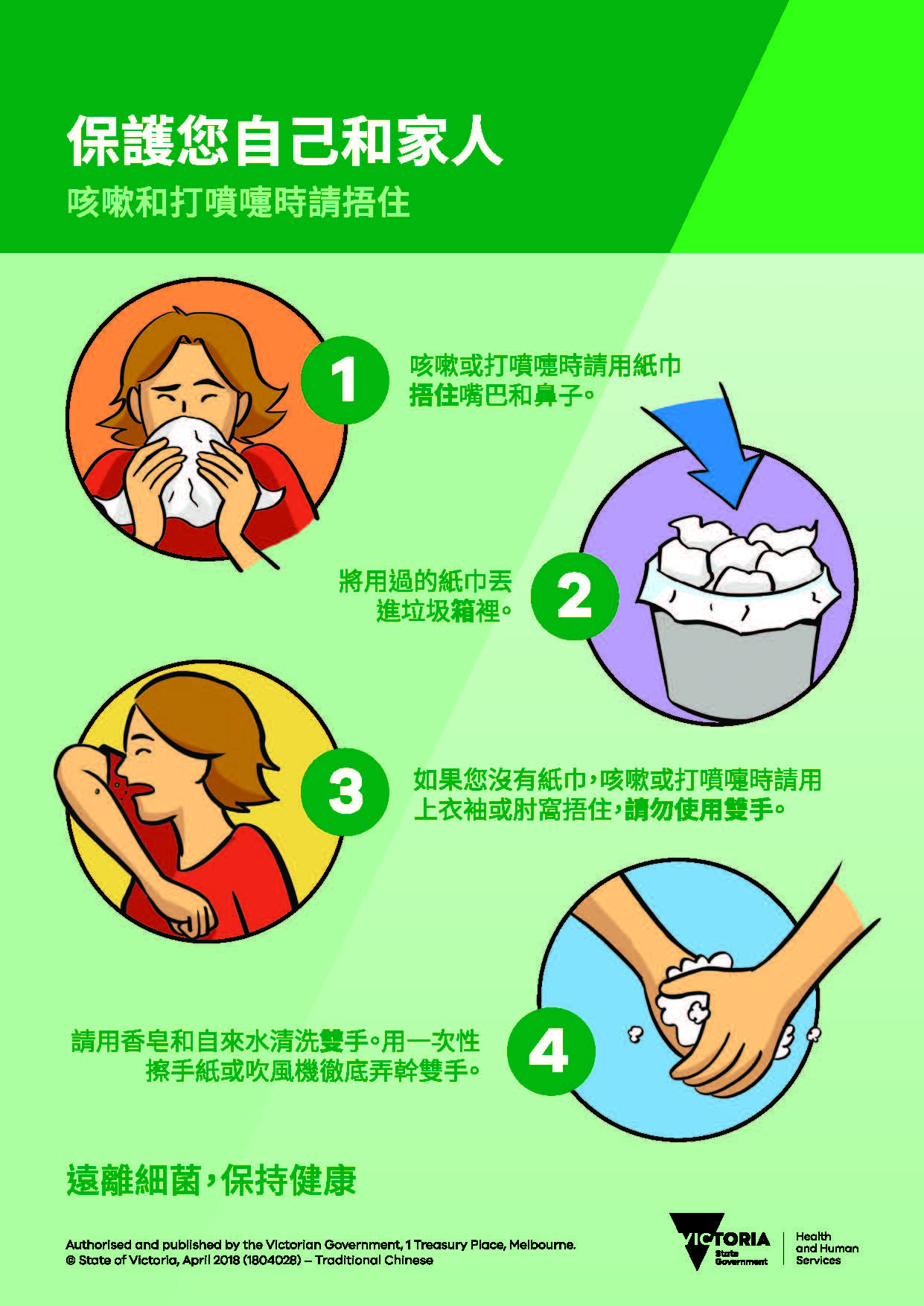
保护您自己和家人 – 咳嗽和打喷嚏时请捂住
How to wear a face mask 怎麼戴口罩
Hong Kong National Security Law expanded: Chief Executive empowered to designate any offence as a national security case
US adds Alibaba, BYD and other Chinese firms to military-linked blacklist
Franco-German sixth-generation fighter jet programme stalls in deadlock
Jacinta Allan denies resignation rumours as One Nation surge pressures Labor
Australians Less Satisfied with Life Than During the Pandemic
Trending
-
Cuisine Explorer6 years agoCantonese Mango Sago
-
Uncategorized6 years ago如果您出現以下症狀,請接受檢測。
-
Tagalog6 years agoFILIPINO: Kung nakakaranas ka ng mga sumusunod na sintomas, mangyaring subukan.
-
Cantonese - Traditional Chinese6 years ago保护您自己和家人 – 咳嗽和打喷嚏时请捂住
-
Uncategorized6 years agoHow to wear a face mask 怎麼戴口罩
-
Uncategorized6 years agoCOVID-19 檢驗快速 安全又簡單
-
Uncategorized6 years ago
在最近的 COVID-19 應對行動中, 維多利亞州並非孤單
-
Cantonese - Traditional Chinese6 years ago保護您自己和家人 – 咳嗽和打噴嚏時請捂住