
National News
Sydney inland artists unite against AI proposal

Prime minister Albanese is facing growing discontent within his own electorate as creatives push back against the federal government’s proposal to allow AI companies to scrape everything Australians create online.
Albanese’s seat of Grayndler in Sydney’s inner west is home to more than 3,000 cultural and creative businesses, and 10% of its workers are employed in cultural and creative fields – compared with 4.2% nationally. He has held it on a safe margin for three decades, and has spoken of its high representation of live music, theatre and artist spaces with pride.But now, as Labor considers giving AI companies access to Australian creatives’ works by default as it pursues a compromise with US tech giants, locals are reacting with dismay.
Labor is mulling over the copyright changes in a suite of reforms surrounding AI, including datacentres, energy and the economy. While Albanese has promised “the strongest possible protection”, warning it would be “theft” if creatives weren’t paid for their work, creative industries are alarmed that AI companies have requested a weakening of copyright law to train their models using Australian material. Some AI companies have said making licensing agreements under existing copyright law would be too difficult, while Anthropic has suggested an “opt-out” model which would allow it to scrape content unless a rights holder objected, prompting warnings from Coalition senators and the recording industry that this could amount to an acquisition of property by the government.
Labor’s proposals were leaked in September as senior personnel from OpenAI, the creator of ChatGPT, met Labor ministers and warned that Australia’s copyright laws were preventing the company from training models locally.
The federal government’s draft laws are expected by the end of the year, with consideration in parliament due in 2027. Artists from the area are saying that AI could be “good for humanity” but is now an “extraction industry mining for profit for the few”. Some also state that AI has been useful in their practice, but having to opt out is “outrageous”, and no one would post anything if free content can just be churned out by an AI machine.

National News
Nationals leader running for lower house seat in possible showdown with One Nation

The Nationals leader, Matt Canavan, will run in a lower house Queensland seat at the next federal election, in a move that may see him face off with Pauline Hanson’s former chief of staff James Ashby.
James Ashby, One Nation’s party director and close political ally to Pauline Hanson is also publicly considering putting his hat in the ring. The announcement follows the retirement of the Capricornia MP Michelle Landry, and could result in a contest against Ashby in a major battle for regional seats.
“The issue is we need to keep this seat to change the government, and I want us to continue to deliver for central Queensland,” Canavan said on Monday, remarking that he may very well die politically but not going to die wondering.
Senator Canavan, who lives in Yeppon in the electorate, became leader of the Nationals in March this year, replacing David Littleproud, who stepped down. A successful move from the Senate to the lower house would shore up the likelihood of Senator Canavan becoming deputy prime minister in a Coalition government, and assure those in the Nationals who hold the view that their leader should sit in the House of Representatives with the other major party leaders.
The Nationals senator Bridget McKenzie said One Nation should not be fighting to win Coalition-held seats if the party was serious about taking on Labor.
National News
Former New Zealand PM advises politicians to ‘rebuild trust by building financial security’

Jacinda Ardern, who now calls Sydney home, has delivered a message to Australian politicians from the stage of the city’s Opera House.
She warned that politicians have been exacerbating the problem of polarisation within society and need to be better.
Her explanation is that in the past few decades, people across the world have been feeling an increasing sense of insecurity as globalization took hold, and hence they began attacking institutions such as the World Trade Organization. Politicians offered proposals such as Brexit in response to the insecurity – saying “here’s what you blame” – which then paved the way for the rise of totalitarian leaders like Donald Trump.
“It’s not just that you hold a different opinion, it’s that you hold it so deeply that you have this view you’ve got moral clarity that is not being held by the other person,” Ardern said when addressing the growing polarisation in public discourse. “Your opinions are recorded and held in time, and when so much of a healthy democracy is your ability to have debate and shift your views based on new evidence of information … that environment makes it more difficult.”
Ardern along with acclaimed Australian author and thinker Anna Funder were speaking a fortnight after the alleged attack on independent MP Helen Haines. The former New Zealand PM did not mention the incident explicitly, but stressed politicians and leaders needed to be aware of the tone they set.
National News
‘Emotional intimacy’ from AI chatbots would be banned under Australia’s digital duty of care laws

The federal government wants to ban AI chatbots which seek to create “emotional intimacy” after prime minister Albanese raised the alarm in a heartfelt speech about children treating these agents as their “best friend”.
But Labor is coming under increasing pressure to empower the telecommunications ombudsman to become a watchdog for social media and AI to give Australians an external complaints mechanism and allow the “naming and shaming” of big tech.
The digital duty of care bill passed the House of Representatives on Wednesday and will be debated by the Senate in coming weeks. The government hopes to pass the bill by the end of 2026, but its pathway through the upper house remains unclear. The Greens support the bill, while the Coalition has said it will not vote for it, though Labor still appears keen to win the opposition’s support and remains open to amendments.
The planned framework would apply new online safety standards to social media, games, apps and chatbots. Labor said it would place “an overarching obligation” on tech platforms “to provide a safe online environment for all Australians” and replace a range of existing online codes and standards with a broader duty-of-care requirement to protect users from certain “harmful” content. It would also require social media platforms to offer an “opt-out” feature for its algorithm and suggested content.
The communications minister, Anika Wells, has suggested content that that promotes misogyny, terrorism, suicide, self-harm and eating disorders would be captured by the laws. On Wednesday, the government accepted amendments from crossbencher Kate Chaney which would add certain AI chatbot activity to the list of harms, requiring platforms to ban “material or conduct that simulates emotional intimacy and encourages or fosters a child’s dependence on it in place of human relationships”.
The opposition voted against the bill in the House, alongside One Nation. Political opponents have accused Labor of an “Orwellian” system of “censorship” and of seeking to influence conversations online – claims Wells strongly denied. The bill now moves to the Senate, where the Greens have set up an inquiry to probe the laws due to report back in late November.

Canada and EU announce new alliance open to like-minded countries
Beijing Queer film festival cancelled after harassment from authorities
Sydney inland artists unite against AI proposal
Nationals leader running for lower house seat in possible showdown with One Nation
Former New Zealand PM advises politicians to ‘rebuild trust by building financial security’

Cantonese Mango Sago

如果您出現以下症狀,請接受檢測。
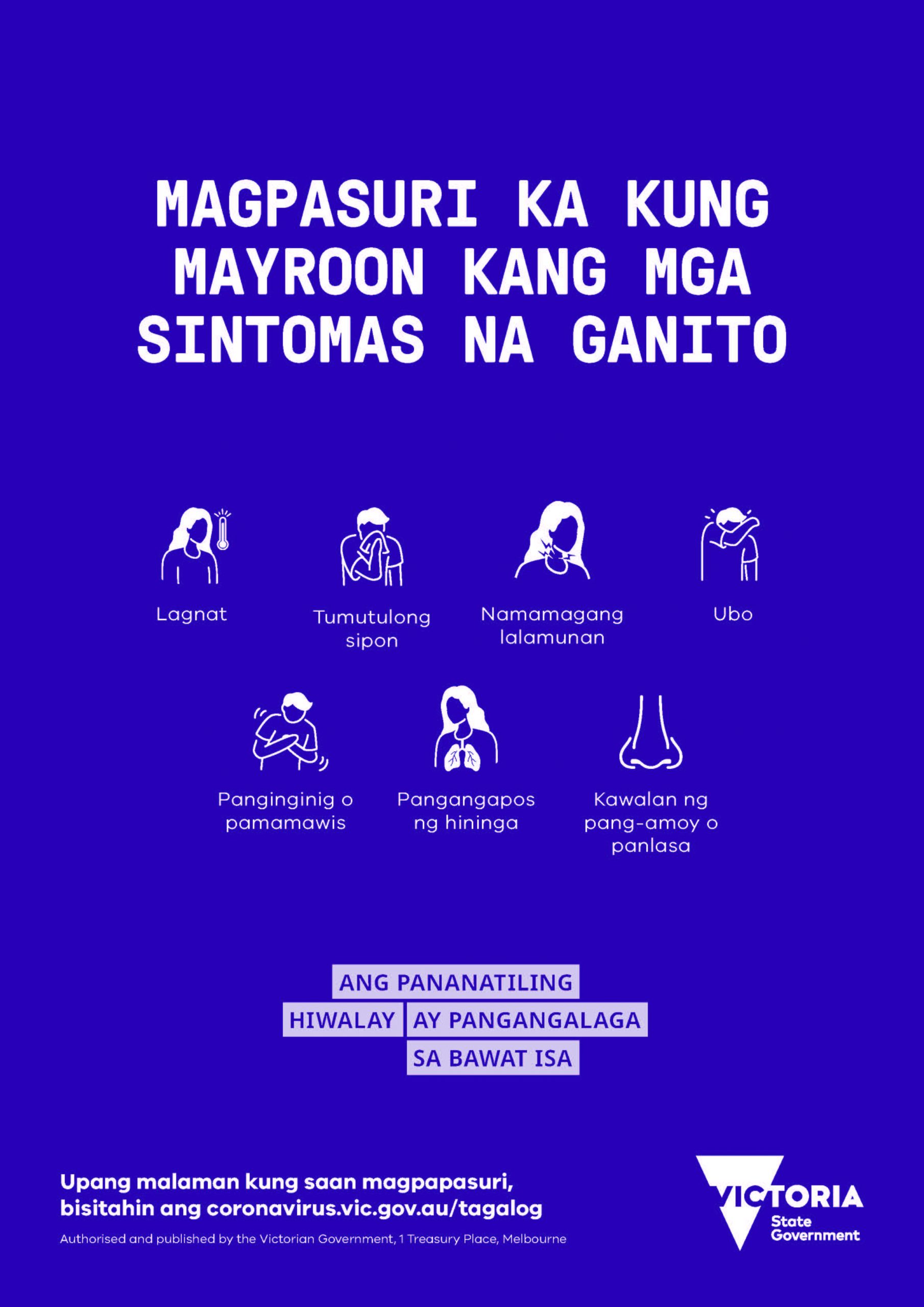
FILIPINO: Kung nakakaranas ka ng mga sumusunod na sintomas, mangyaring subukan.

How to wear a face mask 怎麼戴口罩

保护您自己和家人 – 咳嗽和打喷嚏时请捂住
UAE Fully Suspends Trade and Financial Ties with Iran
Victorian Liberal Candidate Counselled Over Volunteer Internship Program

Trump signs order banning “birth tourism” and further restricting birthright citizenship

SpaceX Rocket Debris Hits the Moon, Renewing Concerns Over Space Junk

Australia Sets New Standards for Men’s Behaviour Programs
-
 Cuisine Explorer6 years ago
Cantonese Mango Sago
-
Uncategorized6 years ago
如果您出現以下症狀,請接受檢測。
-
Tagalog6 years ago
FILIPINO: Kung nakakaranas ka ng mga sumusunod na sintomas, mangyaring subukan.
-
 Uncategorized6 years ago
How to wear a face mask 怎麼戴口罩
-
Cantonese - Traditional Chinese6 years ago
保护您自己和家人 – 咳嗽和打喷嚏时请捂住
-
 Uncategorized6 years ago
COVID-19 檢驗快速 安全又簡單
-
Uncategorized6 years ago
在最近的 COVID-19 應對行動中, 維多利亞州並非孤單
-
 Cantonese - Traditional Chinese6 years ago
保護您自己和家人 – 咳嗽和打噴嚏時請捂住
