
Uncategorized
Tips for safe online shopping during COVID-19 lockdowns


Uncategorized
Police end investigation into gynaecologist Simon Gordon over surgeries

Victoria Police has dropped its investigation into gynaecologist Simon Gordon, who is accused of performing unnecessary surgeries on women.
Earlier this year, Four Corners revealed allegations the renowned surgeon repeatedly removed tissue and organs from women for “severe” endometriosis, when pathology showed little trace of the disease. Dr Gordon retired from practice shortly after Epworth Hospital, where he worked, discovered in October 2025 that Four Corners was investigating him. He has maintained he always acted ethically and responsibly, telling the ABC earlier this year he “never performed surgery to treat endometriosis or any other condition unless I was absolutely convinced it was in the patient’s best interest and to improve their overall quality of life”.
Then-premier Jacinta Allan referred allegations against Dr Gordon to Victoria Police in February, but police are not proceeding with an investigation. However, the Medical Board of Australia, which registers medical practitioners and develops standards, has since determined the allegations AHPRA had been investigating against Dr Gordon warranted consideration by an independent tribunal, and referred the matter to the Victorian Civil and Administrative Tribunal (VCAT).
Uncategorized
Protester sues NSW after allegedly being punched by police at Herzog rally

Palestinian-Australian social services worker Eyad Shadid has launched a civil lawsuit against New South Wales (NSW) police in the district court. The legal action stems from an incident during an anti-Isaac Herzog protest near Sydney’s Town Hall in February 2026, where Shadid alleges he was violently assaulted, falsely arrested, and subjected to malicious prosecution after trying to protect a group of Muslim men praying from advancing officers.
According to court documents, an officer dragged the 26-year-old to the ground, punched him in the face, and twisted his wrist, while another officer pinned him down by kneeling on his head. Though Shadid was initially charged with resisting arrest and failing to obey police directions, the charges were dropped in May after prosecutors conceded no lawful direction was given. Shadid is now seeking aggravated and exemplary damages for assault, false imprisonment, and misfeasance in public office, noting that the wrongful prosecution harmed his business and reputation.
Uncategorized
Hong Kong Judiciary Shifts from “Re-admonishing” Judge to Demanding Retirement

Judge Wilson Chan Ka-shun of the Court of First Instance of the High Court has been repeatedly found to have engaged in “judicial plagiarism” in his written judgments. He was “severely admonished” in mid-2023, at which time he promised to make improvements.
However, a recent Court of Appeal judgment revealed that in the 2024 civil case involving “Nam Tai Electronics,” he was found once again to have copied extensive portions of the defense’s closing submissions. Following the exposure, the Judiciary initially stated that Chan’s workload had been adjusted last year to assign him criminal cases that do not require written judgments, adding that Chief Justice Andrew Cheung Kui-nung and others would admonish him again and require him to undergo targeted training.
In 2023, the Court of Appeal criticized Chan’s judgment in the “Wong To Yick Trademark Case,” where 98% of the text was copied from the plaintiff’s submissions, questioning whether he had exercised independent thought in carrying out his duties, and subsequently ruled in favor of the appellant. In the subsequent “Great Eagle Group Trust Case,” the Court of Appeal again pointed out that 92% of his written judgment involved plagiarism, likewise ruling in favor of the appellant. In June of the same year, the Judiciary stated that Chief Justice Andrew Cheung fully agreed with the Court of Appeal’s findings and, along with Chief Judge of the High Court Jeremy Poon Shiu-chor, delivered a “severe admonishment” to Chan, who expressed understanding and agreement.
In 2025, Chan was criticized twice more by the Court of Appeal in two separate cases for copying extensive, complex submissions. Although another complaint concerning judicial plagiarism was found unsubstantiated, the dedicated panel nevertheless concluded that extensive copying of submissions was undesirable and advised him not to repeat the mistake. However, two recent Court of Appeal rulings revealed further issues: in a mid-July judgment regarding the Nam Tai Electronics share dispute, the Court of Appeal noted that 95% of Chan’s judgment was plagiarized from the defense; on July 20, Chan was cited again in another civil case for copying substantial materials from both parties.
Media reports indicate that since Chan was promoted to a High Court judge ten years ago, his plagiarized judgments have led to ten appeal cases and one formal complaint. Chief Justice Andrew Cheung issued a statement today (July 27), noting that such circumstances impair the rights and interests of litigants, unnecessarily waste the judicial resources of the Court of Appeal, and erode public confidence in Chan’s ability to properly discharge his duties. Consequently, he decided to take further measures by requesting Chan’s early retirement and approving his application, effective July 31. Chan currently earns a monthly salary of approximately HK$340,000. The Judiciary responded tonight that his early retirement grants him pension benefits calculated based on his years of service.
Ronny Tong Ka-wah, an Executive Council member and Senior Counsel, criticized Chan for being “impervious to repeated advice,” calling it an attitude problem that might not be rectified through training. Nearly a week later, Chief Justice Andrew Cheung issued a statement today, expressing full agreement with the public concern over Chan’s judicial plagiarism, emphasizing that it is reasonable and natural for the public to hold high expectations regarding the conduct and professional standards of judges. He noted that although Chan had previously been severely reprimanded and had promised to improve, judicial plagiarism recurred, resulting in multiple appeals and orders for retrials in certain cases. He considered that the situation not only compromised litigants’ rights and unnecessarily expended appellate judicial resources, but more importantly, undermined public confidence in Chan’s ability to continue performing his duties properly.

Graduate student accused of poisoning colleague and trying to flee to China arrested at LAX
Zelenskyy depressed by US action on military restrictions
Fitzroy North vegan cafe falls victim to firebombing
Australian industry reliant on gas for ‘foreseeable future’
Labor condemned for bill to cut private health insurance rebate

Cantonese Mango Sago
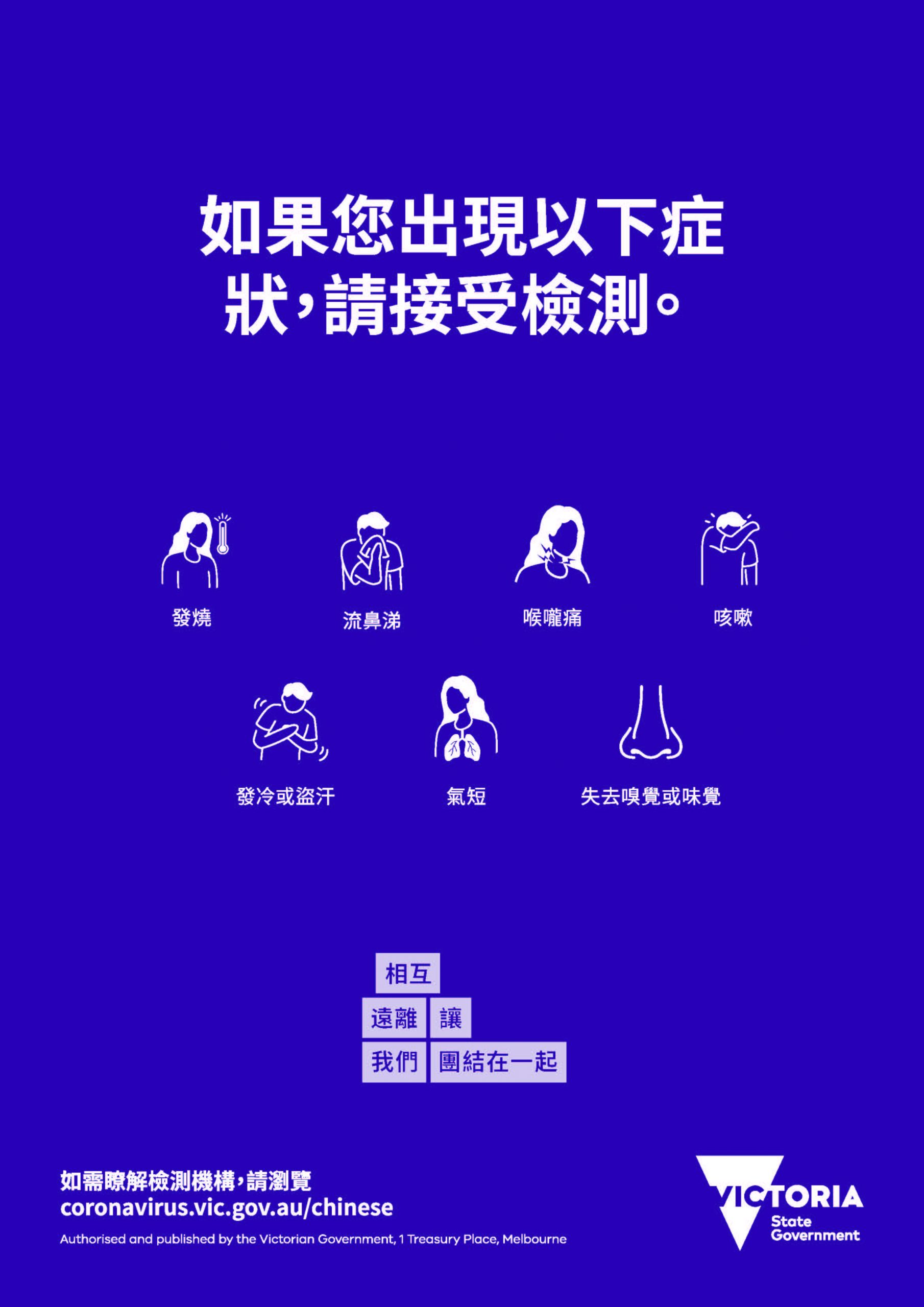
如果您出現以下症狀,請接受檢測。

FILIPINO: Kung nakakaranas ka ng mga sumusunod na sintomas, mangyaring subukan.

保护您自己和家人 – 咳嗽和打喷嚏时请捂住

How to wear a face mask 怎麼戴口罩
UAE Fully Suspends Trade and Financial Ties with Iran
Victorian Liberal Candidate Counselled Over Volunteer Internship Program

Trump signs order banning “birth tourism” and further restricting birthright citizenship

SpaceX Rocket Debris Hits the Moon, Renewing Concerns Over Space Junk

Australia Sets New Standards for Men’s Behaviour Programs
-
 Cuisine Explorer6 years ago
Cantonese Mango Sago
-
Uncategorized6 years ago
如果您出現以下症狀,請接受檢測。
-
Tagalog6 years ago
FILIPINO: Kung nakakaranas ka ng mga sumusunod na sintomas, mangyaring subukan.
-
Cantonese - Traditional Chinese6 years ago
保护您自己和家人 – 咳嗽和打喷嚏时请捂住
-
 Uncategorized6 years ago
How to wear a face mask 怎麼戴口罩
-
 Uncategorized6 years ago
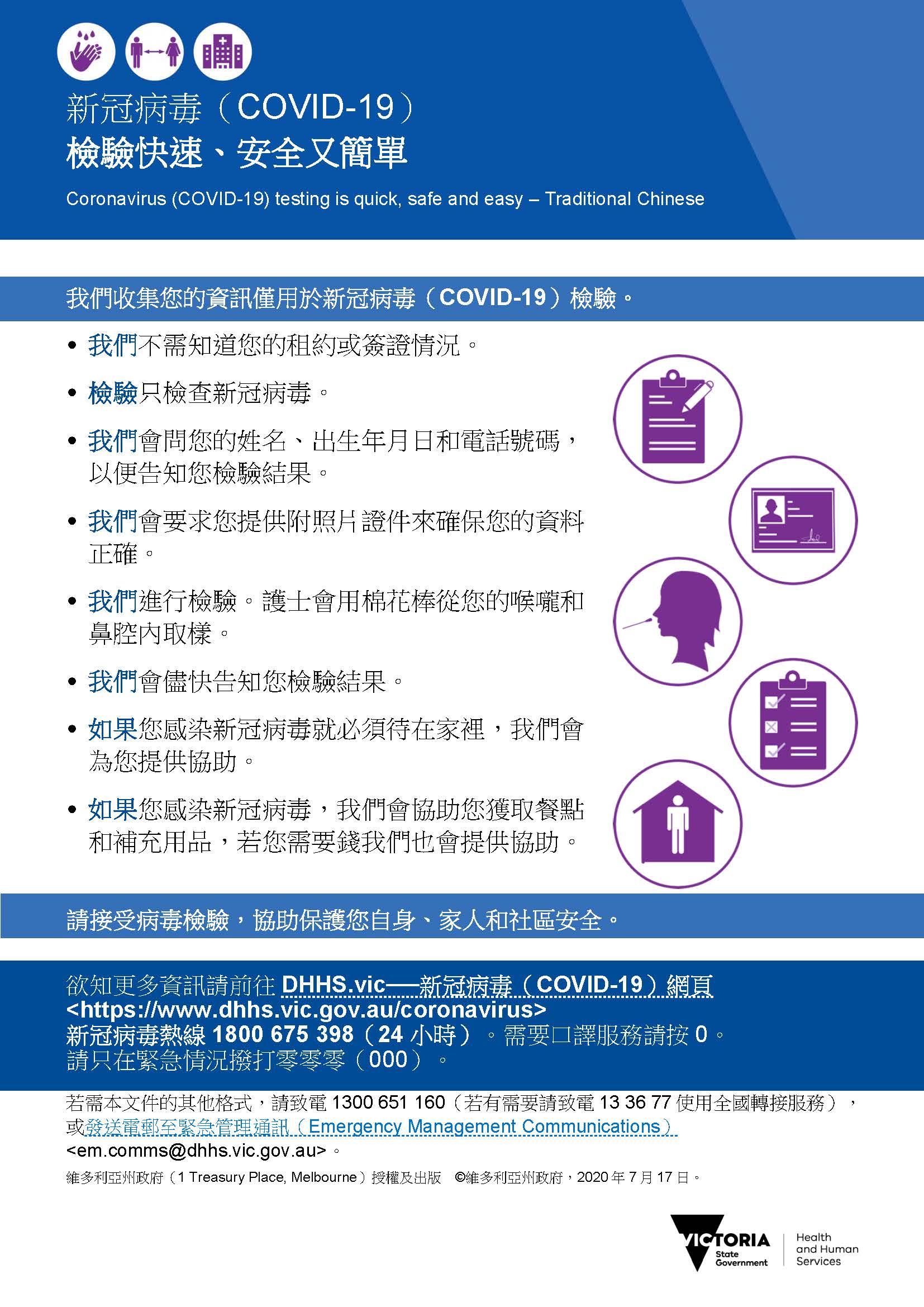
COVID-19 檢驗快速 安全又簡單
-
Uncategorized6 years ago
在最近的 COVID-19 應對行動中, 維多利亞州並非孤單
-
 Cantonese - Traditional Chinese6 years ago
保護您自己和家人 – 咳嗽和打噴嚏時請捂住
