Features
China–US Summit: Searching for a Manageable Relationship Amid Rivalry
Published
2 months agoon
On May 14, US President Donald Trump began his first state visit to China since 2017, holding a leaders’ meeting with Chinese President Xi Jinping at the Great Hall of the People in Beijing.
At a time when China–US relations remain strained over tariff disputes, artificial intelligence competition, tensions across the Taiwan issue, and broader geopolitical rivalry, the “Xi–Trump summit” drew global attention from the moment it was announced. Observers were especially focused on whether Beijing and Washington would send any new political signals regarding the sensitive Taiwan issue.
In the end, however, the summit produced few concrete breakthroughs and limited substantive outcomes. Yet compared with the increasingly confrontational tone that has defined China–US interactions in recent years, the dialogue and interactions between Trump and Xi nevertheless suggested that both sides are still attempting to maintain a relationship that is “manageable rather than uncontrollable” despite their intense competition.
A Meeting Marked by Mutual Gestures of Goodwill
Both sides deliberately cultivated a friendly diplomatic atmosphere during the visit.
When Trump arrived in Beijing, Chinese Vice President Han Zheng personally greeted him at the airport, a gesture widely interpreted as a high-level welcome from Beijing.
After the talks, Xi accompanied Trump on a visit to the Temple of Heaven, making Trump only the second sitting US president to visit the site after President Gerald Ford in 1975. As an imperial ceremonial complex reserved for Ming and Qing emperors, the Temple of Heaven visit was viewed by many as Beijing’s attempt to accommodate Trump’s appreciation for symbolism and personal diplomacy, thereby creating a warmer atmosphere.
The Temple of Heaven also symbolizes the traditional Chinese concept of harmony between heaven and humanity, as well as the ancient worldview of cosmic balance and coexistence. Beijing’s arrangement for Trump to visit the site was therefore interpreted as a cultural signal that China and the United States need to seek a new balance and framework within the existing international order, maintaining stability and coexistence amid competition.
Trump’s overall demeanor during the visit also appeared relatively restrained. His interactions with Xi were notably polite and cooperative. At the start of the meeting, Trump described Xi as “a great leader” and said it was an honor to meet him. During the state banquet, he unusually followed prepared remarks while reflecting on the history of China–US relations, rather than relying on his typical improvisational style.
Of course, with multiple international crises intersecting — including tensions surrounding Iran — Trump’s primary objective during the trip was negotiation. As a result, he appeared more inclined to cultivate a stable and friendly atmosphere in hopes of creating greater room for bilateral bargaining. At the same time, China’s high-profile reception seemed to encourage Trump to adopt a comparatively pragmatic and restrained posture on certain issues, temporarily lowering the intensity of direct public confrontation and establishing a limited sense of stability and trust amid strategic rivalry.
Beijing Draws a Red Line on Taiwan
On the Taiwan issue — the topic most closely watched by outside observers — the summit did not reveal any significant breakthrough. However, Xi Jinping’s remarks on Taiwan were noticeably tougher than in previous meetings with US leaders.
During the talks, Xi again described Taiwan as the “most important and sensitive core issue” in China–US relations, warning that if handled properly, bilateral ties could remain stable, but if mishandled, they could lead to “collision or even conflict,” potentially pushing relations into “an extremely dangerous situation.” He also reiterated that “Taiwan independence” and peace across the Taiwan Strait are fundamentally incompatible.
Compared with Xi’s language in previous meetings with American presidents, his tone this time was significantly stronger. Terms such as “collision” and “conflict” stood out sharply in what was otherwise a highly formal and friendly diplomatic setting. This was not merely a routine restatement of Beijing’s position, but rather appeared to be a formal red line directed at the Trump administration: if China and the United States hope to establish what they call a “strategically stable relationship,” the Taiwan issue will remain unavoidable at its core.
On the American side, Trump deliberately avoided directly addressing Taiwan during the visit, while the White House summary released afterward made no mention of the topic. Secretary of State Marco Rubio later stated that US policy toward Taiwan “has not changed,” emphasizing that although China raised the issue, it was not the central focus of the meeting.
However, Trump later told Fox News that he did not want to see Taiwan declare independence and believed Beijing could generally accept maintaining the status quo. Although the remarks did not alter official US policy, they were nevertheless interpreted by some as a warning to pro-independence forces in Taiwan, signaling that the Trump administration does not wish to enter into direct military conflict with China over the issue.
In addition, aboard Air Force One on the return flight, Trump acknowledged that he and Xi had discussed arms sales to Taiwan, saying they “might approve them, or might not.” Merely admitting publicly that Taiwan arms sales had been discussed with Beijing sparked controversy in both the United States and Taiwan, because under America’s “Six Assurances” to Taiwan, Washington is not supposed to consult Beijing in advance regarding such decisions.
As a result, Taiwan remains one of the most sensitive and difficult issues in China–US relations, with little likelihood of near-term consensus. The coming months may prove critical in shaping the future direction of bilateral interactions. If Washington exercises restraint in military support and official exchanges with Taiwan, Beijing may interpret this as a goodwill gesture toward stabilizing relations. But if US–Taiwan interactions intensify further, the temporary easing atmosphere created after this summit could quickly collapse back into tension.
Consensus on Iran?
Compared with the Taiwan issue, the White House devoted considerably more attention in its post-summit summary to Iran.
According to the US side, both countries agreed that the Strait of Hormuz must remain open to ensure the free flow of global energy supplies. Xi also reportedly expressed opposition to militarizing the waterway or imposing fees on shipping passage. The White House further stated that China intended to increase purchases of American oil to reduce dependence on the route, and that both sides agreed that “Iran cannot possess nuclear weapons.”
Trump later revealed in an interview that Xi had assured him China would not provide military equipment to Iran. This suggested that Trump succeeded in obtaining at least some degree of Chinese cooperation and political signaling on Iran — one of the few tangible diplomatic gains of the trip.
However, compared with the White House version, China’s official readout mentioned the Middle East only briefly, stating simply that the two sides exchanged views on regional issues without disclosing details.
Limited Economic Achievements

Before the visit, many had expected more significant progress on economic cooperation, especially since Trump traveled with 17 American business leaders, including Elon Musk, Jensen Huang, Tim Cook, and Kelly Ortberg. This raised expectations in financial markets, yet the actual economic outcomes remained limited.
In agriculture, China had earlier extended export permits for more than 600 American slaughterhouses through 2029, which was seen as a goodwill gesture. However, restrictions were later reimposed on parts of the list, and permits do not necessarily translate into actual purchases, leaving uncertainty about practical progress. Beef exports themselves also remain relatively limited in scale.
Regarding soybeans, China had already committed under the “Busan Agreement” framework to purchasing roughly 25 million tonnes annually between 2026 and 2028. No additional commitments were announced during this visit, making the arrangement more of a continuation than a breakthrough.
On aviation, Trump claimed China had agreed to purchase 200 Boeing aircraft, though this fell below earlier expectations of between 300 and 500 planes. Meanwhile, China’s new Boeing orders have declined in recent years as the country increasingly turns toward Airbus, suggesting deeper structural changes remain underway.
In trade, both sides floated preliminary concepts such as lowering tariffs on certain non-sensitive goods or creating mechanisms allowing some Chinese investments to bypass US foreign investment reviews through CFIUS. However, these discussions remained conceptual and did not produce concrete agreements or timelines.
There was likewise no breakthrough on technology and semiconductors. Although reports briefly emerged suggesting the US might ease export restrictions on Nvidia H200 chips, no clear progress materialized, and Washington emphasized that export controls were not a central topic of the summit.
Overall, while the summit emphasized “cooperation progress” at the narrative level, most outcomes amounted to extensions of existing arrangements or symbolic gestures rather than major substantive breakthroughs.
The “Thucydides Trap”: Can China and the US Avoid Great-Power Conflict?

More than the summit’s tangible outcomes, outside observers focused on Xi Jinping once again invoking the concept of the “Thucydides Trap.”
Speaking at the Great Hall of the People, Xi said the world was undergoing “accelerated changes unseen in a century,” and that China and the United States must think together about how to “transcend the Thucydides Trap.” He argued that a rising power and an established power are not inevitably destined for conflict, and that both countries should stabilize bilateral relations while jointly addressing global challenges.
Xi further stressed that China and the United States share more common interests than differences, and that each country’s success can also represent an opportunity for the other. He proposed that the two nations should “create a new model of major-power relations” and jointly complete what he called the “answer sheet of our era.”
The “Thucydides Trap” originates from the ancient Greek historian Thucydides and his account of the Peloponnesian War. At the time, Athens rapidly expanded its economic, military, and naval power, causing fear and anxiety in Sparta, the existing dominant power, ultimately leading to nearly three decades of war. Later, Graham Allison of Harvard University used the concept to describe how a rapidly rising power challenging an established hegemon often creates structural tensions and risks of conflict. In contemporary international politics, the phrase is frequently used to characterize China–US relations.
The core of the “Thucydides Trap” may not simply be war itself, but rather the fear experienced by an established hegemon toward a rising challenger. In today’s China–US relationship, this anxiety can be seen in America’s unease regarding China’s rise. That fear itself may gradually push both sides toward confrontation, with potentially catastrophic consequences.
Xi’s renewed reference to the “Thucydides Trap” therefore appeared to carry a dual message: first, that China now sees itself as a power capable of standing on equal footing with the United States; and second, that although China seeks to reshape its place within the international order, it does not wish for China and the United States to descend into total confrontation or a zero-sum struggle.
The Real Trap Behind the “Thucydides Trap”

Yet perhaps the most important warning contained in the “Thucydides Trap” is not war itself, but how such rivalries historically end.
In the Peloponnesian War, even though Sparta eventually defeated Athens, it failed to establish a lasting and stable hegemony. Prolonged internal exhaustion and warfare weakened the entire Greek world, which was later conquered by the rising Kingdom of Macedon. In other words, when great-power rivalry spirals out of control, the outcome may not be a true victory for either side, but rather mutual weakening that ultimately allows a third force to rise.
Chinese history contains similar examples. After years of warfare, the Northern Song dynasty and the Liao dynasty signed the Chanyuan Treaty, creating a kind of balance between equals: the Song possessed strong economic and cultural influence, while the Liao maintained military and cavalry superiority. Although both sides remained wary of each other, they also sustained a long period of peace and trade.
Yet the force that ultimately reshaped the region was neither Song nor Liao, but the rise of the Jin dynasty. The Jin first destroyed the Liao and then defeated the Northern Song. Later, after years of rivalry between the Jin and the Southern Song, both were ultimately swallowed by the even more powerful Mongol Empire.
Viewed through today’s geopolitical landscape, these historical parallels become especially thought-provoking. The United States faces mounting strategic and resource pressures from tensions surrounding Iran, while continuing to respond to the Russia–Ukraine war and the evolving Indo-Pacific security environment. China, meanwhile, remains highly focused on Taiwan and the South China Sea while expanding its influence through economic development and technological competition, sustaining an ongoing strategic rivalry with Washington.
As both powers devote vast resources to multiple fronts simultaneously, observers are beginning to ask whether prolonged China–US confrontation and exhaustion could eventually create space for another emerging force to reshape the global order between them.
Trump: “This Is the G2”
Returning to China for the first time in nine years, Trump’s visit attracted significant diplomatic attention, and he repeatedly emphasized its achievements. Yet compared with the past, the international environment and the structure of China–US relations have changed substantially. As China’s influence in the global economy and geopolitics continues to rise, bilateral relations increasingly display structural characteristics of simultaneous competition and engagement.
In interviews, Trump again referred to the “G2” framework, reflecting his apparent recognition of China and the United States as two co-equal superpowers dominating the global order.
Overall, while the Beijing trip lacked major substantive breakthroughs, the carefully managed atmosphere of stability and restraint established during the visit may nevertheless have created a more controllable tone for future relations. China–US interactions are expected to remain intensive throughout the year, including a planned White House return visit by Xi and his wife on September 24, the APEC summit in Shenzhen in November, and the G20 summit in Miami in December.
As these diplomatic engagements unfold, the future trajectory of China–US relations will continue to command global attention.
You may like
If someone asked you today, “What are Australian values?” how would you answer?
Freedom? Fairness? The rule of law? Multiculturalism? Or speaking fluent English and respecting the local culture?
In recent years, “Australian values” has appeared increasingly frequently in political debate. From immigration policy and social integration to national identity, politicians have repeatedly argued that new migrants must embrace Australian values. Pauline Hanson, leader of One Nation, has even advocated for Australia to return to a “monocultural” society, arguing that new migrants should speak English, obey Australian laws, and assimilate into the mainstream culture.
Yet as “Australian values” has become an increasingly common political slogan, the most fundamental question is rarely discussed: what exactly are Australian values? Although the concept appears familiar, it is far more complex than it seems. People from different political parties, generations, and cultural backgrounds may all have different interpretations.
In fact, Australian values have never been a fixed or unchanging set of standards. They are a collection of shared values that have been shaped, revised, and redefined over more than two centuries of Australian history through the intertwined experiences of colonisation, immigration, multiculturalism, and the history of the First Nations peoples. To understand Australian values, we must first understand how Australia became the nation it is today. More importantly, in a multicultural society, how should Australia enable people from different cultural backgrounds to genuinely understand the country and build a shared set of national values together?
How the Australian Government Defines Australian Values
In fact, the Australian Government has already established an official definition of “Australian values.” Everyone applying for an Australian visa is required to sign the Australian Values Statement, committing to respect and uphold Australia’s fundamental values. The statement outlines a number of core principles, including respect for individual freedom and dignity, freedom of religion, freedom of speech, the rule of law, and democracy. It also emphasises that everyone should enjoy equal opportunity regardless of their gender, race, religion, age, disability, sexual orientation, or ethnic background.
The government’s official definition also explains one of the concepts most frequently associated with Australian society: “Fair Go.” The idea extends beyond mutual respect and tolerance for others. It also emphasises empathy and care for those in need, while ensuring that everyone has the opportunity to compete on a level playing field and achieve upward social mobility. In addition, English is defined as Australia’s national language and is regarded as the common foundation for communication, social cohesion, and national unity.
Beyond signing the Values Statement, all applicants for Australian citizenship are also required to pass the citizenship test, which includes five compulsory questions on Australian values. The government’s official resource, Australian Citizenship: Our Common Bond, further sets out the same core principles contained in the Australian Values Statement, providing detailed explanations of each of these values.
Do Australians Know What Australian Values Are?
Although the Australian Government has established a clear official definition of “Australian values” and reinforces it through the Australian Values Statement and the citizenship test, this does not necessarily mean that all Australians truly understand what these values entail—let alone share a common understanding of them.
At the political level, there are clear differences in how Australian values are interpreted. Pauline Hanson, leader of One Nation, advocates returning to a “monocultural” framework, closely linking Australian values with assimilation, the English language, and cultural conformity, and using this as justification for tightening immigration policies. By contrast, Prime Minister Anthony Albanese presents a more inclusive and multicultural interpretation, arguing that the core of Australian values lies in respecting diversity and upholding fairness, rather than requiring cultural homogeneity.
However, these differences are not confined to politicians. Even within Australian society, there is no clear or consistent understanding of what Australian values actually mean. For example, “Fair Go” is often regarded as one of the defining Australian values, yet people interpret it in very different ways.
According to the Australian Survey of Social Attitudes conducted by a team of Australian researchers, when respondents were asked what “Fair Go” meant to them, the answers reflected a wide range of—and sometimes conflicting—interpretations. Some viewed it as equal opportunity and non-discrimination, while others emphasised the relationship between effort and reward. Still others extended the concept to fairness in social welfare and the distribution of public resources.
Further evidence came from a public opinion survey conducted by DemosAU in January this year, which found that there is, in fact, no single social consensus on what constitutes Australian values. When respondents were asked an open-ended question about what Australian values meant to them, the answers varied considerably. The most common response was “respect and kindness,” followed by “equality and fairness.” Other frequently mentioned values included community spirit, friendship and “mateship,” as well as peaceful coexistence. At the same time, some respondents believed that Australian values were disappearing altogether, while others said they simply did not know how to answer.
In other words, even under the same official government framework, Australian values continue to be interpreted differently across both politics and society, rather than existing as a clearly defined and universally accepted set of shared principles.
How Australia’s Immigration History Shaped Australian Values
To understand what we now call “Australian values,” it is not enough to look solely at government policies or political rhetoric. We must instead return to Australia’s immigration history and examine how these values were formed.
Australia did not evolve naturally as a single-culture nation. Rather, it is a society that has been gradually built through successive waves of migration across different historical periods. As a result, Australian values have never been a fixed or static concept. They have been continually redefined alongside changing migration patterns and evolving social experiences.
The earliest chapter of Australian society can be traced back to Britain’s convict transportation system. In 1788, large numbers of British convicts were transported to Australia, where they rebuilt their lives in a distant colony. Throughout this process, the ideas of hard work and freedom gradually became embedded in the emerging social culture. As the colony became more stable, Australia’s institutions continued to develop from the British system, laying the foundation for its future democratic governance.
The nineteenth-century gold rush then attracted migrants from around the world, including Europeans, Americans, and Chinese miners. Amid competition for resources and cooperation within mining communities, a social culture emerged that emphasised opportunity and social mobility.
During this period, many of the principles that are now regarded as core Australian values began to take shape, including equal opportunity, anti-elitism, and the spirit of fair competition. In particular, within mining communities, the belief that “those who work hard should be rewarded” gradually evolved into what is now widely recognised as the idea of a “Fair Go.”
In the twentieth century, the White Australia Policy imposed assimilation policies that restricted non-European immigration for decades, resulting in a relatively homogeneous cultural landscape for a period of time. However, as immigration policies gradually liberalised after the Second World War, large numbers of migrants from Europe, Asia, and the Middle East arrived in Australia, making multiculturalism an undeniable national reality. During this period, inclusiveness, multicultural coexistence, and respect for cultural diversity gradually became part of Australia’s understanding of its own values.
Today’s Australian values are therefore the cumulative product of different waves of migration and historical experience: from the resilience and pursuit of freedom demonstrated by transported convicts, to the spirit of fair opportunity fostered during the gold rush, and later to the coexistence and inclusiveness that emerged within a multicultural society. In other words, Australian values do not originate from a single source; they have been collectively shaped by migrants from different backgrounds and different eras.
Recognising First Nations: Australian Values Beyond the Colonial Narrative
It is worth noting that Australia’s understanding of its own identity has undergone an important period of historical reflection in recent years. Increasingly, Australians have come to recognise that the First Nations peoples—including Aboriginal peoples and Torres Strait Islander peoples, who have lived on this land for more than 60,000 years—are the original custodians of the continent and the holders of its oldest continuous cultures. This recognition is more than a symbolic cultural gesture; it represents Australia’s growing willingness to re-examine the nation’s founding history and acknowledge the harm and inequalities inflicted upon Indigenous peoples through colonisation.
For much of Australia’s modern history, national identity was largely built around the legacy of British colonisation. The English language, British institutions, and European culture were regarded as the primary foundations of Australian society. However, with the development of multiculturalism, Australia has gradually come to recognise that a truly fair national identity should not be based on the dominance of a single culture, but should instead embrace both the original history of this land and the cultural experiences brought by successive waves of migrants.
In recent years, Australia’s Multicultural Framework has further emphasised that First Nations cultures are a fundamental part of Australia’s shared national identity. Rather than treating Indigenous Australians as simply one of many cultural groups within a multicultural society, the framework recognises their foundational place in Australia’s history and culture, while promoting more meaningful reconciliation, cultural safety, and social participation. In other words, Australia has begun to move away from a one-way model of asking migrants to integrate into Australia, towards a two-way understanding of how different communities collectively shape Australia.
This shift also reflects a deeper commitment to Australia’s values of freedom, democracy, and the rule of law. A healthy democracy is not only about protecting the rights of the majority; it also requires acknowledging the voices of those who have historically been marginalised and responding to historical injustice through institutional reform. In this sense, recognising First Nations peoples represents an important sign of Australia’s democratic maturity and its willingness to critically reflect on its own history.
Viewed from a broader historical perspective, everyone who has come to Australia over the past two centuries—whether early British settlers, transported convicts, European and Asian gold miners, or today’s migrants from around the world—arrived after the First Nations peoples. Consequently, when some political narratives attempt to define Anglo-white culture as the only authentic expression of Australian values, this historical perspective exposes the limitations of such claims.
Today’s Australian values are therefore not inherited from a single cultural tradition. Rather, they have evolved through the interaction of more than 60,000 years of First Nations history, the experience of colonisation, successive waves of migration, and the ongoing development of a multicultural society. At its core, Australian identity is no longer defined by who arrived first, but by how the nation acknowledges its history while building a society founded on freedom, democracy, the rule of law, inclusiveness, and equal opportunity.
Can Administrative Measures Really Shape Shared Values?
Although the Australian Government has established an official framework defining “Australian values” and incorporated it into the visa and citizenship process, does it truly represent the shared values of all Australians? From an institutional perspective, the government requires applicants to understand and commit to these values through official study materials, the Australian Values Statement, and standardized citizenship tests. However, this top-down, administrative approach to defining values raises an important question: can a set of official documents and examinations truly enable people to understand and genuinely identify with the core values of a society?
More recently, Liberal Party leader Angus Taylor proposed introducing a legally binding “Australian Values Statement” into migration law, making it a core requirement for obtaining a visa. He also argued that visa holders who breached these behavioural standards should face visa cancellation and deportation. At the same time, he criticised the Labor government’s migration policy as being too lenient, arguing that migration screening should be strengthened and entry requirements tightened to ensure migrants better align with Australian values.
The fundamental issue, however, is that even Australians themselves do not necessarily share a common understanding of what “Australian values” actually mean. If there is no clear consensus among the broader Australian public, it is reasonable to question whether migrants from different cultural backgrounds—particularly those from non-democratic societies—can truly change, embrace, and internalise these values in their daily lives simply by reading government materials, signing a declaration, or passing a citizenship test. This assumption itself deserves closer examination.
Australian Values Cannot Be Reduced to a Textbook
Under Australia’s current migration policy, the government primarily adopts an information transmission model to establish shared values. Through official documents, value statements, and standardized citizenship tests, new migrants are expected to “understand and accept” Australian values as part of the migration process.
However, from the perspective of communication theory, the formation of values is not simply a process of receiving information. Rather, it is a process of meaning-making, in which understanding is constructed through interaction, lived experience, and social relationships.
A migrant may be able to answer every question in the citizenship test, but that does not necessarily mean they truly understand how freedom, democracy, or fairness operate in Australian society. Values are not like legal provisions that can be fully internalised through reading and examination. Instead, they are gradually developed through everyday interactions with people from different backgrounds, participation in public life, and first-hand experience of how institutions function.
To some extent, the current policy assumes that Australian values are a complete and fixed set of principles that simply need to be transmitted from the government to new migrants. Yet Australia’s own history demonstrates the opposite: national values have never been static. They have continuously evolved through the interactions of different communities.
From more than 60,000 years of First Nations cultural heritage, to the colonial era, and later waves of migration that brought diverse cultural experiences to Australia, the values that Australia now upholds—freedom, democracy, the rule of law, and equal opportunity—are themselves the product of long-term social negotiation.
If Australia genuinely seeks to build a shared sense of national values, administrative procedures and standardized testing alone are insufficient to reflect the realities of a multicultural society.
The real question is not whether migrants know Australian values, but whether they are given the opportunity to experience them within Australian society.
Intercultural Democracy: Understanding Values Through Interaction
Compared with a one-way information transmission model, Australia needs to develop a form of intercultural democracy that places interaction at its core.
Intercultural democracy is not merely about allowing different cultural groups to coexist peacefully. Rather, it involves designing institutions that create opportunities for ongoing dialogue, collaboration, and participation in public affairs among diverse communities. Values are not standards imposed from the top down; they are social understandings gradually formed through people living together, inspiring one another, and influencing one another through everyday interaction. In this context, the role of government is no longer simply to tell people what “Australian values” are, but to create opportunities for people to understand, through practical participation, why these values are worth upholding collectively.
This also means that policy design should shift from excluding those who do not conform to encouraging shared participation. For example, governments could promote intercultural community collaboration programs that encourage new migrants and local residents to participate together in Rural Fire Service (RFS) activities, community kitchens, youth mentoring programs, and local governance initiatives. By working together to address social issues, participants do not merely learn about fairness, responsibility, mateship, and mutual support in theory; they experience these values in practice.
Governments could also establish honour and incentive mechanisms to encourage participation. Initiatives such as an Intercultural Excellence in Participation Award or a Community Inclusion Points Scheme could recognise the contributions of both migrants and local residents who engage in community activities. Recognition might include official certificates, public service benefits, or other forms of acknowledgement. In addition, residents from different backgrounds could be encouraged to work together to solve local issues, thereby gaining a deeper understanding of democracy, the rule of law, and equal participation, while putting the principle of Fair Go into practice through cooperation and shared outcomes.
More importantly, these policies should not be designed solely to help migrants integrate; they should enable the whole society to participate in the construction of shared values. Intercultural democracy does not require migrants to unilaterally adopt mainstream culture. Local Australians can also, through interaction, gain a renewed appreciation of the cultural resources, life experiences, and global perspectives that migrants bring. Genuine integration is not a process in which one group changes another; it is a process of mutual growth through two-way interaction, allowing Australian values to continue evolving alongside society.
Ultimately, Australian values should not exist merely as answers in a textbook. They should be lived experiences practiced in communities, schools, workplaces, and public life. Intercultural democracy enables people from different backgrounds to engage in ongoing dialogue, negotiation, and shared decision-making, thereby gradually understanding what Australia is, rather than simply being told what Australia should be. Values understood through interaction are no longer cold and rigid migration requirements; they become living Australian values that are practiced in daily life and continue to evolve over time.
Australian Values Should Not Become a Political Tool
However, as Australia rethinks how to foster intercultural dialogue, it must also be alert to a growing concern: a set of values originally shaped through history, migration, and democratic practice is increasingly being appropriated by some politicians as a tool for winning votes.
In recent years, some politicians have deliberately simplified complex social issues in order to appeal to voters’ anxieties. Through emotionally charged rhetoric, they have framed immigration, multiculturalism, and national identity as issues of conflict and division. They have redefined “Australian values” as a narrow cultural standard, implying that only those who conform to a particular language, culture, or background truly belong in Australian society. Such narratives not only ignore Australia’s history as a nation built by migration, but also dismiss the contributions that diverse communities have made to Australian society over many decades.
Pauline Hanson’s call for a return to a “monocultural” Australia exemplifies this approach. It reduces Australian values to an exclusive identity rather than recognising them as a set of shared principles that continue to evolve within a democratic society. This form of populist politics amplifies fear and public anxiety, portraying migrants as the cause of housing pressures and rising living costs, while avoiding deeper structural issues such as policy failures, economic conditions, and governance challenges.
Yet in the face of this political narrative, the major parties have largely responded passively. Although Angus Taylor criticised One Nation’s proposals as inconsistent, he has failed to put forward a clearer and more inclusive vision of Australian values. In doing so, he has also avoided the responsibility of shaping a more constructive national conversation.
Australian values have never belonged to any single cultural or ethnic group, nor should they be redefined or manipulated by politicians for electoral gain. To genuinely uphold Australian values is not to divide society into “us” and “them” through fear and confrontation, but to continue strengthening the foundations of understanding, mutual respect, and shared participation within a democratic society.
Features
The New Pacific Reality Facing Australia After China’s Missile Test
Published
5 days agoon
July 8, 2026
On 6 July, a Chinese People’s Liberation Army Navy strategic nuclear submarine successfully test-fired a submarine-launched ballistic missile capable of carrying a nuclear warhead into international waters of the Pacific Ocean. The missile travelled across the Exclusive Economic Zones (EEZs) of several Pacific island countries before landing in waters near Tuvalu. Although China described the launch as a “routine training exercise”, Australia, New Zealand and several Indo-Pacific countries criticised the incident as a “provocative action that undermines regional stability”.
Coincidentally, on the same day as the missile test, Australian Prime Minister Anthony Albanese was beginning a three-day Pacific visit, during which he sought to strengthen defence, policing and economic cooperation with Fiji and other Pacific island nations. Australia not only signed the “Vuvale Union” with Fiji, which includes mutual defence commitments, but also signed the “Nakamal Agreement” with Vanuatu last month, further consolidating Australia’s role as a major security and aid partner in the region.
One side was China demonstrating its military projection capabilities across thousands of kilometres, while the other was Australia accelerating efforts to strengthen ties with Pacific island countries. Although these two events appear separate, they reflect an intensifying geopolitical competition. For Australia, the concern is not only the missile itself, but China’s growing influence in the Pacific through infrastructure investment, diplomacy, policing cooperation and security agreements, which is gradually challenging the security structure Australia has long regarded as its “strategic backyard”.
Australia No Longer Has a “Natural Security Distance”
For decades, Australia’s greatest defence advantage was not military strength, but geography.
Surrounded by oceans and located thousands of kilometres away from major powers, Australia also benefited from a natural buffer formed by Pacific island countries including Papua New Guinea, Solomon Islands, Fiji and Vanuatu to the north. This meant Australia faced few direct military threats to its mainland in the decades after World War II. Therefore, the idea that “distance equals security” has long been a key foundation of Australia’s defence strategy.
However, as China has continued to pursue military modernisation in recent years, this sense of security based on geography is gradually weakening.
Although the Chinese missile test was still some distance away from mainland Australia, the real concern for the Australian government is not where the missile landed, but the long-range military projection capability China demonstrated. Submarines have high levels of stealth, and their ability to launch long-range ballistic missiles indicates that China is gradually developing a more complete sea-based nuclear deterrence capability. It also shows that Chinese military power can now extend further across the Indo-Pacific region.
The Lowy Institute has also noted in its latest reports that as China continues to develop long-range bombers, ballistic missiles, nuclear submarines and long-endurance drones, Australia’s “natural security barrier” based on geographic distance is gradually disappearing. The report argues that over the next decade, China may not only be capable of threatening Australia through naval power, cyberattacks, disruption of undersea cables and interference with maritime trade, but may also develop the ability to directly strike Australian territory. If Beijing establishes military bases in the Pacific or deploys longer-range weapon systems in the future, major Australian ports, airports, energy facilities and transport infrastructure could potentially become targets.
Therefore, Australia’s heightened concern over the missile test is not because it believes China is about to attack Australia, but because the incident serves as a warning: the security advantage created by geographic distance is gradually shrinking. As China’s military projection capabilities continue to grow, combined with its expanding relationships with Pacific island countries, Australia must rethink how it maintains its strategic advantage in the South Pacific.
From “Strategic Neglect” to Re-engaging Pacific Island Countries
However, Australia’s real challenge is not only China’s growing military capability, but also its previous misjudgment of China’s expansion in the Pacific.
For a long time, Australia viewed Pacific island countries as its “strategic backyard”, but due to economic considerations, it adopted a cautious approach towards China’s increasing influence in the region, and at times underestimated the significance of these developments. Particularly over the past decade, China expanded its relationships with multiple Pacific island countries through the Belt and Road Initiative, infrastructure investment, foreign aid and people-to-people exchanges. Meanwhile, Australia remained more focused on trade cooperation with China and did not immediately view these developments as a security challenge.
It was only in recent years, as China’s role in the Pacific became increasingly visible, that Australia began adjusting its approach. In 2022, Solomon Islands signed a security agreement with China, allowing cooperation in policing and security areas, which raised significant concerns in Australia. The Australian government feared that Beijing could gradually establish a deeper strategic presence through what appeared to be economic and public security cooperation, potentially paving the way for future military deployments.
Against this background, the Albanese government has actively repositioned Australia’s Pacific policy by signing a series of strategically significant agreements with island nations to strengthen bilateral relations.
The recently signed Vuvale Union with Fiji represents an important step in Australia’s effort to enhance regional security cooperation. The agreement is not merely a standard diplomatic partnership, but includes a rare mutual defence commitment, requiring both sides to respond when either party faces security threats. It is Fiji’s first formal defence arrangement with another country and makes Fiji Australia’s fourth formal defence partner after the United States, New Zealand and Papua New Guinea. The agreement also includes an “open clause” allowing other Pacific island countries to join in the future, reflecting Australia’s efforts to expand its regional security network and balance China’s influence.
Beyond security cooperation, Australia is also strengthening ties through economic assistance. The Vuvale Union covers cooperation in climate change, economic development and infrastructure, with Australia committing A$1 billion over the next decade to support Fiji.
Similarly, Australia signed the Nakamal Agreement with Vanuatu last month, establishing Australia as a major aid provider and policing partner for the country. The Albanese government hopes to rebuild Australia’s influence in the South Pacific through security training, infrastructure investment and economic support.
Pacific Island Countries Are Not Choosing Only One Side: China’s Influence Is Reshaping Regional Security
However, while Australia strengthens cooperation with Pacific island countries, it must also recognise a reality: these nations are not simply aligned with Australia, but maintain different levels of cooperation with China based on their own interests.
Facing long-term challenges including climate change, limited infrastructure and economic development needs, many Pacific island countries require external funding and assistance. This has created opportunities for China to expand its economic and diplomatic influence. For Beijing, Pacific island countries are not only development partners but also part of its efforts to challenge existing US influence in the region and break through the island chain strategy. For Australia, China’s deeper engagement with these countries is gradually changing a Pacific security order traditionally dominated by Australia.
In recent years, China has not only strengthened ties through infrastructure investment and economic assistance, but has also expanded cooperation into policing and security fields. Beijing has provided multiple countries with law enforcement equipment, including drones, patrol boats and police vehicles, while strengthening police exchanges with Pacific island nations. Solomon Islands has become the most closely watched example. In 2022, Solomon Islands signed a security cooperation agreement with China, the details of which have not been fully disclosed, raising concerns in Australia and other Western countries that Beijing could establish a deeper security presence.
Following the agreement, Chinese police personnel entered Solomon Islands to provide support including firearms training, riot control tactics and policing training. China has also provided similar cooperation to other Pacific nations through personnel exchanges, equipment assistance and policing programmes. Although Beijing insists such cooperation is mainly aimed at maintaining public security, policing cooperation could become an entry point for expanding China’s security influence and further weakening Australia’s traditional role in the region.
China’s Pacific strategy is not limited to security. Over many years, Beijing has used Belt and Road-related investments and aid to build roads, stadiums, government buildings and hospitals across several island countries, gradually establishing economic and political connections. For some Pacific island nations with small populations and limited resources, Chinese funding and development projects are attractive and provide more diplomatic options.
Therefore, Pacific island countries are not simply choosing between Australia and China. Many seek to maintain security cooperation with Australia while preserving economic ties with China, balancing different powers to maximise their own interests. For example, even after signing the Nakamal Agreement with Australia last month, Vanuatu stated that it was still waiting for Beijing’s approval of another development cooperation agreement, showing that some island nations wish to retain space for cooperation with China despite receiving Australian security support.
This diplomatic balancing strategy creates greater challenges for Australia. Even if Australia views China as its main strategic competitor, neighbouring island countries may not share the same position. The real risk for Australia is not simply that Pacific island countries maintain diplomatic relations with China, but whether Beijing can gradually establish a strategic presence through long-term economic dependence, security cooperation and political influence. If China builds deeper security networks in Australia’s “strategic backyard”, or gains access to ports, communications systems or other strategic facilities, Australia’s defence advantage based on geographic distance could further decline.
Therefore, Australia’s recent efforts to increase aid, deepen policing cooperation and promote defence agreements are essentially responses to the new security pressures created by China’s expanding influence. However, the question remains whether this strategic awakening has come too late.
Who Is China Really Sending a Message To?
Observers generally believe that the missile test was not solely a response to Australia’s recent security agreements with Pacific island countries. Its primary target was more likely the United States.
By launching a long-range ballistic missile from a strategic nuclear submarine, China demonstrated that its nuclear capabilities are no longer limited to land-based missiles, but are increasingly developing into a diversified nuclear deterrence system that includes sea-based capabilities. This indicates stronger long-range projection capabilities and reflects continued progress in China’s military modernisation.
Although China has long maintained a “no first use” nuclear policy, it has continued expanding its nuclear arsenal and developing advanced military technologies in recent years. According to the US Department of Defense’s China Military Power Report, China’s nuclear arsenal has grown rapidly in recent years and is moving towards a goal of possessing more than 1,000 nuclear warheads by 2030.
If China further develops long-range bombers, strategic aviation forces and related weapons systems, it could gradually complete a “nuclear triad” structure — consisting of land-based intercontinental ballistic missiles, submarine-launched ballistic missiles and air-launched nuclear platforms — creating nuclear deterrence capabilities across land, sea and air domains. This would not only represent an increase in China’s military capability but could also alter the long-standing strategic balance in the Indo-Pacific, which has been dominated by the United States.
However, what concerns Australia and other countries is not the missile test itself, but the gap between China’s rapidly expanding military capabilities and its limited strategic transparency. While Beijing continues to modernise its military, expand its nuclear arsenal and enhance long-range strike capabilities, it has not increased transparency at the same pace, making it difficult for other countries to accurately assess its long-term strategic intentions.
Therefore, while the test may not have directly targeted Australia, it remains an important warning. China demonstrated not just a single weapons capability, but an expanding strategic projection system. As these capabilities extend closer to Australia’s surrounding waters and the Pacific region, Australia’s challenge is no longer simply traditional security concerns created by geography, but how to respond to a China with increasingly expanding military influence.
How Should Australia Respond?
China’s continued military growth does not mean Australia is already in an irreversible disadvantageous position, but it does show that the era of relying on geographic distance for security is gradually ending. Australia’s future challenge is not only how to respond to one missile test, but how to build a more resilient national security system in a rapidly changing Indo-Pacific strategic environment.
The Lowy Institute has pointed out that China continues to expand its naval forces and plans to have around 25 nuclear-powered attack submarines by 2035, compared with an estimated nine currently. In comparison, although Australia is developing nuclear-powered submarines through the AUKUS security partnership, its future fleet size will remain relatively limited. Furthermore, China’s submarine construction speed currently exceeds that of the United States, meaning the maritime balance of power in the Indo-Pacific is gradually changing.
However, researchers also emphasise that this does not mean China is preparing to attack Australia. The key concern is not whether China currently intends to do so, but that it is gradually developing the capability to do so. Australia’s defence planning cannot focus only on whether another country currently has hostile intentions, but must consider whether that country would have the ability to act militarily if circumstances change. Therefore, Australia can no longer assume “distance equals security” and must establish a more comprehensive defence strategy.
Australia’s future approach should not only involve increasing defence spending or purchasing advanced weapons. It must also improve maritime surveillance and early warning capabilities, protect undersea cables and critical infrastructure, deepen security cooperation with allies, and continue strengthening long-term partnerships with Pacific island countries. Only through these measures can Australia maintain strategic initiative in an increasingly complex Indo-Pacific environment.
Winning the Pacific Requires More Than Security Cooperation
In recent years, many Australian Pacific policies have focused on balancing China’s influence. However, if Australia views Pacific island countries merely as pieces in geopolitical competition, it risks overlooking the issues these nations actually care about. For many island countries, climate change, infrastructure shortages, healthcare limitations, youth unemployment and economic development are far more urgent than great power competition.
Taking Solomon Islands as an example, the country currently faces challenges including youth unemployment, pressure on public healthcare and rising financial burdens. Compared with geopolitical rivalry between major powers, local communities are more concerned about whether living standards can improve and whether their countries can achieve sustainable development. Australia’s previous malaria prevention programmes in Solomon Islands, which significantly reduced infection rates, provide an example of successful cooperation. Such initiatives gained local support because Australia responded to practical development needs rather than using aid purely as a strategic tool.
This demonstrates that if Australia wants to maintain long-term influence in the South Pacific, security cooperation and financial assistance alone are insufficient. More importantly, Australia must build trust. Only by responding to island nations’ development, climate and social needs through equality, respect and mutual benefit can Australia become a partner they genuinely rely on. After all, Pacific island countries are not limited to choosing between China and Australia, but will continue seeking cooperation that best serves their own interests.
China has not “won” the South Pacific, and Australia has not completely lost its influence. This will be a long-term competition for regional influence. Facing China’s growing military capabilities and expanding diplomatic and security presence in the South Pacific, Australia must redefine not only its defence strategy but also how it builds a long-term approach that protects its own security while earning the trust of regional partners in an Indo-Pacific environment where competition and cooperation coexist.
Features
Walking with the Solitary (11): Encouraging Children to Participate in Training (Part 1)
Published
1 week agoon
July 6, 2026
Supporting Vocational Training
Over the past six months, I have been designing and implementing a workplace readiness training program for young people with high-functioning autism. In addition to being funded through the National Disability Insurance Scheme (NDIS) for eligible participants, we also hope to offer it as a workplace internship program in the near future.
Traditionally, Chinese communities have placed relatively little emphasis on systematic vocational training. As a result, many people are surprised by Australia’s diverse vocational education and training (VET) system after they arrive. What many may not know is that the Australian Government and various vocational training organisations have been promoting Australia’s nationally recognised vocational training system in China for many years.
Australia’s vocational education sector offers nationally recognised Workplace Skills certificate courses designed primarily for secondary school students preparing to enter the workforce and adults returning to employment. These courses help participants develop the fundamental skills needed to function effectively in the workplace. For new migrants unfamiliar with Australian workplace culture, they also provide an excellent introduction to Australian employment practices while teaching practical workplace skills.
Many of the units offered in these courses are particularly valuable for autistic individuals who have little or no work experience or who have not yet developed these workplace competencies. With time and step-by-step learning, most participants can acquire a solid foundation of workplace skills through structured training.
Unfortunately, these courses are generally not designed specifically for autistic individuals. At Rejoice, our vision is to provide a practical, workplace-based training program that helps autistic people develop the essential skills needed to navigate working life successfully.
How Do People Learn?
Society is constantly changing. Over the past three years, rapid advances in artificial intelligence have led many people to question what knowledge students should learn to prepare for the future. Whether or not people use AI themselves, most would agree that today’s students will enter workplaces requiring very different skills and knowledge from those needed today. As a result, educators and society alike are debating what students should actually be learning.
In reality, education researchers have been asking this question for decades. The issue simply received less public attention because people largely trusted the existing education system. An even deeper question worth asking is: How do people learn throughout different stages of life? This is a critical consideration for any program supporting autistic individuals.
As society has gained a better understanding of autism, educators have continually explored how best to support autistic learners. Parents often notice developmental differences when autistic children are very young, but many do not know how to help them learn effectively. Mainstream primary and secondary schools rarely provide learning plans tailored to each student’s individual abilities and interests. Consequently, many autistic children become unsuccessful learners within the traditional education system.
Autistic individuals with stronger language skills often demonstrate remarkable learning abilities due to their intense concentration. They may excel in reading, communication, mathematics, creativity, or the performing arts. Therefore, it is inaccurate to assume that autistic people who struggle with communication or forming close social relationships lack the ability to learn.
The current school system emphasises following rules, acquiring knowledge through social interaction, and mastering a broad range of standard academic subjects. This structure often disadvantages autistic students. Nevertheless, some high-functioning autistic individuals receive additional support either at school or at home, enabling them to continue developing their strengths. Many successfully complete secondary school and university education.
However, even these high-functioning autistic individuals often continue to experience significant social difficulties and may not know how to build workplace relationships. For this reason, pre-employment training becomes especially important. Effective workplace preparation helps autistic individuals develop fundamental employment skills that can profoundly influence their future lives.
Developing a Positive Attitude
For workplace training to be effective for high-functioning autistic individuals, learners generally need three essential ingredients:
- a positive attitude toward learning,
- the ability to absorb new knowledge, and
- sufficient repetition to develop practical skills.
For many high-functioning autistic individuals, the second and third elements are not major obstacles. If they are willing to participate in training, their chances of success can be very high.
A positive learning attitude begins with the desire to learn. Employment training should first inspire autistic individuals to want to work.
When parents bring their children to discuss whether our program is suitable, I sometimes find that some young people have little interest in employment. Some have lost confidence after experiencing rejection within their communities and doubt their ability to work alongside others. Others simply do not believe they need a job. This can be surprising.
Many parents express frustration or helplessness because, throughout their child’s upbringing, they have often felt unable to change their child’s behaviour.
I fully understand these feelings. Every parent hopes their child can build healthy friendships, communicate effectively, and grow up surrounded by supportive peers. Many parents devote considerable effort to improving their autistic child’s social skills, encouraging more activities or language development from an early age. Unfortunately, these efforts often produce limited results, leaving parents discouraged and, in some cases, resigned.
If parents themselves become pessimistic about their child’s ability to change, it becomes even more difficult for the child to develop a positive attitude toward learning.
However, high-functioning autistic individuals often demonstrate exceptional ability in subjects they genuinely enjoy. Parents should therefore begin by recognising and celebrating their children’s achievements. By encouraging them to set higher goals, parents can help motivate them to pursue new learning opportunities with confidence.
The successful cases I have encountered all shared one common factor: parents consistently acknowledged and affirmed their autistic child’s strengths, encouraging them to persevere until they achieved their goals.
To make this possible, both parents and children need to regularly address and manage negative emotions.
Managing Negative Emotions
Because autistic children are frequently excluded by their peers at school, parents should create more opportunities for them to interact with people who understand and accept them. Adults are generally more mature and often provide greater emotional support and social acceptance. Many autistic children naturally prefer spending time with older people because they feel more accepted.
As autistic children grow, they often develop interests that differ from those of their peers or show little interest in activities that other children enjoy. Parents sometimes pressure them to participate in the same activities as other children or frequently compare them with their peers. In reality, such comparisons are unnecessary.
Every individual develops differently. People’s interests, strengths, and achievements naturally vary. As long as children are willing to make an effort, parents should recognise and encourage their progress. Doing so helps build self-confidence.
If children compare themselves with others and become discouraged because they cannot do what others can, parents should certainly provide support. At the same time, they should help their children accept their own unique strengths and limitations. This acceptance is an effective way to reduce negative emotions.
I believe that a child’s ability to accept their own limitations begins with their parents accepting that their child is different from others. In fact, this acceptance is one of the most important starting points in supporting autistic children.
For those interested in the program, contact raymond@sameway.com.au or 0422 871 799 for more details.
Mr. Raymond Chow
Listen Now

China ballistic missile test pushes forward case for Pacific Security Agreement
Witnesses at royal commission subjected to ‘ugly antisemitic attacks’ after appearing, commissioner says
Strikes hit Kuwait oil platform as US-Iran war continues
Australia Going to ditch paper arrival cards for incoming travellers
Australian Values: Do We Really Have a Consensus?
Cantonese Mango Sago
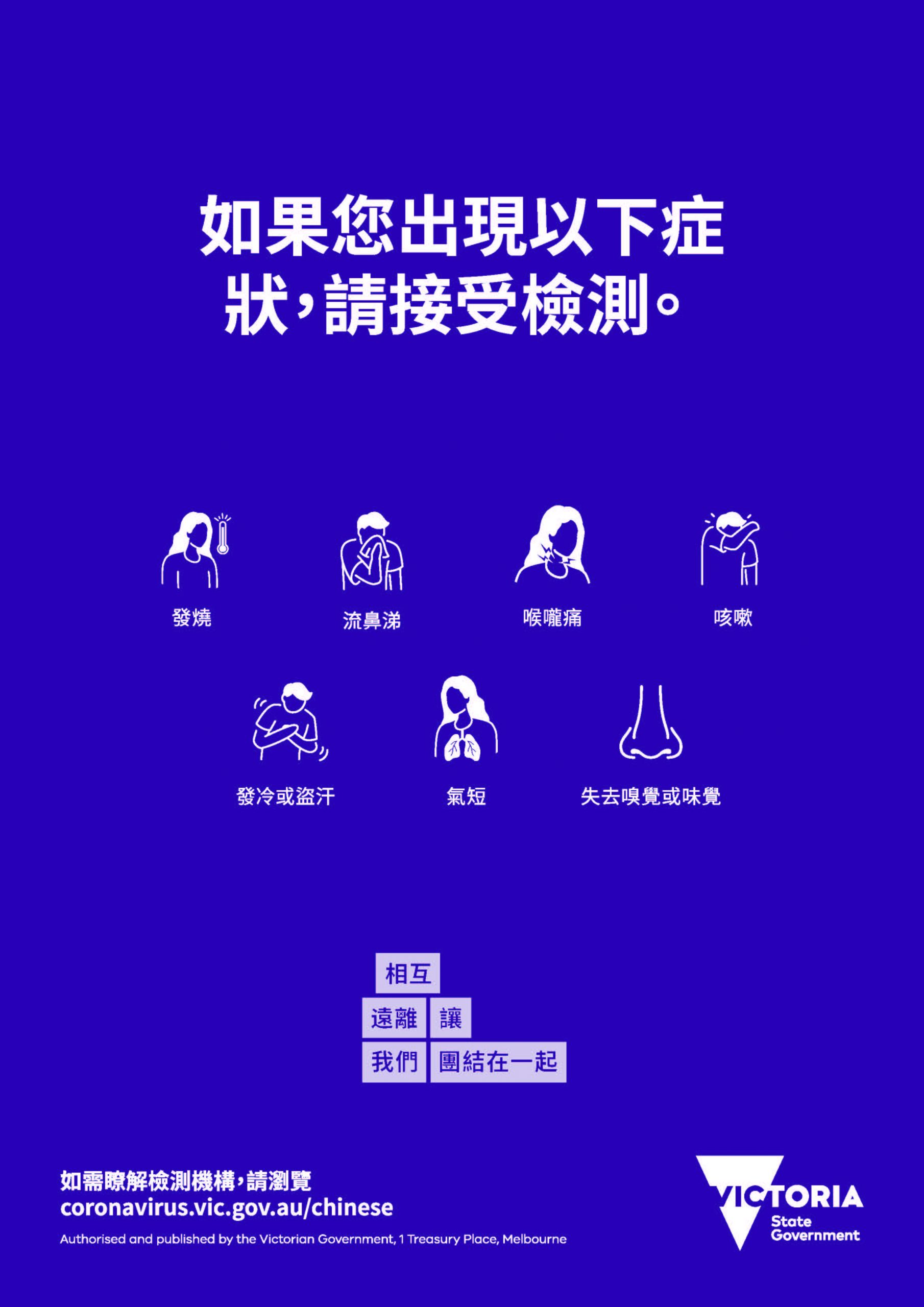
如果您出現以下症狀,請接受檢測。

保护您自己和家人 – 咳嗽和打喷嚏时请捂住
FILIPINO: Kung nakakaranas ka ng mga sumusunod na sintomas, mangyaring subukan.

How to wear a face mask 怎麼戴口罩
China Accelerates Development of Robotaxis
Trump Allows Ukraine to Produce ‘Patriot Missiles’
Taylor Criticises One Nation’s Inconsistent Policies as Hanson Calls for Cooperation
Australia Formally Opposes US “Forced Labour Tariff”
Australia and India Sign Uranium Export Agreement, Deepening Bilateral Cooperation
Trending
-
Cuisine Explorer6 years agoCantonese Mango Sago
-
Uncategorized6 years ago如果您出現以下症狀,請接受檢測。
-
Cantonese - Traditional Chinese6 years ago保护您自己和家人 – 咳嗽和打喷嚏时请捂住
-
Tagalog6 years agoFILIPINO: Kung nakakaranas ka ng mga sumusunod na sintomas, mangyaring subukan.
-
Uncategorized6 years agoHow to wear a face mask 怎麼戴口罩
-
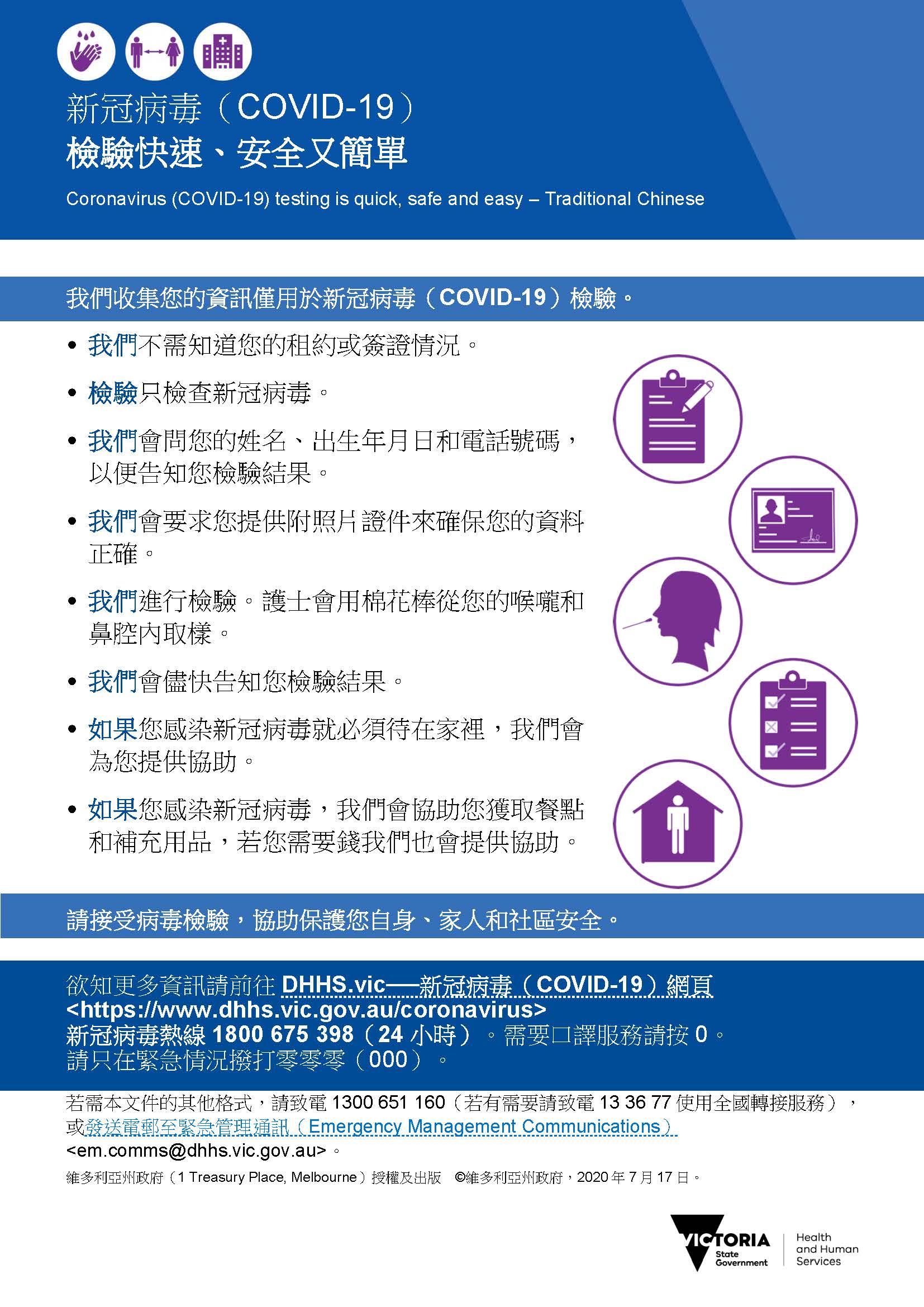
Uncategorized6 years agoCOVID-19 檢驗快速 安全又簡單
-
Uncategorized6 years ago
在最近的 COVID-19 應對行動中, 維多利亞州並非孤單
-

Cantonese - Traditional Chinese6 years ago保護您自己和家人 – 咳嗽和打噴嚏時請捂住